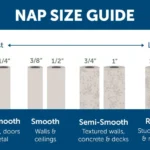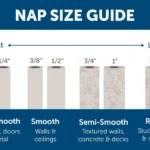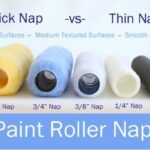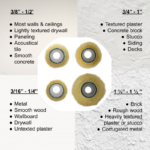
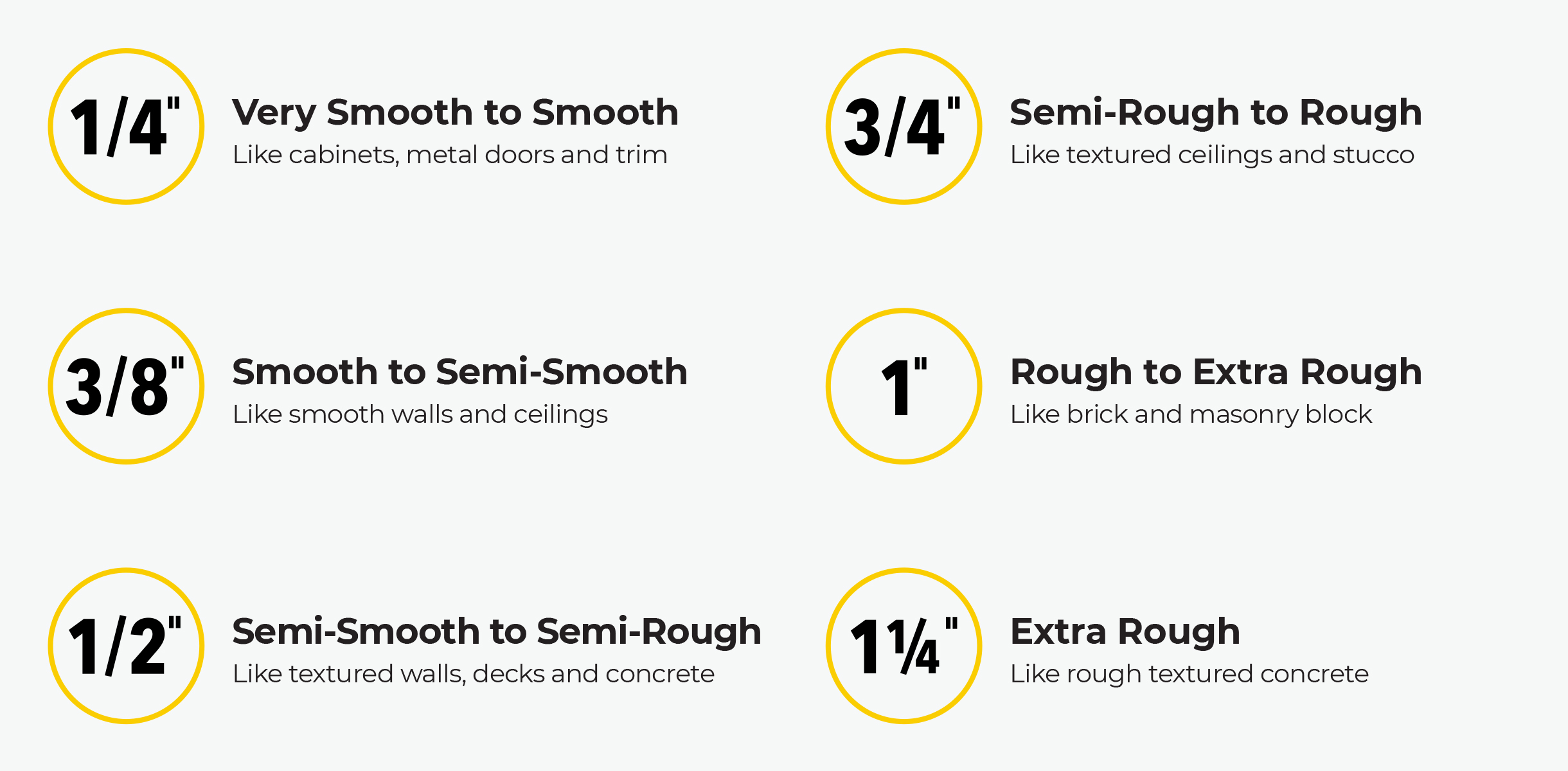
The difference between a 1/4-inch and 3/8-inch nap roller is the fiber length on the cover, which affects how much paint it holds and where it’s best used. A 1/4-inch nap is best for smooth surfaces like drywall, cabinets, and doors because it applies a thin, even coat without texture. A 3/8-inch nap holds more paint and works well on lightly textured surfaces such as plaster or lightly textured walls. Choose the nap based on surface texture to achieve even coverage with minimal roller marks.
The Best Rollers for a Flawless Finish
Don’t ruin a $70 gallon of paint with a $2 hardware store roller. These specific professional-grade naps are the industry gold standard.
Best for Cabinets (1/4″) Best for Walls (3/8″) The “Must-Have” Tool Wooster Pro Woven 1/4″ Purdy White Dove 3/8″ Wooster Sherlock Frame Shed-resistant and leaves zero lint on smooth wood. The “gold standard” for lint-free, uniform walls. High-strength frame that won’t “walk” off the roller. Our Top Pick for Standard Walls: Purdy White Dove 3/8″ Nap
If you are painting standard interior drywall, the 3/8″ nap roller is almost always the right choice. We recommend the Purdy White Dove because its high-density acrylic fibers release paint evenly without leaving those annoying “fuzzies” in your wet paint.
Best Paint Roller – Expert-Tested Rollers for Walls & Ceilings
If you want pro results without wasting paint or time, keep reading. I’ve rolled miles of walls and trim, and I’ll show you exactly when the 1/4 vs 3/8 nap roller wins. This guide breaks down nap length, finish quality, speed, and common traps. You’ll leave knowing which cover to grab for each job and why it matters.
What “nap” means and why it changes your finish
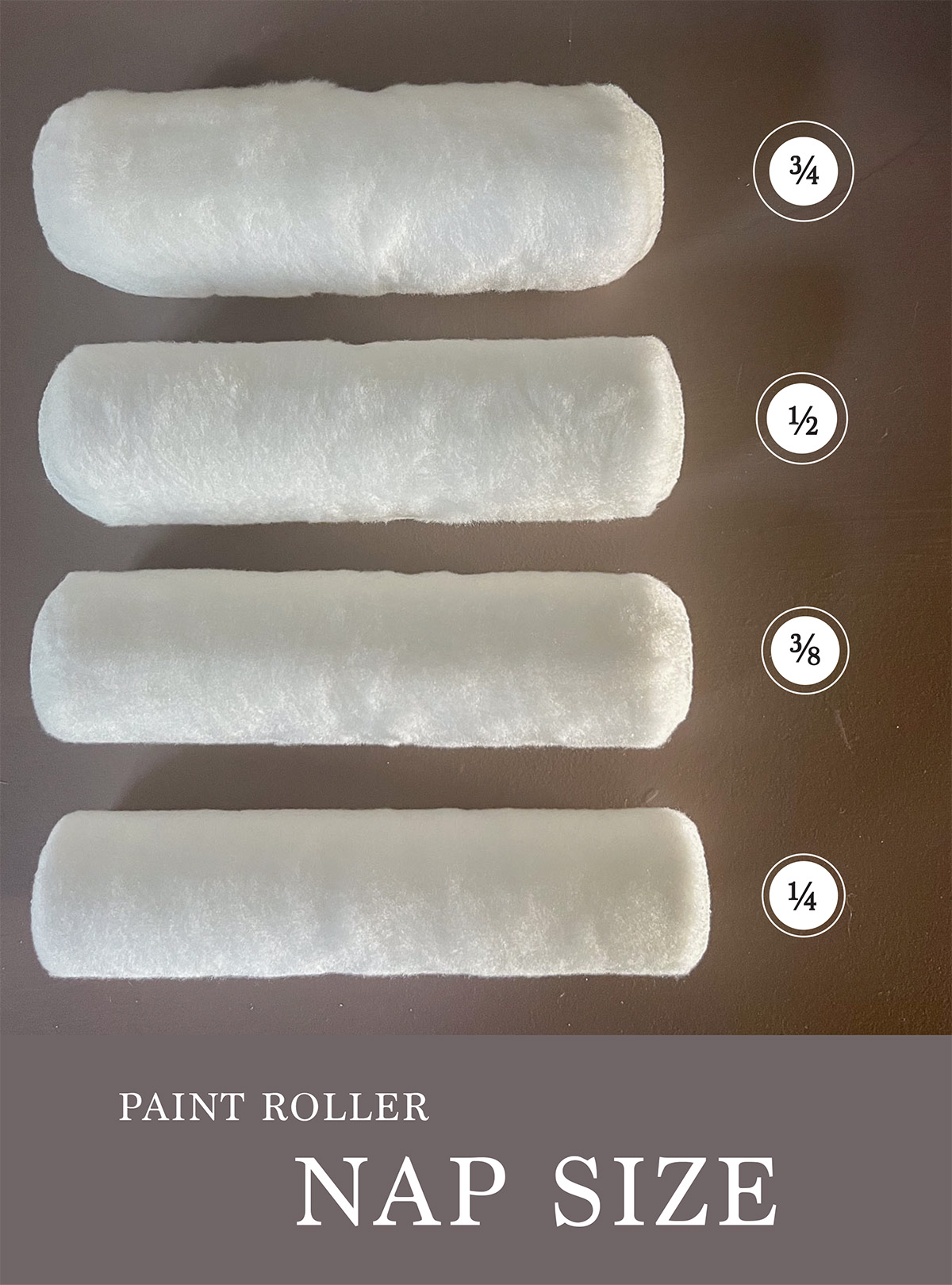
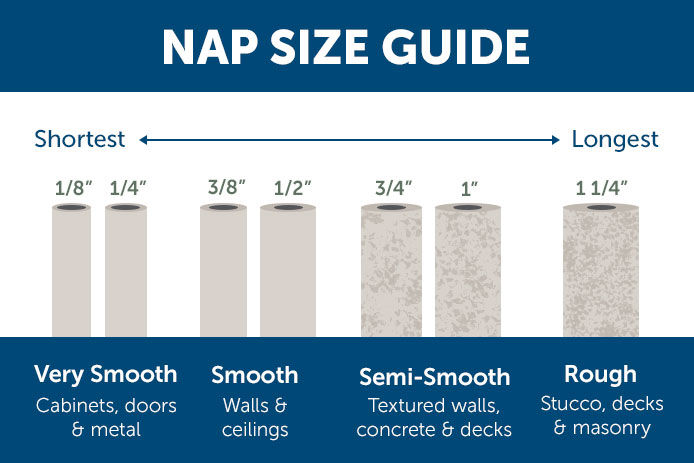
Nap is the fiber length on a roller cover. Short nap holds less paint and lays it down thin. Long nap holds more paint and hides more.
A 1/4 inch nap is very short. It gives a fine, smooth coat. A 3/8 inch nap is a bit longer. It carries more paint and moves faster.
Short nap lowers texture and helps with sheen control. Longer nap hides small flaws but can leave a light stipple. That is the key trade-off in the 1/4 vs 3/8 nap roller choice.
3/8 vs 1/4 Nap Roller– Coverage, Paint Load & Finish Compared
1/4 nap roller: Best for glass-smooth work
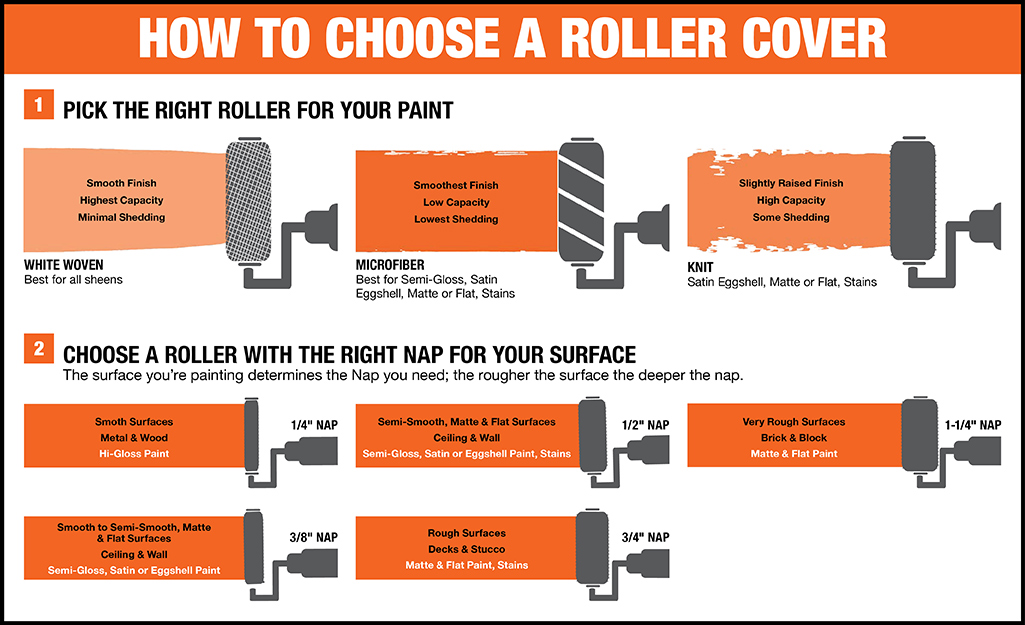
Use a 1/4 nap when the surface is flat and tight. Think doors, trim, cabinets, metal, and smooth drywall with high sheen paint.
Pros:
- Very smooth finish with low texture
- Crisp edges and fewer lap marks
- Less orange peel under bright light
Cons:
- Holds less paint, so slower on big areas
- Can skip on rough spots
- Demands better surface prep
Best paints and sheens:
- Oil or water-based enamels
- Satin, semi-gloss, and gloss
- Primers for cabinets or trim
Pro move: If you plan to back-brush or tip with a foam brush, a 1/4 nap lays a thin, even film to start. That is ideal for doors.
You will pick a 1/4 vs 3/8 nap roller when the top goal is a fine finish and you have a smooth base.
How Do I Prevent Streaks With a Nap Roller? Techniques for Smooth, Avoid Lap Marks and Uneven Paint
3/8 nap roller: Best for walls, ceilings, and speed
Use a 3/8 nap for most interior walls and ceilings. It balances speed, coverage, and a clean look on smooth to semi-smooth surfaces.
Pros:
- Holds more paint, so faster coverage
- Good hide for minor texture and patch work
- Forgiving for DIY users
Cons:
- Can leave light stipple if you push too hard
- More prone to spatter with thin paint
- Needs a wet edge to avoid flashing
Best paints and sheens:
- Flat, matte, eggshell, and satin
- Most interior acrylics and low-VOC paints
- Primers on new drywall
Practical tip: Load the roller well and roll in a tight W. Then level off with low pressure. That keeps texture even.
You will reach for a 1/4 vs 3/8 nap roller choice here when you want good speed on walls without rough texture.
1/4″ vs. 3/8″ Nap Roller: Which One Do You Need?
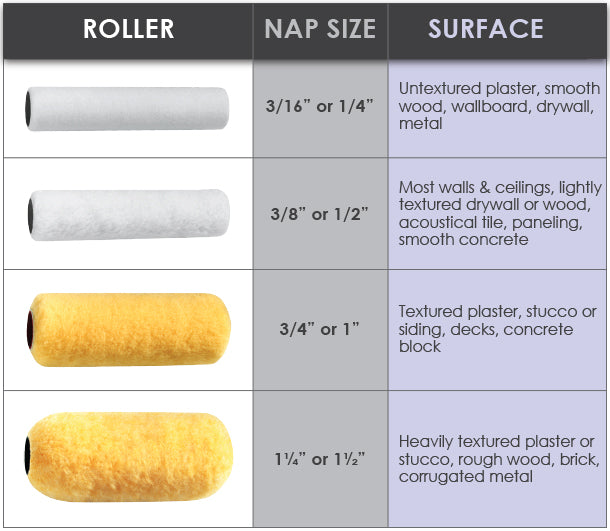
The “nap” of a roller refers to the thickness of the fibers. Choosing the wrong one results in either a “stippled” orange-peel mess or a patchy, thin coat that requires three extra passes.
The Quick Comparison
| Feature | 1/4″ Nap Roller | 3/8″ Nap Roller |
| Surface | Ultra-smooth (Cabinets, Metal, New Drywall) | Smooth to semi-smooth (Standard Walls, Ceilings) |
| Finish | Professional, spray-like finish | Standard “eggshell” texture |
| Paint Pickup | Low (requires more frequent dipping) | Medium (holds more paint for faster coverage) |
1/4 vs 3/8 nap roller: Side-by-side
Finish quality:
- 1/4 nap gives a very smooth coat with low stipple. Great for light glare and high sheen.
- 3/8 nap gives mild texture but hides tiny flaws. Great for eggshell walls.
Speed and coverage:
- 1/4 nap is slower. It holds less paint and needs more trips to the tray.
- 3/8 nap is faster. It holds more paint and covers more per load.
Best surfaces:
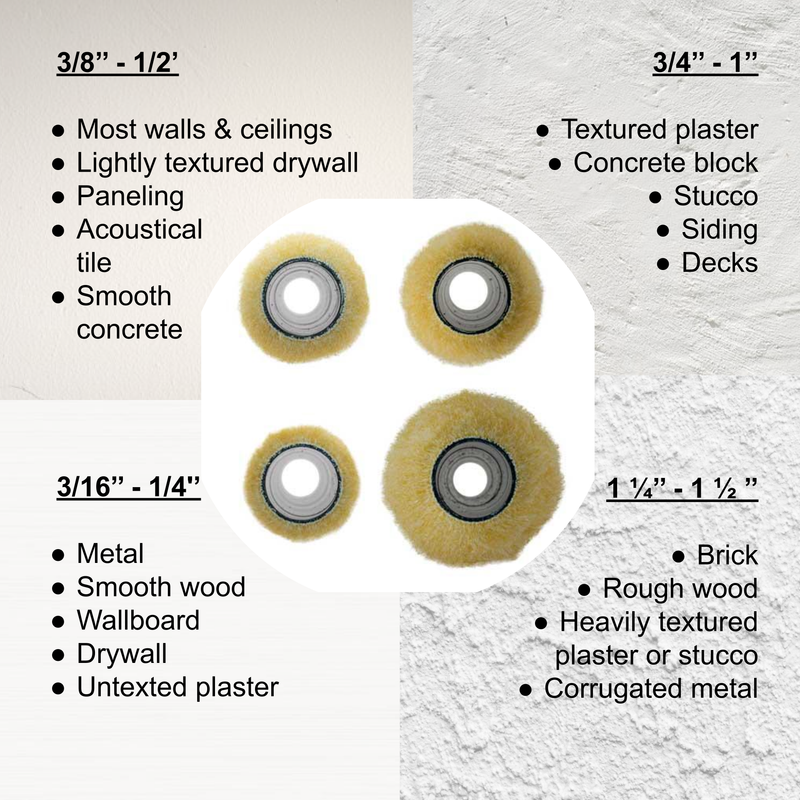
- 1/4 nap: doors, trim, cabinets, smooth metal, tight plaster.
- 3/8 nap: walls, ceilings, smooth to semi-smooth drywall.
Risk level:
- 1/4 nap can flash on patched spots if the prep is weak.
- 3/8 nap can show orange peel if you press too hard.
Paint match:
- 1/4 nap excels with enamels and semi-gloss.
- 3/8 nap shines with flat, matte, and eggshell.
People also ask:
Is 1/4 nap too thin for walls?
Not for small walls with fine drywall and good prep. But most walls roll faster and more even with 3/8 nap.
Will 3/8 nap leave texture on doors?
It can. On doors, 1/4 nap or a foam cover gives a smoother, cleaner finish.
Which nap hides patches better?
3/8 nap hides light mud feathering better than 1/4 nap, thanks to more film build.
In short, the 1/4 vs 3/8 nap roller choice is smooth finish versus speed and forgiveness. Pick based on sheen, surface, and timeline.
How to choose: A quick checklist
Ask these questions before you paint:
- What is the surface? For doors and trim, use 1/4. For walls and ceilings, use 3/8.
- What is the sheen? For semi-gloss or gloss, favor 1/4. For flat to satin, favor 3/8.
- How smooth is the base? For mirror-smooth, use 1/4. For light texture or patching, use 3/8.
- What is your skill level? For easy rolling, use 3/8. For detail work, use 1/4.
- What is the deadline? For speed, use 3/8. For fine work, use 1/4.
Two common paths:
- New drywall in eggshell: 3/8 nap wins.
- Prepped door with semi-gloss enamel: 1/4 nap wins.
If you still feel stuck on 1/4 vs 3/8 nap roller, test a 2×2 foot area with both. Check under bright light after 10 minutes.
Field notes from my jobs
Kitchen doors, high-gloss enamel:
I tried 3/8 nap first. It flashed on the panel edges and left light texture. I switched to 1/4 nap and back-brushed. The finish leveled like glass.
Rental unit walls, washable eggshell:
3/8 nap was a breeze. It covered minor patches and rolled fast. One extra leveling pass stopped the stipple.
Ceiling over old roller texture:
3/8 nap held enough paint to hide shadows. A 1/4 nap dragged on the highs. The 3/8 nap won on speed and uniform look.
These tests set my default for 1/4 vs 3/8 nap roller on smooth work and general walls.
Common mistakes and pro tips
Avoid these errors:
- Pressing too hard. It squeezes paint out and leaves heavy texture.
- Dry rolling. Always keep a wet edge.
- Skipping prep. Smooth results start with sand and dust control.
Pro tips:
- Pre-wet the cover with water for latex or mineral spirits for oil. Spin out extra.
- Use a quality frame with a stiff core. Cheap frames flex and cause ridges.
- Work top to bottom. Then feather off with light pressure.
If you switch between 1/4 vs 3/8 nap roller mid-job, blend the overlap area right away.
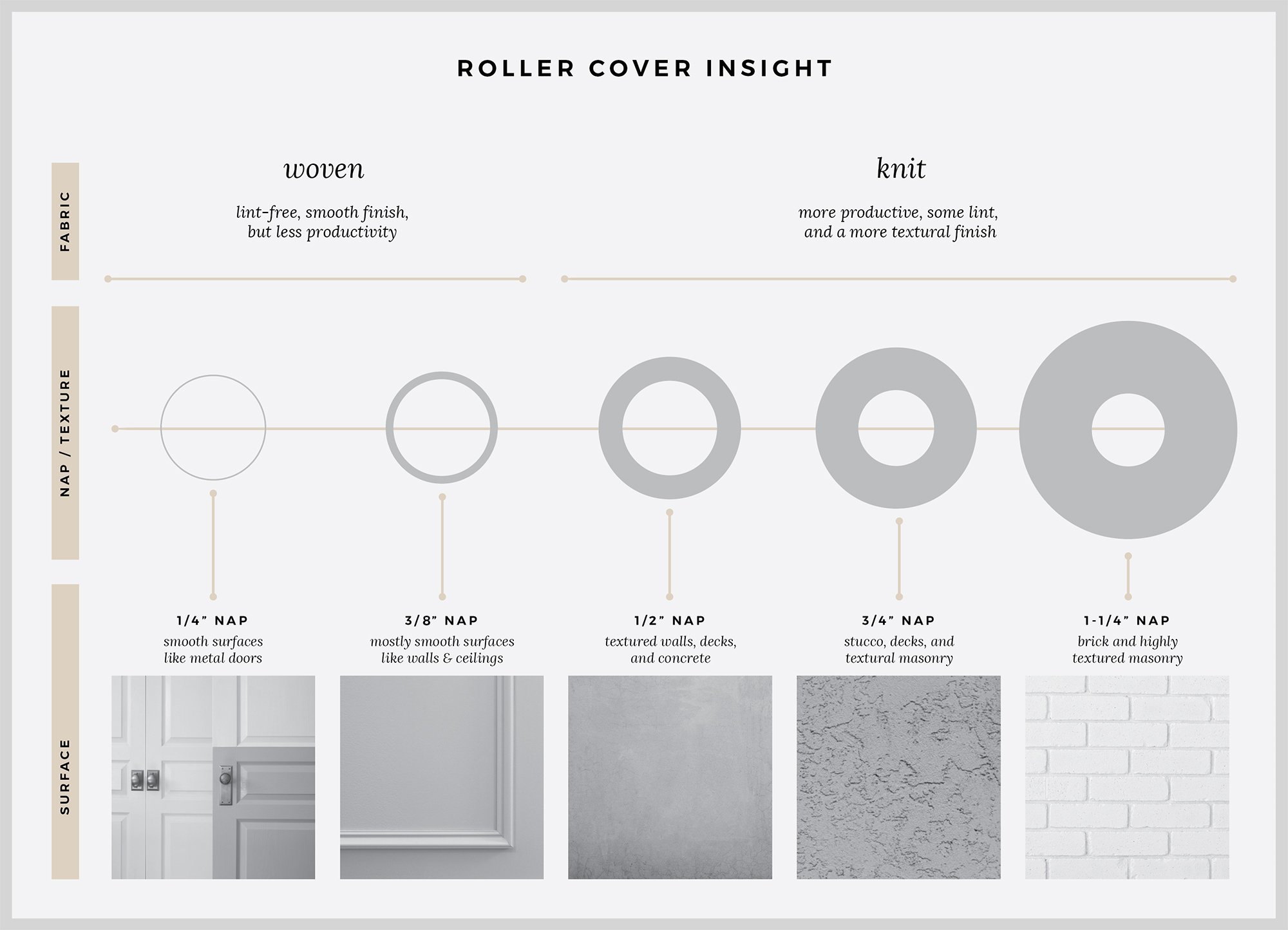
Material matters: Woven, knit, microfiber, and mohair
Match fiber to task:
- Woven microfiber, 1/4 nap: ultra-smooth doors and trim with minimal lint.
- Woven microfiber, 3/8 nap: clean walls with soft stipple and low spatter.
- Knit covers: load fast for primers, but watch for lint on gloss.
- Mohair or foam: fine work on cabinets and metal with thin coats.
Most paint makers suggest 1/4 nap for gloss and 3/8 nap for walls. That aligns with field results on the 1/4 vs 3/8 nap roller debate.
Cost, quality, and ROI
A good roller cover costs a bit more but saves time and paint. Cheap covers shed lint and leave marks you will see later.
Smart buys:
- Keep one 1/4 nap and one 3/8 nap on hand.
- Clean well and reuse. A top cover can last many rooms.
- Use a bucket with a grid for faster loading and less mess.
On a whole room, the right pick between 1/4 vs 3/8 nap roller can cut a coat or save an hour. That is real value.
Frequently Asked Questions of 1/4 vs 3/8 nap roller
Is 1/4 nap good for semi-gloss paint?
Yes. It lays a thin, smooth film with less texture, which helps high sheen level out. It also reduces lap marks under strong light.
Can I use 3/8 nap on doors if I sand well?
You can, but expect more stipple. If you must use 3/8, level off with light pressure and consider a fine final pass with a foam cover.
Which nap wastes less paint?
A 1/4 nap holds less paint, so waste is lower on small jobs. For larger walls, 3/8 nap is more efficient due to fewer trips and better coverage.
Does 3/8 nap hide wall patches better than 1/4?
Often yes. The extra film build softens minor patch edges. Still, prime patches first to prevent flashing.
What nap is best for ceilings?
Most ceilings roll best with 3/8 nap in flat paint. It holds enough paint to prevent dry spots and speeds up the job.
Will 1/4 nap reduce roller marks?
Yes. The shorter fibers leave a finer texture, which helps reduce visible roller lines, especially in semi-gloss and gloss.
Are there times to mix both naps on one project?
Yes. Use 3/8 nap on walls for speed, then switch to 1/4 nap for doors and trim for a smooth finish that matches the sheen.
Conclusion
Pick 1/4 nap for smooth, high-sheen work and 3/8 nap for most walls and ceilings. That one choice shapes speed, texture, and how pro your job looks. Test a small area, check under bright light, and let the surface and sheen guide you.
Ready to roll your next room? Use this guide, choose between the 1/4 vs 3/8 nap roller with confidence, and share your results or questions in the comments.