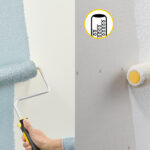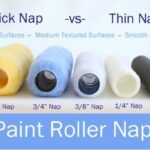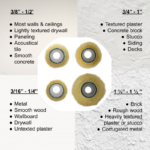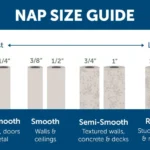
The difference between a 3/4-inch and a 3/8-inch nap roller is the thickness of the roller’s fibers, which affects how much paint it holds and how well it covers textured surfaces. A 3/8-inch nap is thinner and best for smooth surfaces like drywall or cabinets, providing a fine, even finish with minimal texture. A 3/4-inch nap is thicker and holds more paint, making it better for semi-rough or textured surfaces like stucco, brick, or lightly textured walls. Choose the nap based on surface texture — thinner for smooth surfaces and thicker for rougher ones — to achieve the best paint coverage and finish.
The Top Picks for Every Surface
Don’t ruin a great paint job with a cheap roller that sheds lint. Whether you’ve settled on a 3/4 vs 3/8 nap roller, these professional-grade options from Wooster and Purdy are the gold standard for a lint-free finish.
1. For Smooth Walls & Ceilings (3/8″ Nap)
Wooster Brush Super/Fab 3/8-Inch Nap This is the best 3/8 nap roller for standard DIY projects. It’s high-density, meaning it carries a lot of paint to the wall without dripping, and it leaves a buttery-smooth finish on drywall.
- Best for: Bedrooms, living rooms, and “eggshell” finishes.
2. For Textured Walls & Masonry (3/4″ Nap)
Purdy Colossus 3/4-Inch Nap Roller Cover When comparing 3/4 vs 3/8 nap rollers for rough surfaces, the Purdy Colossus is the undisputed king of the 3/4″ category. It’s designed to hold a massive amount of paint, allowing you to cover stucco or brick in half the time.
Best for: Cinder blocks, exterior brick, and heavy-textured plaster.
Best Paint Roller – Expert-Tested Rollers for Walls & Ceilings
Use a 3/8-inch nap for smooth walls; use a 3/4-inch nap for rough or textured surfaces.
If you’re comparing 3/4 vs 3/8 nap roller, you’re already on the right track. I’ve rolled thousands of square feet across homes and job sites, and nap length is the one small choice that makes a big difference. In this guide, I’ll break down when to use each, why it matters, how it affects finish and speed, and how to avoid common mistakes that cost time and money.
What “nap” means and why it controls your finish
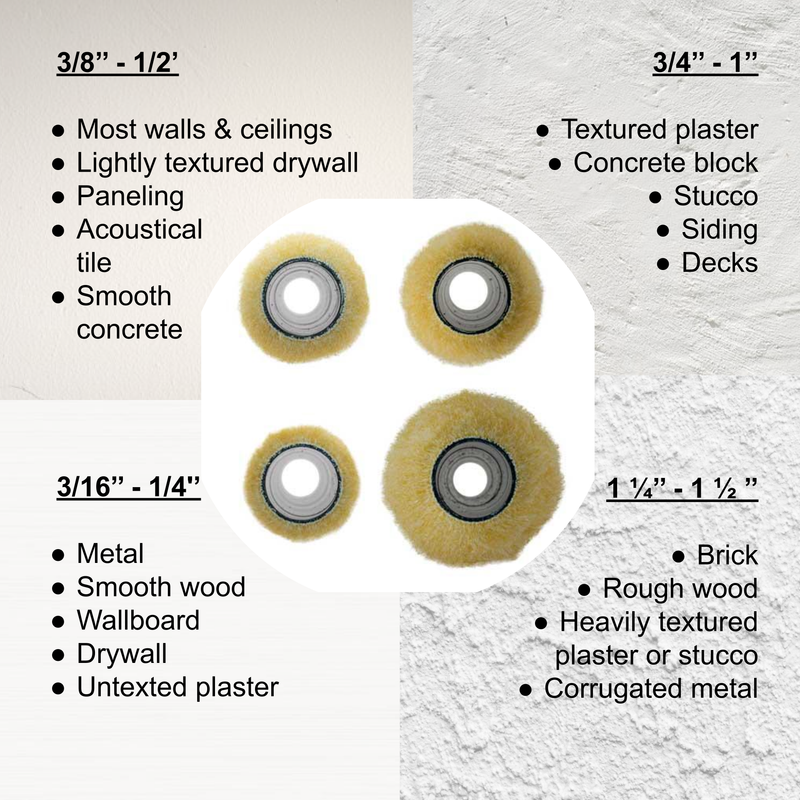
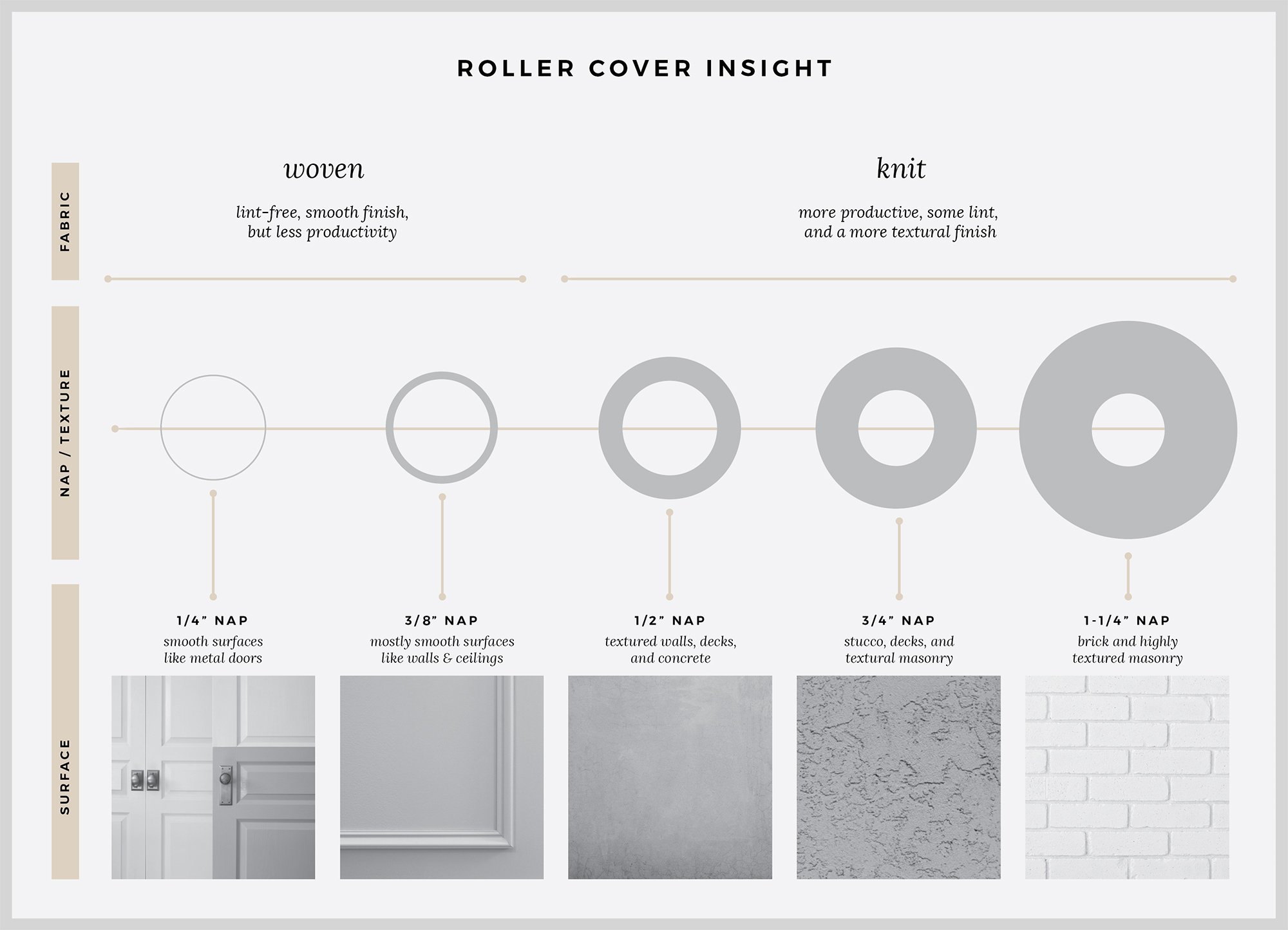
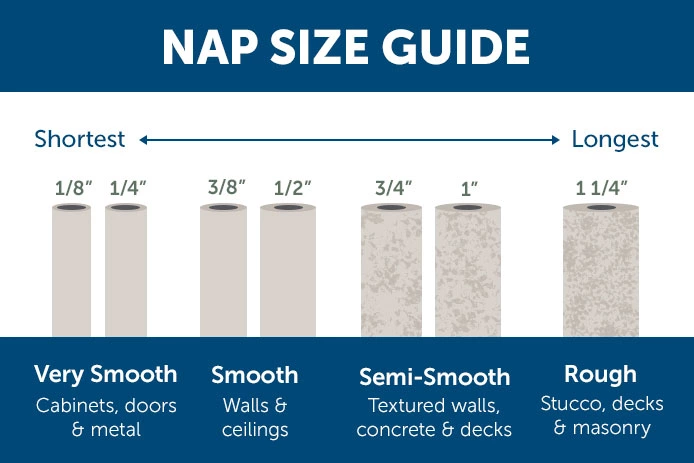
Nap is the length of the roller cover’s fibers. It’s the part that holds and releases paint. Longer nap reaches into rough surfaces and holds more paint. Shorter nap lays paint flatter with less texture.
Common nap lengths:
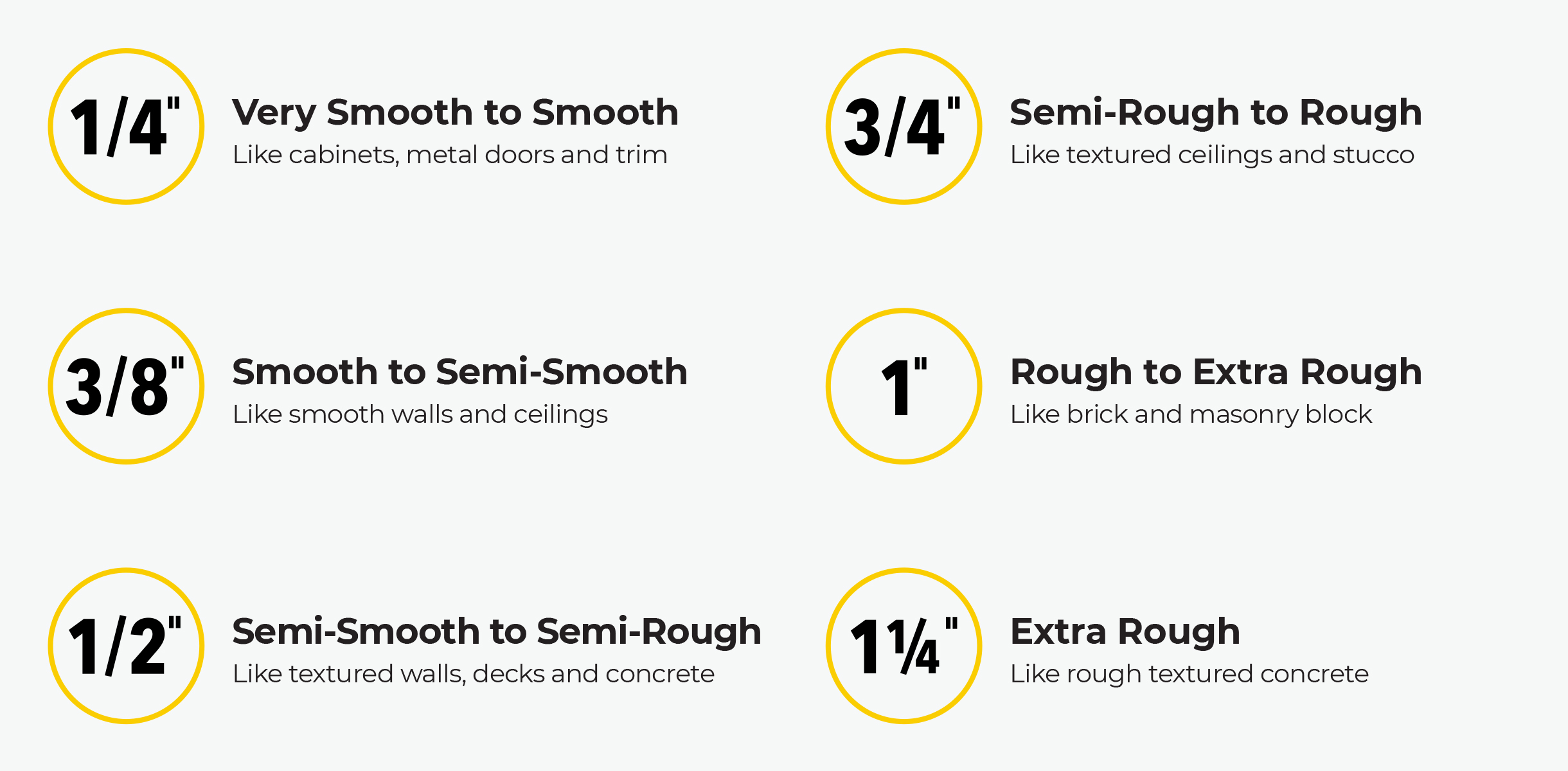
- 1/4 to 3/8 inch for smooth to semi-smooth walls, trim, and ceilings
- 1/2 inch for semi-rough surfaces
- 3/4 inch and above for rough exteriors, heavy texture, and masonry
Cover fabrics matter too:
- Woven covers minimize lint and give a smoother finish
- Knit covers hold more paint and lay it down faster
- Microfiber can split the difference with high pick-up and a fine finish
- Lambswool is fast and lush but can shed if low quality
Key takeaway: The 3/4 vs 3/8 nap roller debate is about texture, paint load, and control. The right call depends on your surface and your finish goal.
The Breakdown: 3/4 vs 3/8 Nap Roller
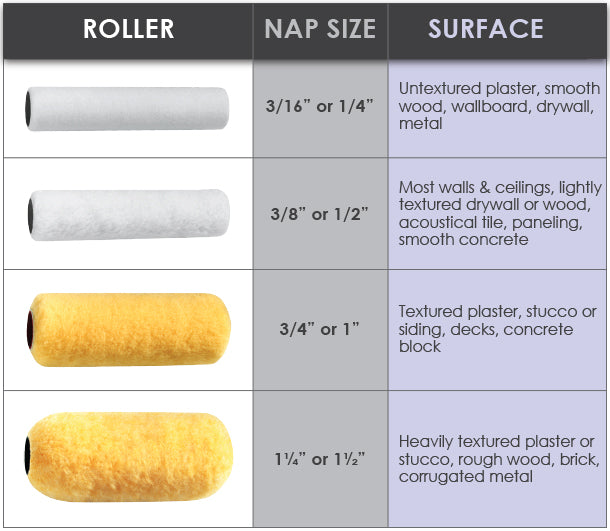
The rule of thumb is simple: The rougher the surface, the thicker the nap.
| Nap Size | Best Surface | Result |
| 3/8 Inch | Smooth: Drywall, wood, or ceilings. | A smooth, professional finish with minimal texture. |
| 3/4 Inch | Rough: Stucco, brick, masonry, or textured plaster. | Holds more paint to get into deep crevices and gaps. |
1/4 vs 3/8 Nap Roller– Smooth Finish vs Better Coverage
3/4 vs 3/8 nap roller: side-by-side comparison
Use this quick comparison to pick with confidence.
Where each shines:
- 3/8 nap: Smooth drywall, new plaster, primed doors, ceilings, and most interior walls
- 3/4 nap: Stucco, brick, block, rough siding, fences, popcorn or heavy textures
Finish and texture:
- 3/8 nap: Smoother finish, less stipple, better for eggshell, satin, semi-gloss
- 3/4 nap: More texture, fills voids on rough surfaces, not ideal for high-gloss
Speed and coverage:
- 3/8 nap: Steady pace, good control, less spatter
- 3/4 nap: Fast on rough areas, higher paint pick-up, more spatter risk
Control and clean-up:
- 3/8 nap: Cleaner edges, easier to wash, less paint waste
- 3/4 nap: Heavier, more pressure needed, longer clean-up
Paint types:
- 3/8 nap: Standard latex wall paints and primers
- 3/4 nap: Masonry paints, elastomerics, thick primers on textured or porous surfaces
My field rule: If the wall is smooth or close to it, I reach for 3/8. If I can feel bumps or see deep pores, I switch to 3/4.
Quick answers to common searches
- Is 3/4 nap too thick for walls? Yes, for smooth walls it adds extra texture and can look blotchy.
- Can I use 3/8 nap outside? Yes, if the surface is smooth siding; not great for rough stucco.
- What nap for exterior stucco? Go 3/4 nap or even 1 inch for deep textures.
3/8 vs 1/4 Nap Roller– Coverage, Paint Load & Finish Compared
Match nap to surface type
Smooth drywall and ceilings:
- Choose 3/8 nap for a clean, even finish
- Ideal for fresh drywall, level 4 or 5, and primed surfaces
- Helps avoid orange peel on satin and semi-gloss
Light texture or patched walls:
- 3/8 nap still works well
- If patches are rough, step up to 1/2 nap to blend faster
- Back-roll lightly to even out sheen
Rough surfaces and exteriors:
- 3/4 nap is best for brick, block, stucco, rough cedar, and textured plaster
- It reaches into gaps and covers faster
- Expect a bit more spatter; use a shield and move slower
Personal note: I once tried 3/8 nap on old block to “keep it neat.” I burned twice the time and still had holidays. Switched to 3/4, and the wall covered in one pass.
Paint type and finish goals
Finish sheen:
- Flat and eggshell are forgiving with 3/8 nap on smooth walls
- Satin and semi-gloss show texture; 3/8 nap keeps stipple low
- High-gloss needs sprayer or very short nap plus tipping for trim
Paint thickness:
- Standard latex flows best with 3/8 nap for interiors
- Thick masonry or elastomeric coatings pair well with 3/4 nap
- Primers on rough surfaces lay faster with 3/4 nap
Special cases:
- Ceiling paint on popcorn or knockdown needs 3/4 nap
- Cabinetry and doors: avoid 3/4; use 1/4–3/16 nap microfiber or spray
How Do I Prevent Streaks With a Nap Roller? Techniques for Smooth, Avoid Lap Marks and Uneven Paint
Coverage, speed, spatter, and texture
Coverage and speed:
- 3/4 nap holds more paint and covers rough surfaces faster
- 3/8 nap shines on smooth walls with cleaner, even coats
Spatter control:
- 3/8 nap spatter is low when you roll slow and steady
- 3/4 nap can sling drops if you roll fast or overfill; slow down near edges
Texture and stipple:
- 3/8 nap gives a fine, uniform stipple on drywall
- 3/4 nap leaves a heavier texture that looks right on rough materials
Edge control:
- 3/8 nap lets you cut tight to trim and ceilings with a light touch
- 3/4 nap needs more space; keep a damp rag and shield handy
Pro tip: Pre-dampen the cover with water for latex, then spin it out. It helps flow and cuts spatter for both 3/8 and 3/4.
Cost, waste, and cleanup
Cost:
- 3/8 nap covers are common and often cheaper
- 3/4 nap may cost more, but it saves time on rough jobs
Waste:
- Longer nap holds more paint, so plan for a deeper tray well
- Wrap covers in plastic between coats to avoid dry-out and waste
Cleanup:
- 3/8 nap rinses faster and uses less water
- 3/4 nap takes longer; use a roller spinner for faster cleaning
When to toss:
- If fibers mat down or shed, replace the cover
- Keep separate covers for primers, elastomerics, and topcoats
Pro tips from the field
Mistakes to avoid:
- Using 3/4 nap on smooth walls adds texture you did not want
- Using 3/8 nap on rough surfaces leaves holidays and wastes time
Simple wins:
- Always load the roller fully, then roll a “W” and fill in
- Keep even pressure; pressing hard makes lines and splatter
- Back-roll within 5–10 minutes to level out the coat
My go-to combos:
- Interior new drywall: 3/8 nap woven microfiber, eggshell paint
- Exterior stucco: 3/4 nap knit, high-build elastomeric
- Old textured ceiling touch-up: 3/4 nap with ceiling flat, two light coats
How to choose between 3/4 and 3/8 nap in 30 seconds
Use this fast checklist:
- Run your hand over the surface. Smooth equals 3/8 nap. Rough equals 3/4 nap.
- Think finish. Want smooth and clean? Pick 3/8 nap. Need to fill deep pores? Pick 3/4 nap.
- Consider paint. Thin wall paint inside? 3/8 nap. Thick exterior or masonry paint? 3/4 nap.
- Time and mess. Need control and low spatter? 3/8 nap. Need speed on rough stuff? 3/4 nap.
If you’re still unsure, test a 2-by-2 foot area with both. The right choice will be obvious in minutes.

Related tools and smart alternatives
Balanced middle ground:
- 1/2-inch nap is the compromise for semi-rough walls and light textures
- Microfiber 3/8 nap can boost pick-up but keep a smooth finish
Cover construction:
- Woven covers reduce lint and orange peel on smooth walls
- Knit covers load fast and work better on rough surfaces
Beyond rollers:
- A sprayer speeds big jobs; still back-roll with 3/8 or 3/4 to even the film
- Use an extension pole for pressure control and safety on ceilings
Small details, big gains:
- Choose a quality frame with bearings to reduce chatter
- Keep a damp brush for quick edge touch-ups as you roll
Frequently Asked Questions of 3/4 vs 3/8 nap roller
What is the main difference between 3/4 vs 3/8 nap roller?
3/8 nap is for smooth surfaces and a finer finish. 3/4 nap is for rough surfaces and faster coverage with more texture.
Can I use a 3/4 nap roller on interior walls?
You can, but it will add texture on smooth drywall. Most interior walls look better with 3/8 nap.
Will a 3/8 nap roller work on stucco or brick?
It will struggle to reach into the deep texture. A 3/4 nap roller is the better match for stucco and brick.
Which nap is best to reduce roller marks?
Use 3/8 nap on smooth walls, roll in small sections, and back-roll lightly. Keep a wet edge and avoid heavy pressure.
Does nap length affect paint waste?
Yes. Longer nap holds more paint, so you may waste more if you stop often. Wrap the roller between coats to cut waste.
Is a 1/2-inch nap a good compromise?
Yes. 1/2-inch sits between 3/4 vs 3/8 nap roller and works well on semi-rough surfaces or light textures.
What nap should I use for ceilings?
Smooth ceilings do well with 3/8 nap. Popcorn or heavy textures need 3/4 nap for full coverage.
Conclusion
When you weigh 3/4 vs 3/8 nap roller, start with the surface, then match your finish goal. Use 3/8 nap for smooth walls, ceilings, and clean results. Use 3/4 nap for rough exteriors, deep textures, and fast coverage. If you remember that simple split, you’ll save hours and get a better finish.
Pick your cover, test a small area, and commit. Share your project questions or wins in the comments, and subscribe for more hands-on paint guides and pro tips.