
Choosing between a 3/8-inch or 1/2-inch nap roller depends on the texture of the surface you’re painting. A 3/8-inch nap is best for smooth surfaces like walls, cabinets, or doors, providing even coverage without leaving roller marks. A 1/2-inch nap is better for lightly textured or semi-rough surfaces, such as plaster or lightly textured drywall, as it holds more paint and reaches into small crevices. Selecting the right nap ensures smooth application and consistent finish.
Choosing Your Tool: 3/8 vs. 1/2 Nap Roller
The “nap” is simply the thickness of the roller’s fibers. Picking the wrong one can lead to an “orange peel” texture on smooth walls or patchy coverage on rough ones.
The Quick Comparison
Feature 3/8″ Nap Roller 1/2″ Nap Roller Best For Smooth drywall & ceilings Semi-smooth to lightly textured walls Finish Very smooth, low stipple Moderate texture, holds more paint Effort Requires more frequent dipping Covers more area per “load” Our Pick Purdy White Dove 3/8″ Wooster Pro/Doo-Z 1/2″ Which one do you actually need?
- Use a 3/8″ Nap if: You are painting standard interior walls and want a “professional” look with minimal texture. This is the industry standard for bedrooms and living rooms.
- Use a 1/2″ Nap if: Your walls have some “character” (light texture, old layers of paint, or paneling). Because it’s thicker, it holds more paint and reaches into small divots better than a 3/8″ roller.
Choose 3/8 nap for smooth walls; pick 1/2 nap for light texture and faster coverage.
If you want a clean, pro look, the right roller nap matters more than you think. In this guide, I break down the 3/8 or 1/2 nap roller choice with clear rules, real job-site tips, and simple tests you can use today. By the end, you will know when to grab a 3/8 or 1/2 nap roller, how to avoid orange peel, and how to get a smooth, even coat that lasts.
What Does Nap Size Mean?
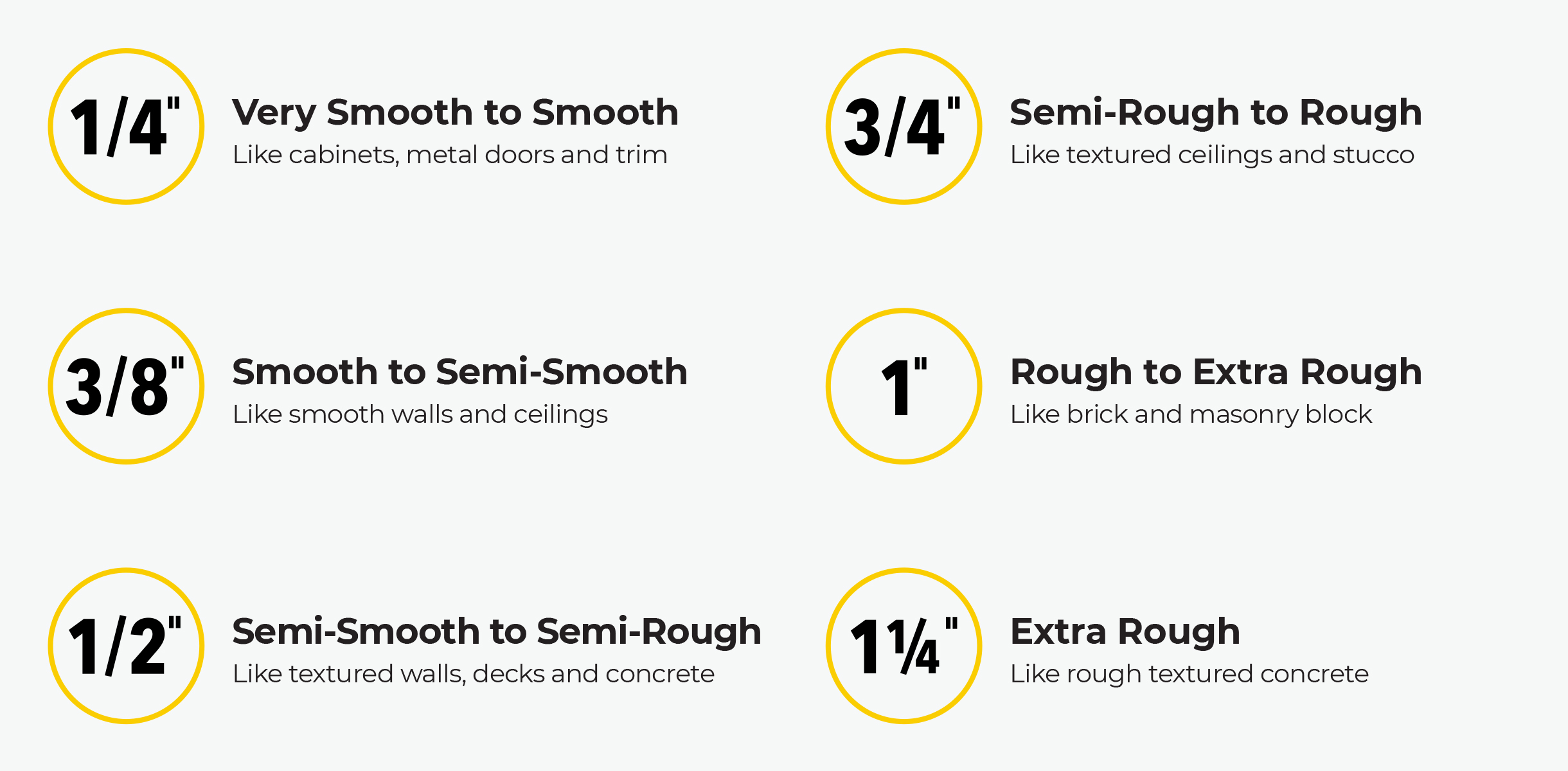
Nap is the length of the fibers on a roller cover. It is measured in inches. A 3/8 nap is shorter than a 1/2 nap. Shorter nap means a thinner coat and a smoother look. Longer nap holds more paint and can reach into small pits and bumps.
Here is the key idea. The smoother the wall, the shorter the nap. The rougher the wall, the longer the nap. That is why people ask about a 3/8 or 1/2 nap roller so often. Both are “middle of the road,” but they act very different on the wall.
Paint makers and trade groups note that most interior walls are “smooth to light texture.” That is why a 3/8 or 1/2 nap roller is the most used size on home jobs. You can get good flow, fast work, and a clean finish with the right one.

Thick Vs Thin Roller Nap– Expert Tips for Smooth, Even Paint Coverage
3/8 vs 1/2 Nap: Side‑by‑Side
Think of the 3/8 or 1/2 nap roller like two bikes. One is nimble. One is strong. Both get you there, but the ride feels different.
- 3/8 nap roller
- Best for smooth drywall, primed trim, and flat to eggshell paint.
- Leaves a fine texture and less orange peel.
- Holds less paint, so more trips to the tray, but more control.
- 1/2 nap roller
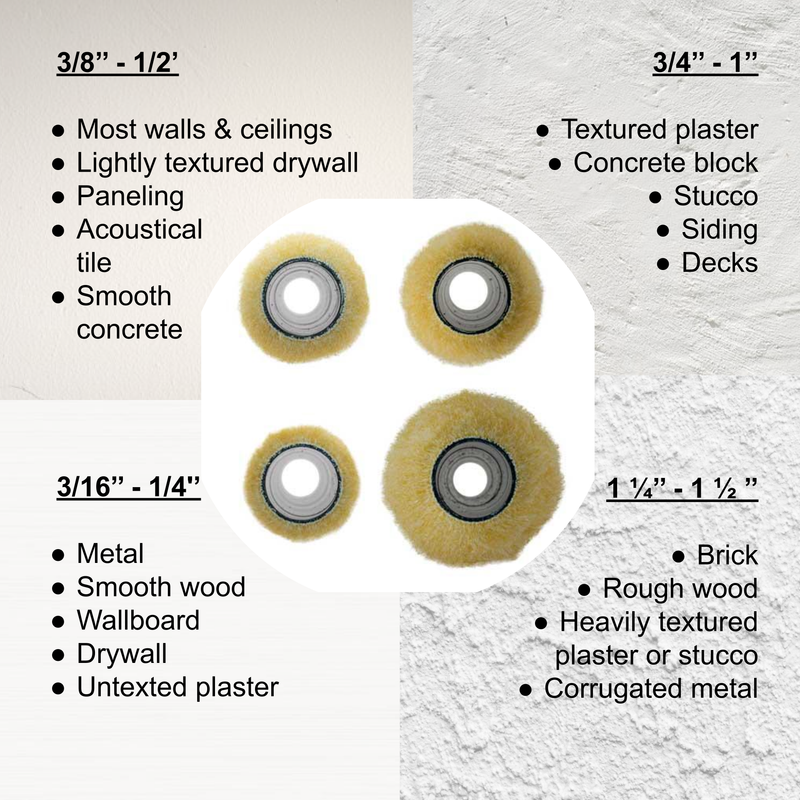
- Best for light texture, orange peel walls, light stucco, or slightly rough plaster.
- Holds more paint, covers faster, and hides tiny flaws.
- Can leave a slight stipple if you press hard or let paint get tacky.
On brand-new drywall and a quality acrylic paint, I reach for a 3/8 or 1/2 nap roller based on surface feel. If the wall feels like a sheet of paper, I go 3/8. If I can feel small grit or a spray texture, I go 1/2.
How to Choose: Surface, Paint, and Sheen
The right 3/8 or 1/2 nap roller choice comes down to three things: surface, paint type, and sheen.
- By surface
- Smooth drywall or skim coat: 3/8 nap
- Light orange peel texture: 1/2 nap
- Light stucco, acoustic ceiling, rough plaster: 1/2 nap
- Paneling with grooves: 1/2 nap can help reach edges
- By paint type
- Standard interior acrylic or latex: either nap works
- High-solids wall paint: 1/2 nap for load and spread
- Low-VOC thick paints: 1/2 nap often levels better
- Oil-based coatings: 3/8 nap for finer layoff on smooth parts
- By sheen
- Flat and matte: 1/2 nap for fast, even coverage
– Eggshell and satin: 3/8 nap on smooth walls for clean light bounce - Semi-gloss and gloss: 3/8 nap to reduce texture and roller marks
- Flat and matte: 1/2 nap for fast, even coverage
Pro tip I use on bids: rub your hand over the wall. If it snags a bit or feels sandy, the 3/8 nap may skip over tiny lows. The 1/2 nap will reach them. If it feels very smooth, the 1/2 nap can print more texture than you want.
What is considered a low nap paint roller?

Fabric Types That Boost Results
Nap size is only half the story. The roller fabric changes the look and speed too. I match fabric to the 3/8 or 1/2 nap roller choice for best results.
- Microfiber
- Great for smooth walls with 3/8 nap.
- Lays down thin coats with low lint and few tracks.
- Handy for eggshell and satin.
- Woven polyester
- Good all-around for 3/8 or 1/2 nap.
- Less splatter than knit.
- Durable and easy to clean.
- Knit polyester
- Holds more paint. Good for 1/2 nap on light texture.
- Can shed if cheap. Buy a pro-grade sleeve.
- Wool or mohair blends
- High paint load. Smooth layoff on fine work.
- Often used for doors and trim with shorter nap (not 1/2).
If you fight lint on the wall, rinse and spin the cover before use. I use painter’s tape to lift loose fibers from a new sleeve. It helps with both a 3/8 or 1/2 nap roller.
Foam Roller Vs Nap Roller- Disastrous Mistakes That Ruin Your Paint

Pro Techniques for a Smooth Finish
You can get a near-spray look with a 3/8 or 1/2 nap roller if you use the right moves. These are the steps I use on client jobs.
- Box your paint. Mix cans into a bucket to even color and sheen.
- Load the roller well. Do not just kiss the tray. Work it into the fibers.
- Use the “N then W” pattern. Roll a loose N, then fill with overlapping W strokes.
- Keep a wet edge. Work one wall at a time. Do not stop in the middle.
- Back-roll light. With near-empty roller, make long, light strokes to level.
- Watch room temp. Hot, dry rooms speed tack time. Mist the air or use extender if needed.
- Roll from dry to wet. This helps blend each pass and avoid lap marks.
If I see orange peel start to form with a 1/2 nap, I ease my pressure and speed up. If I see thin spots with a 3/8 nap, I reload more often and shorten the stroke.
Common Mistakes and How to Avoid Them
I have made all the classic errors so you don’t have to. Here are the big ones with a 3/8 or 1/2 nap roller.
- Using 1/2 nap on glass-smooth walls with gloss
- You will see texture under raking light. Switch to 3/8 nap.
- Using 3/8 nap on light texture
- You will miss tiny lows and need extra coats. Use 1/2 nap.
- Pressing too hard
- This squeezes out paint and leaves tracks. Let the nap do the work.
- Dry rolling over tacky paint
- This pulls and pills the film. Keep a wet edge and move with purpose.
- Cheap sleeves
- Lint and streaks cost you time. Buy pro-grade covers and clean before first use.
A simple rule saves me on fast jobs. When in doubt on a mixed wall, start with a 3/8 or 1/2 nap roller in microfiber. Do a test patch near a light. Adjust after you see the layoff.
Cost, Coverage, and Time: What to Expect
The 3/8 or 1/2 nap roller also changes your time and coverage. Here is what I see on average with quality acrylic wall paint.
- Coverage
- 3/8 nap: about 325–400 sq ft per gallon on smooth walls.
- 1/2 nap: about 300–375 sq ft per gallon on light texture.
- Real rates vary with porosity, color, and skill.
- Speed
- 1/2 nap often wins on speed due to higher load.
- 3/8 nap can match speed on very smooth walls with fewer trips if you work in zones.
- Splatter
- 3/8 nap tends to splatter less.
- 1/2 nap splatter rises with thick paint and high speed. Use a slow, even roll.
A study from trade training programs notes that nap choice shifts labor time more than material cost. That tracks with my books. Labor is the big cost lever. The right nap saves passes, fixes, and callbacks.

Real-World Scenarios: What I Use and Why
These are real picks from recent jobs. They show how I pick a 3/8 or 1/2 nap roller fast.
- New-build drywall, two coats eggshell
- 3/8 inch microfiber on a 9-inch frame.
- Reason: smooth walls, client wants soft sheen and clean light lines.
- 1990s home with orange peel texture, flat ceiling paint
- 1/2 inch woven cover on a 14-inch frame.
- Reason: light texture and large spans. Need reach and speed.
- Rental refresh, walls with small dents and patch spots
- 1/2 inch knit cover for first coat, 3/8 inch for second.
- Reason: first coat fills minor lows. Second coat refines look.
- Accent wall, deep color, satin finish
- Start with 1/2 inch to lay base. Finish with 3/8 inch to smooth.
- Reason: deep tints show marks. The two-nap plan hides them.
I have tested both sizes on the same wall more times than I can count. In many homes, the sweet spot is the 3/8 or 1/2 nap roller used in sequence: build with 1/2, refine with 3/8.

Simple Tests to Pick the Right Nap Today
If you are still not sure, run one quick test. It takes five minutes and saves hours.
- Tape test
- Stick blue tape to the wall and peel. If grit lifts, surface is rough. Go 1/2 nap.
- Light rake test
- Shine a flashlight at an angle. If you see many small bumps, use 1/2 nap. If it looks like glass, use 3/8 nap.
- Patch test
- Roll a 2×2 foot square with 3/8 nap. Let it set for five minutes. If you see skips, switch to 1/2 nap.
This small check is how I avoid the “Why do I see tracks?” call after the job. It works for any 3/8 or 1/2 nap roller choice.
Cleaning, Storage, and Reuse
A clean roller acts like new for the next room. I reuse quality covers many times. Here is my quick plan.
- Wipe excess paint back into the tray.
- Rinse with warm water for latex. Use the right cleaner for oil-based.
- Spin or shake out water. I use a roller spinner over a bucket.
- Comb the nap with my hand. Set to dry on end, not flat.
- Store in a zip bag with air pressed out. Label nap size and last paint type.
Do not leave a damp cover in a hot car. It can mat down and shed. The 3/8 or 1/2 nap roller will not lay paint right if the fibers are bent.
Safety and Setup Tips
A tidy setup saves your back and your floors.
- Use a quality frame with a snug cage. Loose frames cause chatter.
- Use an extension pole. Your strokes will be longer and more even.
- Protect floors with drop cloths. 3/8 nap splatter is low, but not zero.
- Vent the room and wear a mask if sanding or using oil-based products.
These small steps build trust with clients. They also keep the work clean and fast when you switch between a 3/8 or 1/2 nap roller.
Troubleshooting: Fixing Roller Marks, Lines, and Orange Peel
Even pros see these issues. Here is how I fix them on the fly.
- Roller lines or lap marks
- Cause: Dry edge or heavy pressure. Fix: Work smaller areas, keep a wet edge, back-roll light.
- Orange peel texture
- Cause: Thick paint, hot room, long nap. Fix: Add extender, reduce pressure, switch to 3/8 nap on the second coat.
- Sheen mismatch
- Cause: Uneven film thickness. Fix: Recoat the whole panel with steady load and overlap.
- Fuzz or lint on wall
- Cause: Cheap cover or no prep. Fix: De-lint the cover with tape; switch to woven or microfiber.
If a wall already looks rough from a 1/2 nap, I let it dry and topcoat with a 3/8 nap. That blend saves many jobs and keeps the 3/8 or 1/2 nap roller debate from stalling your project.
Buying Guide: What to Look For
Not all roller covers are equal. Here is my short list when I buy a 3/8 or 1/2 nap roller.
- Dense core that does not flex or warp
- Heat-fused fabric to reduce shedding
- Clear label for nap, fabric, and paint type
- Pro-grade lines for ceilings and large walls
- Extra sleeves so you can switch mid-job if needed
I keep both sizes in my kit. Then the choice is fast on site. If a client asks why I switch, I explain the 3/8 or 1/2 nap roller is a tool, not a rule. The right tool changes with the wall.
Frequently Asked Questions of 3/8 or 1/2 nap roller
Which is better for smooth walls: 3/8 or 1/2 nap roller?
Use a 3/8 nap roller for smooth drywall. It lays a finer coat and hides roller marks better under light.
Can I use a 1/2 nap on all walls?
You can, but it may add texture on very smooth walls. Reserve 1/2 nap for light texture, ceilings, or when you need speed.
Does a 1/2 nap roller waste more paint?
It holds more paint, but that does not mean waste. It can cut time and coats on textured surfaces, which evens out cost.
What nap should I use with eggshell paint?
On smooth walls, 3/8 nap gives a clean eggshell finish. On lightly textured walls, 1/2 nap can help even coverage.
How do I stop roller lines with a 1/2 nap?
Keep a wet edge, use less pressure, and back-roll gently. If lines persist, switch to a 3/8 nap for the finish coat.
Can I mix naps on the same job?
Yes. Many pros build with 1/2 nap and finish with 3/8 nap. It blends speed with a smoother final look.
Conclusion
The 3/8 or 1/2 nap roller choice is simple once you match nap to surface, paint, and sheen. Use 3/8 for smooth walls and fine finishes. Use 1/2 for light texture, faster coverage, and better hide on imperfect walls. If you are unsure, test a small patch, watch the light, and adjust. That is how pros lock in a clean, even coat.
Ready to paint with confidence? Pick your 3/8 or 1/2 nap roller, try the test steps above, and share your results. Subscribe for more pro tips, or drop a question in the comments so we can solve your next paint challenge together.
Related posts:
 Thick Vs Thin Roller Nap– Expert Tips for Smooth, Even Paint Coverage
 What Is a Roller Nap? – Choosing the Perfect Roller for Walls and Ceilingswhat is a roller nap?
 Can You Paint Over Stucco: Expert Tips for a Flawless Finish
 What Nap Roller for Textured Ceiling?– ¾″ vs 1″ Nap for Rough & Knockdown Textures