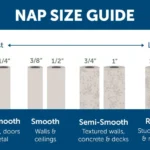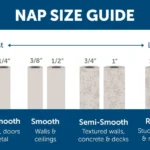
A 3/8-inch nap roller holds more paint and is best for slightly textured or semi-smooth surfaces, providing better coverage with fewer passes. A 1/4-inch nap roller holds less paint and is ideal for very smooth surfaces like primed drywall or cabinets, delivering a finer, more even finish. Choosing between them depends on the texture of the surface you’re painting — use 3/8″ for light texture and 1/4″ for smooth walls — to ensure proper paint distribution and a professional result.
The Pro’s Choice: Essential Roller Gear
If you are debating 3/8 vs 1/4 nap rollers, the quality of the fabric matters as much as the thickness. Cheap rollers shed lint into your wet paint; these professional-grade options do not.
Product Why it’s the Best Key Feature Wooster Pro/Doo-Z 3/8″ Nap The Best All-Rounder. Perfect for 90% of household walls. Shed-resistant; works with all paints. Purdy White Dove 1/4″ Nap The Best for Smooth Finishes. Use this for cabinets or doors. High-density lint-free microfiber. Wooster Sherlock Frame The “Must-Have” Tool. Prevents the roller from slipping off. Quick-release spring; smooth rotation.
Best Paint Roller – Expert-Tested Rollers for Walls & Ceilings
If you have asked yourself which cover to grab, you are not alone. I have tested both for years on real jobs. This guide breaks down 3/8 vs 1/4 nap roller with clear tips, real examples, and simple rules you can use today. By the end, you will know which nap gives you the finish you want and the speed you need.
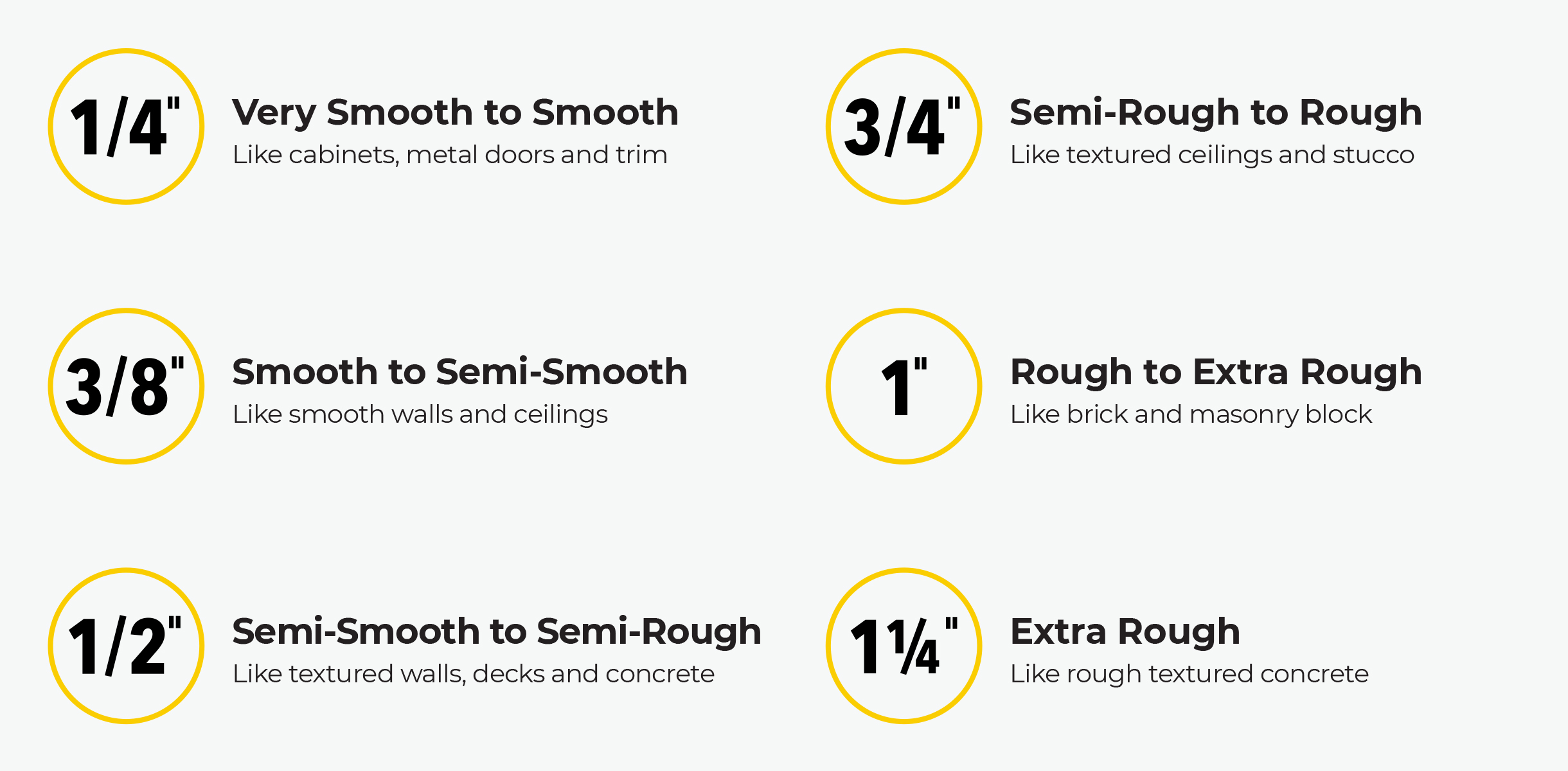
What “nap” means and why it matters
Nap is the thickness of the roller cover fibers. It controls how much paint the roller holds, how smooth the finish looks, and how fast you can work.
Short nap lays down a thin, smooth coat. Long nap holds more paint and hides more flaws, but adds texture. In short, nap is the steering wheel for finish, speed, and control.
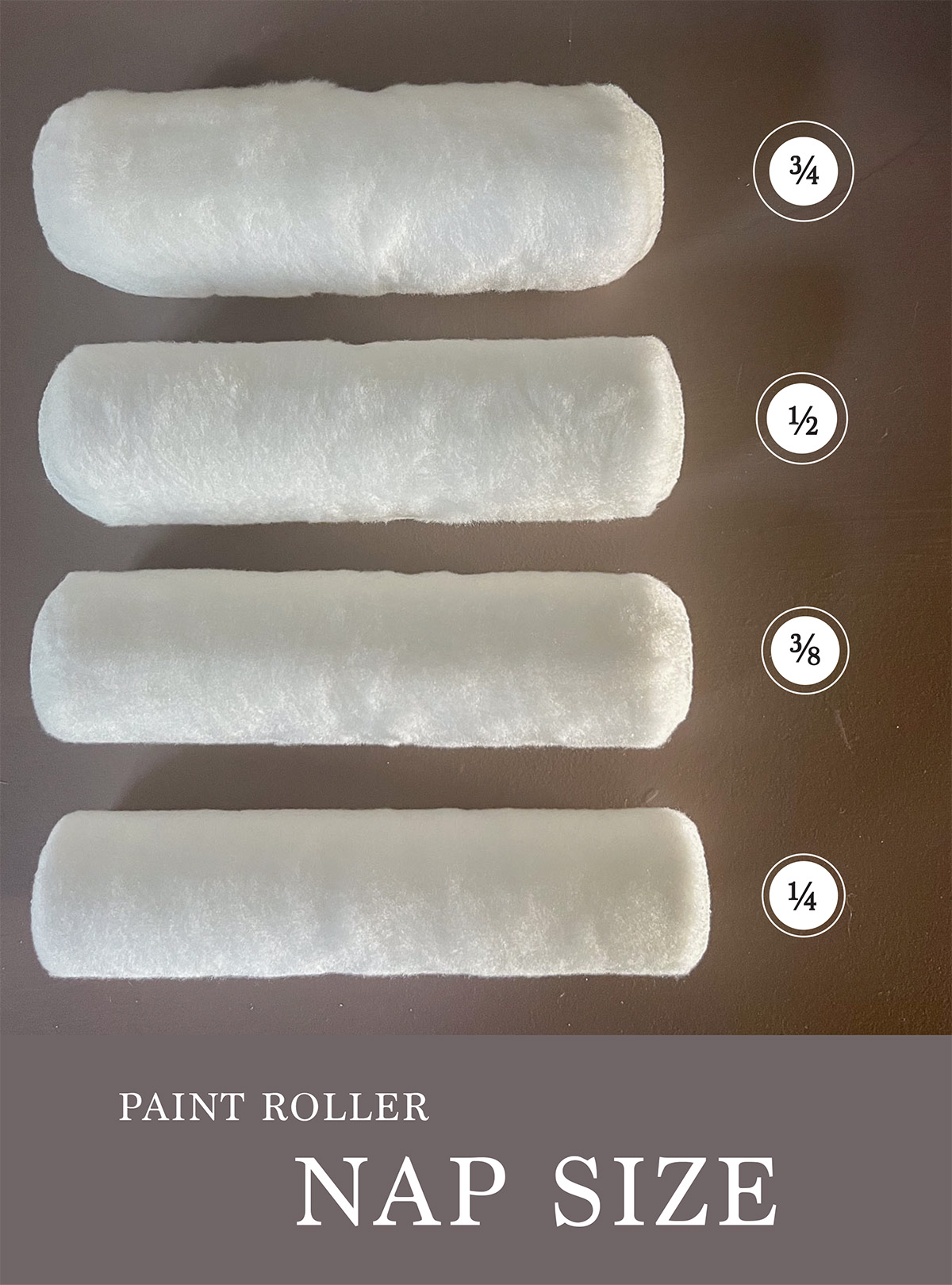
3/8 nap roller: When and why it shines
A 3/8 nap roller is the everyday hero. It is built for smooth to semi-smooth walls and ceilings. It holds enough paint to move fast, yet still keeps texture low.
Use it for:
- Drywall in living rooms, bedrooms, and halls. Great with matte, eggshell, or satin.
- Ceilings where you want speed and even coverage.
- Light orange peel or knockdown textures that need a bit more paint.
Pros:
- Good balance of speed and finish.
- Fewer trips to the tray.
- Works with most latex wall paints.
Cons:
- Can add faint orange peel if you push too hard.
- More spatter than 1/4 nap if you rush.
My take: If I do a whole home repaint, I start with 3/8 nap for walls and ceilings. It is the sweet spot for most surfaces.
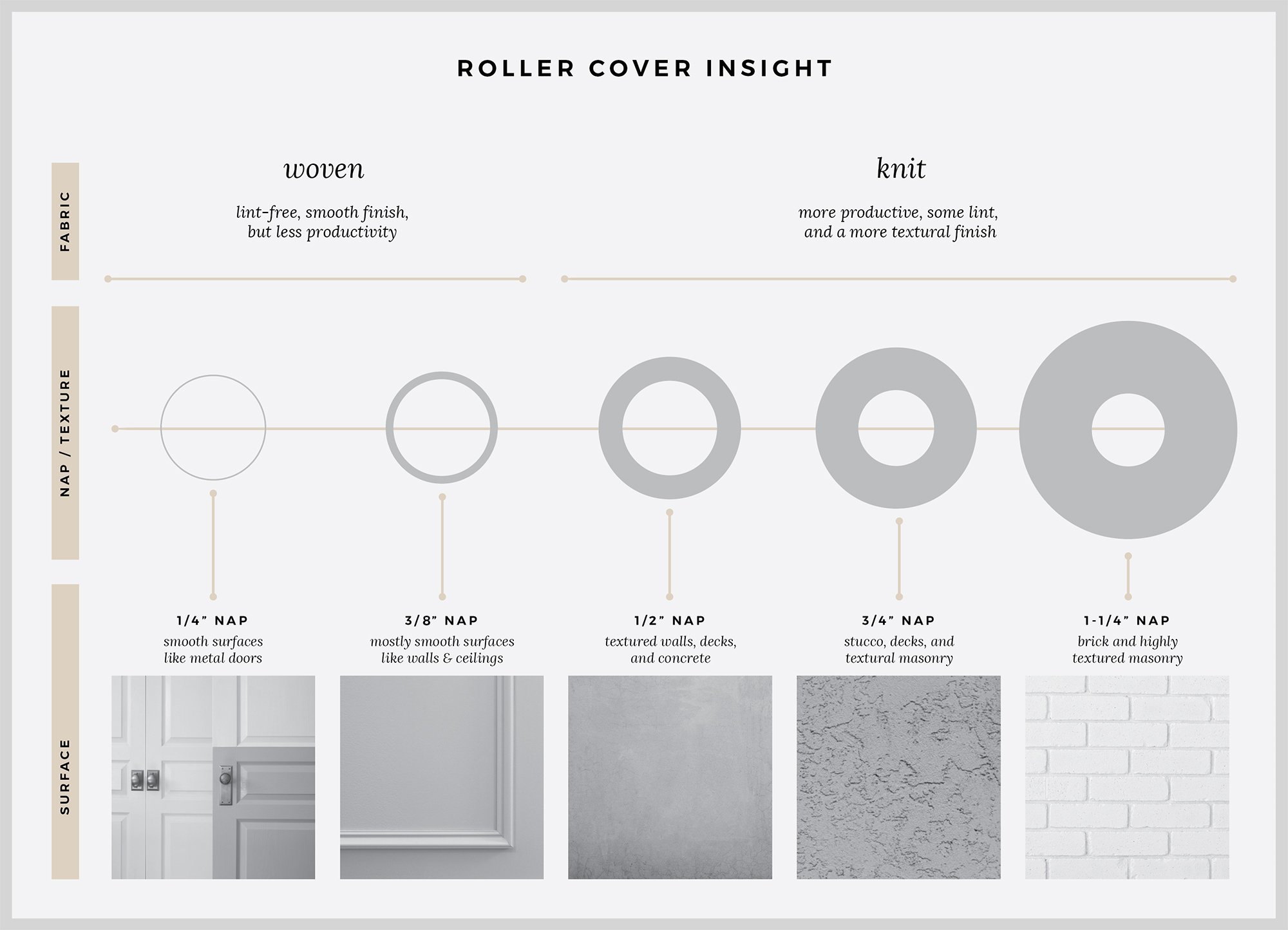
1/4 nap roller: When a glass-smooth finish matters
A 1/4 nap roller is the go-to for very smooth surfaces. It lays down a thinner coat with tight control. It is slow but very clean.
Use it for:
- Doors, trim, cabinets, and built-ins.
- Metal or pre-finished panels where lint or texture is a risk.
- Semi-gloss and gloss paints that show every mark.
Pros:
- Very low texture. Great for a fine finish.
- Less spatter and better edge control.
Cons:
- Holds less paint, so it is slower.
- Not good on textured walls. It can skip.
My take: When a client wants a near-spray look on doors, I use a 1/4 nap or microfiber mini. I take my time and the finish looks sharp.
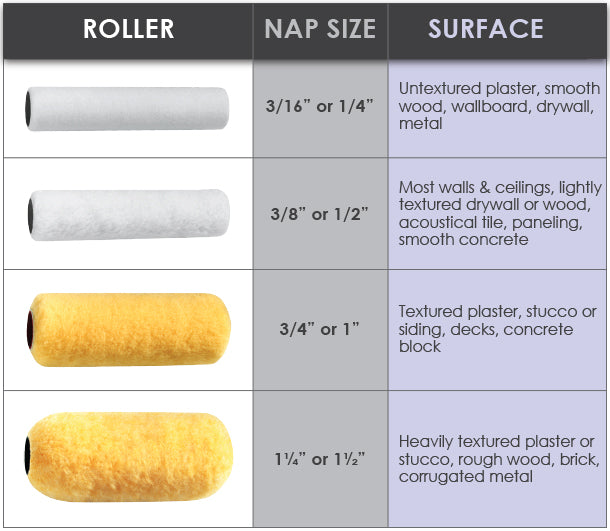
3/8 vs 1/4 Nap Roller: Which One Do You Need?
The “nap” refers to the thickness of the fibers on your roller cover. Choosing the wrong one leads to either a “bumpy” orange-peel texture or a finish that looks thin and streaky.
Quick Comparison Table
| Feature | 1/4-inch Nap | 3/8-inch Nap |
| Best Surface | Ultra-smooth (Cabinets, Metal, New Drywall) | Light texture (Standard Walls, Ceilings) |
| Finish Type | Professional, spray-like finish | Slightly textured “eggshell” finish |
| Paint Capacity | Low (Requires frequent dipping) | High (Holds more paint, faster coverage) |
| Best Sheen | High Gloss or Semi-Gloss | Eggshell, Satin, or Flat |
3/8 vs 1/4 nap roller: Side-by-side
Here is how 3/8 vs 1/4 nap roller compare in real use:
- Finish quality
- 1/4 nap: Smoother finish on flat, hard surfaces.
- 3/8 nap: Slight texture on smooth walls. Fine for wall paint.
- Speed and coverage
- 1/4 nap: Slower. More reloads.
- 3/8 nap: Faster. More paint per load.
- Paint types
- 1/4 nap: Best with semi-gloss and gloss on trim and doors.
- 3/8 nap: Best with flat to satin on walls and ceilings.
- Surface match
- 1/4 nap: Smooth to very smooth.
- 3/8 nap: Smooth to semi-smooth or light texture.
- Spatter and mess
- 1/4 nap: Least spatter.
- 3/8 nap: Slightly more spatter if rolled fast.
- Risk of orange peel
- 1/4 nap: Low.
- 3/8 nap: Moderate if overworked.
If your priority is a flawless, tight finish, lean 1/4. If your priority is speed on walls, lean 3/8.
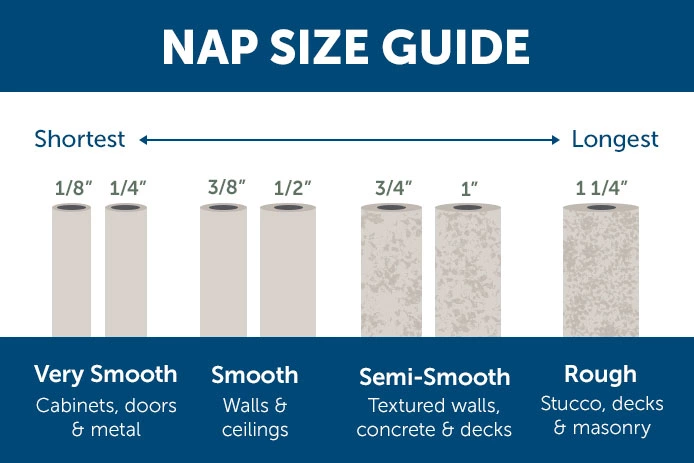
How to choose the right nap in seconds
Match the nap to the surface and the sheen. Then weigh speed vs finish.
- Surface texture
– Glass smooth doors, cabinets, metal: 1/4 nap.- New drywall, light orange peel: 3/8 nap.
- Paint sheen
- Gloss or semi-gloss: 1/4 nap reduces roller marks.
- Flat, matte, eggshell, satin: 3/8 nap works great.
- Project goal
- Speed and coverage: 3/8 nap.
- Fine finish and control: 1/4 nap.
- Your technique
- Light pressure, careful rolling: Either can look great.
- Heavy pressure or rushing: 1/4 hides fewer sins; 3/8 forgives more but may add texture.
Simple rule of thumb:
- Walls and ceilings? Choose 3/8 nap.
- Trim, doors, and cabinets? Choose 1/4 nap.
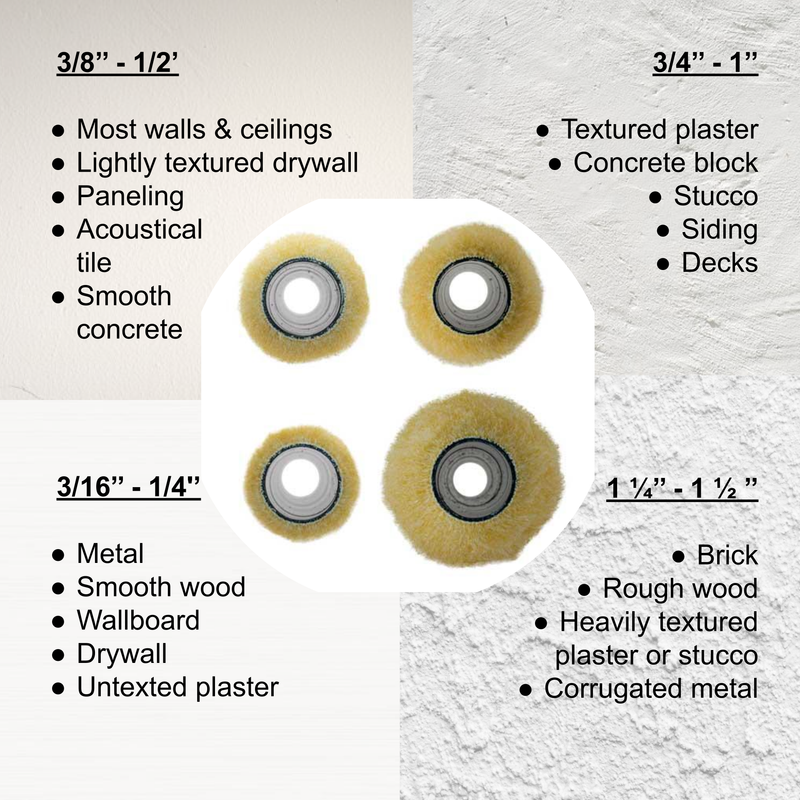 Source: hooverpaint.com
Is 3/8 nap okay on smooth walls?
Yes, it is the most common choice. Keep pressure light, back-roll gently, and it will look clean.
Will 1/4 nap cover minor wall flaws?
Not well. It lays a thin coat and can make flaws show. Patch and sand first.
Can I mix naps on one job?
Yes. Use 3/8 for walls and 1/4 for trim and doors. This keeps speed and finish in balance.
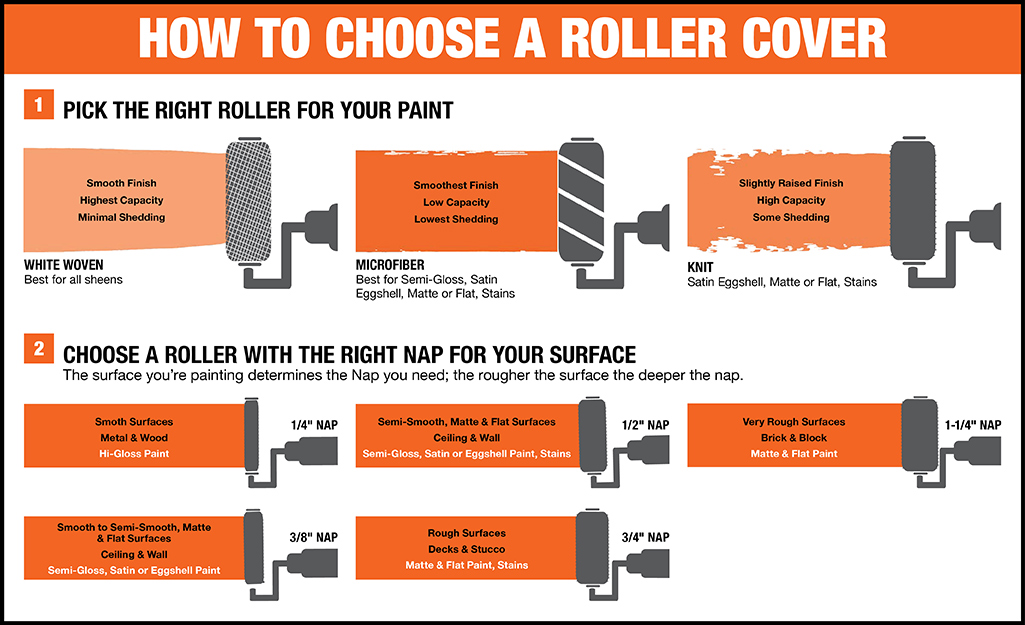
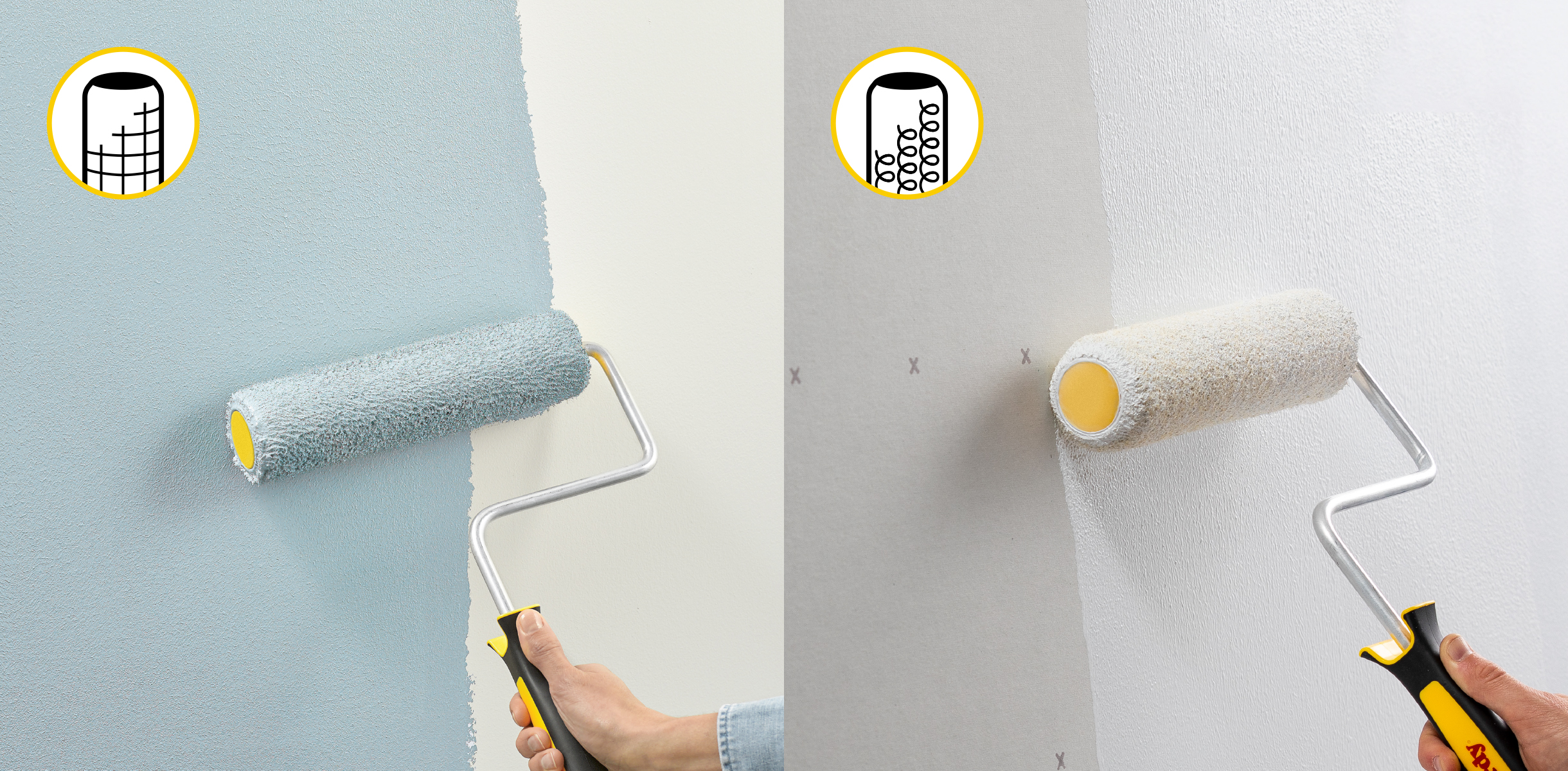
Material matters: Woven, knit, microfiber, and foam
Nap is only half the story. The fabric of the roller cover changes the result too.
- Woven covers
- Tighter weave, less lint. Best for a smooth finish.
- Great for 1/4 nap on trim and doors.
- Knit covers
- Hold more paint. Faster, but risk more lint.
- Common for 3/8 nap walls and ceilings.
- Microfiber covers
- Very smooth layoff with low spatter.
- A 3/8 microfiber can rival a woven cover for finish.
- Foam covers
- Ultra-smooth, but low capacity. Not great on walls.
- Good for varnish or oil on doors and cabinets.
Pro tip: Buy quality, shed-resistant sleeves. Cheap sleeves shed lint and ruin the finish.
Technique that makes either nap look better
How you load and roll matters as much as 3/8 vs 1/4 nap roller.
- Load the roller fully. Spin off excess on the tray ramp.
- Start rolling in a W or M, then fill in.
- Keep a wet edge. Do not let paint flash off.
- Finish with light, top-to-bottom passes. Use almost no pressure.
- Roll slower with 1/4 nap to avoid dry lines.
- Do not overwork semi-gloss. Lay it and leave it.
If you see orange peel with 3/8 nap, back-roll lightly. If you see lap marks with 1/4 nap, work in smaller sections.
Real-world lessons from the field
A few stories to save you time.
- Smooth condo doors, semi-gloss: My first pass with 3/8 nap looked fine at first, then dried with light texture. I switched to 1/4 woven, rolled slower, and the doors leveled out.
- Popcorn ceiling repair: I tried 1/4 nap to be “neat.” Big mistake. It skipped and left thin spots. A 3/8 microfiber grabbed the texture and covered in one extra pass.
- New drywall in a hallway: 3/8 knit was fast but shed a little. I swapped to a 3/8 woven shed-resistant. Same speed, cleaner finish.
Takeaway: Pick nap for the surface, then pick fabric for the finish.
Common mistakes to avoid with 3/8 vs 1/4 nap roller
- Using 1/4 nap on textured walls. It will skip and streak.
- Using 3/8 nap on high-gloss doors. You will see orange peel.
- Pressing too hard. It forces texture and lap lines.
- Cheap sleeves. Lint ends up in your paint.
- Not keeping a wet edge. Sheens will flash and show bands.
Cost, coverage, and time
The right nap saves time and paint.
- 3/8 nap
- Fewer reloads. Faster on big areas.
- Slightly more paint used per coat, but fewer passes.
- 1/4 nap
- More reloads. Slower but cleaner.
- May need an extra pass on dark colors to fully hide.
Industry data and my logs agree: A good 3/8 microfiber often cuts total wall time by 15–25 percent versus 1/4, with no loss in quality on flats and eggshells. That time savings adds up fast on whole-home jobs.
Frequently Asked Questions of 3/8 vs 1/4 nap roller
Which nap is best for walls?
Use 3/8 nap for most walls. It balances speed, coverage, and a clean finish.
Which nap is best for trim and doors?
Use 1/4 nap for a smoother finish on trim and doors. It reduces roller marks with semi-gloss and gloss.
Can I use 3/8 nap for cabinets?
You can, but expect light texture. For a near-spray look, use 1/4 nap or a fine microfiber mini.
Does nap affect spatter?
Yes. 1/4 nap tends to spatter less. 3/8 nap can spatter more if rolled fast or with heavy pressure.
What fabric should I choose for fewer lint issues?
Choose woven or shed-resistant microfiber. Avoid cheap knit covers that shed fibers.
Will 1/4 nap hide wall flaws?
Not well. Patch and sand first, or use 3/8 nap on flat paint to help disguise minor defects.
Is 3/8 vs 1/4 nap roller different for oil paint?
Use 1/4 nap for oil on doors and trim to control texture. Use 3/8 nap for oil primers on walls or ceilings for faster build.
Conclusion
Choosing between 3/8 vs 1/4 nap roller is simple when you match the nap to the surface and sheen. Use 3/8 nap for most walls and ceilings. Use 1/4 nap when you need a fine, tight finish on doors, trim, and cabinets.
Ready to paint with confidence? Pick the right cover, test a small area, and adjust. If this helped, share it, subscribe for more pro tips, or drop your questions in the comments.