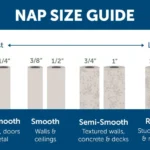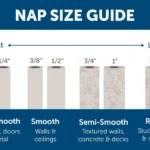
The difference between a 5 mm and 10 mm paint roller is the nap (pile) thickness, which affects how much paint the roller holds and how it applies paint on different surfaces. A 5 mm roller has a shorter nap and is best for smooth surfaces like drywall or furniture, providing a fine, even finish with minimal texture. A 10 mm roller has a thicker nap that holds more paint and is better for slightly textured surfaces, helping fill small imperfections more efficiently. Choosing the right nap ensures good paint coverage and the desired finish quality.
Best mm Roller for Painting Walls – Expert‑Recommended Rollers for Smooth Coverage
The Right Tools for the Job
To get a professional result, the quality of the roller sleeve is just as important as the nap thickness. Cheap rollers shed lint into your fresh paint—these specific picks are lint-free and trade-rated.
1. For the Ultra-Smooth Finish (5mm Nap)
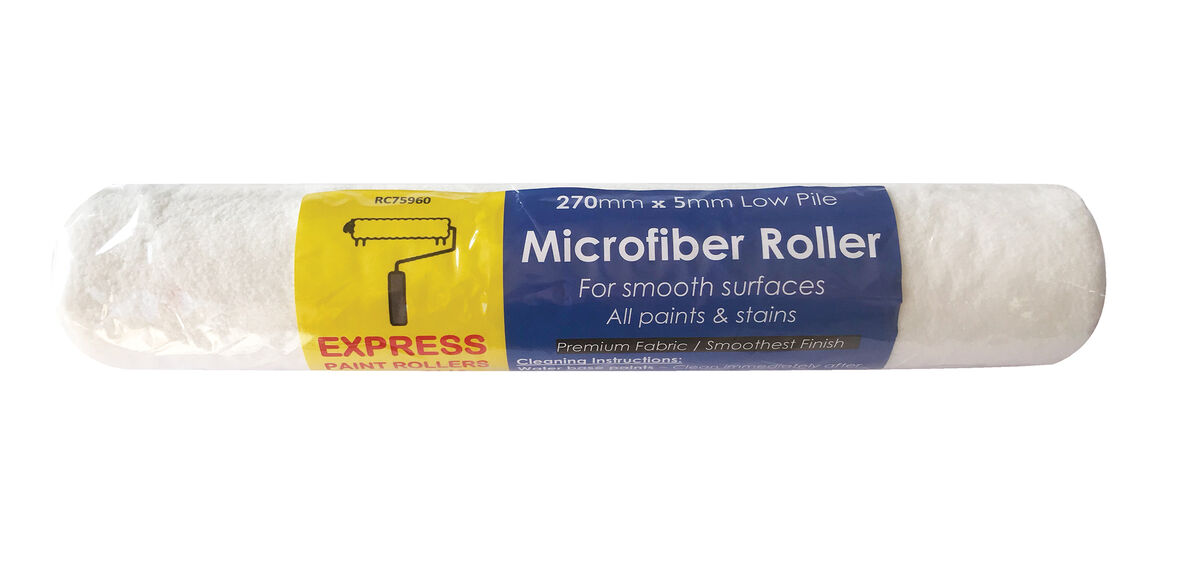
If you are painting doors, trim, or modern cabinets, you need a high-density microfiber or foam.
- Top Pick: Wooster Pro/Doo-Z 3/16 inch (5mm) Roller
- Why it works: This is the gold standard for avoiding “stippling” (that bumpy texture). It’s the best 5mm paint roller for achieving a factory-smooth look on wood or metal.
2. For Standard Walls & Ceilings (10mm Nap)
For your average bedroom or living room wall, a 10mm nap provides the perfect balance of paint capacity and smoothness.
Why it works: The White Dove series is famous for its “lint-free” promise. It’s widely considered the best 10mm paint roller for DIYers because it carries enough paint to make the job go fast without dripping.
Top Pick: Purdy White Dove 3/8 inch (10mm) Nap
5mm vs 10mm Paint Roller: Which One Do You Need?
Choosing between a 5mm and 10mm nap depends entirely on the texture of your surface and the sheen of your paint.
The Comparison at a Glance
| Feature | 5mm Nap (Short Pile) | 10mm Nap (Medium Pile) |
| Best For | Ultra-smooth surfaces (Metal, New Plaster, Cabinets). | Standard interior walls and ceilings. |
| Paint Finish | Gloss, Semi-Gloss, or Eggshell. | Matt or Silk. |
| The Result | “Spray-like” smooth finish; no “orange peel.” | Good coverage; hides minor wall imperfections. |
| Paint Loading | Holds less paint; requires more dipping. | Holds more paint; covers more area per load. |
Choose 5mm for ultra-smooth finishes; pick 10mm for standard walls and faster coverage.
If you’ve ever argued with tiny bumps on a “smooth” wall, you know nap length matters. I’ve tested hundreds of sleeves on doors, cabinets, and drywall. In this guide, I break down 5mm vs 10mm paint roller choices with clear steps, field notes, and pro tips. You’ll see when each shines, what to avoid, and how to get a flawless coat on your first try.

What nap thickness means and how it changes your finish
Nap (or pile) is the fiber length on a roller sleeve. Shorter nap lays down a thinner, smoother coat. Longer nap holds more paint and hides minor texture.
For context, 5mm is an extra-short nap. It’s great for very smooth surfaces. 10mm is a common “do most jobs” nap for smooth to semi-smooth walls and ceilings. In inches, that’s roughly 3/16 inch for 5mm and 3/8 inch for 10mm.
Nap affects paint pickup, release, and texture. It also shapes how much “orange peel” or stipple you’ll see. That’s why 5mm vs 10mm paint roller is a real choice, not a guess.

5mm vs 10mm paint roller: key differences at a glance
Here’s how these two compare in the real world:
- Finish quality: 5mm leaves a finer, flatter film. 10mm adds gentle texture that helps hide small flaws.
- Surfaces: 5mm loves doors, trim, cabinets, and metal. 10mm suits drywall, ceilings, and light orange peel.
- Speed and coverage: 10mm loads more paint, so you move faster. 5mm needs more dips.
- Sheen control: 5mm helps high-gloss and satin look glassy. 10mm is ideal for eggshell and matte on walls.
- Lap marks: 10mm gives more forgiveness. 5mm demands a lighter touch and good timing.
- Spatter: 5mm tends to spatter less. 10mm can spatter if you press hard or over-rotate.
In short, 5mm is your precision tool. 10mm is your everyday workhorse. That is the core of 5mm vs 10mm paint roller decisions.
Best Paint Roller – Expert-Tested Rollers for Walls & Ceilings
Match the roller to surface texture
The surface calls the shots. Use touch and light to guide your pick.
- Choose 5mm for very smooth faces. Think pre-sanded doors, trim, cabinets, MDF, factory-finished metal, and level-5 drywall. It lays a sleek coat that levels well.
- Choose 10mm for smooth to semi-smooth walls and ceilings. It reaches tiny lows in drywall and helps even out minor tape lines and patched spots.
Simple test: Shine a light sideways and run your palm over the surface. If you feel almost nothing, go 5mm. If you feel faint texture or see patch blends, go 10mm. That’s the fastest way to nail 5mm vs 10mm paint roller calls on site.

Finish quality: smoothness, texture, and defects
Short nap reduces texture. Long nap masks defects. Your goal sets the choice.
- If you want a furniture-like finish, reach for 5mm. It keeps the film thin and even, with less stipple. Great with high-gloss or enamel on doors and trim.
- If you need to blend drywall patches or light orange peel, use 10mm. It feathers edges and hides small flaws better than 5mm.
- Watch for orange peel and lap marks. 5mm can flash if you roll too long into the set time. 10mm can leave texture if you push too hard.
Tip from the field: I “tip off” my last pass with near-zero pressure. That trick is gold with 5mm. It also smooths a 10mm coat when I need a cleaner wall. It’s a simple move that cuts defects in half.

Paint types and sheens that pair best
Paint body and sheen change how the nap behaves.
- High-gloss and satin: 5mm gives a tighter film with fewer micro-ridges. It helps sheen look even. It’s ideal for doors, trim, and cabinets.
- Eggshell and matte wall paint: 10mm boosts coverage and hides touch-ups. It keeps walls uniform under room light.
- Thick acrylics and primers: 10mm carries more paint, so you get fewer trips to the tray. That matters on ceilings.
- Oil or urethane enamels: Many pros use 5mm microfiber or mohair for a near-sprayed look. Back-brush edges if needed.
Most makers suggest short nap (about 5–6mm) for smooth surfaces and 10mm for smooth to semi-smooth walls. I follow that for 90% of jobs. It’s a reliable frame for the 5mm vs 10mm paint roller debate.

Coverage, speed, and fatigue
Time is money. Load rate matters.
- 10mm holds more paint per dip. You cover more wall per load and climb the ladder fewer times.
- 5mm needs frequent reloads. It’s slower on big walls but perfect on doors and trim where speed is less vital.
- A 10mm sleeve reduces hand strain on wide walls. A 5mm shines when control is key.
If I must paint two rooms before lunch, 10mm wins. If I must make a front door look like it was sprayed, 5mm wins. That’s how I weigh 5mm vs 10mm paint roller on busy days.
Cost, durability, and waste
Better sleeves save time and give a cleaner coat.
- Quality 5mm sleeves last long on fine work. They resist shedding and clean fast.
- Good 10mm sleeves keep their shape after many washes. Cheap ones mat down and start to drag.
- Buy woven or premium microfiber. Knit sleeves tend to shed more lint, which shows in gloss.
- Replace when the nap mats, sheds, or leaves mystery fuzz. Don’t let a $6 sleeve ruin a $60 gallon.
Spending a little more on the right nap often cuts one full coat. That offsets the cost and makes 5mm vs 10mm paint roller choices even smarter.

How to choose: a simple decision framework
Use this quick flow when you stand in the paint aisle:
- Is the surface ultra-smooth like a sanded door, cabinet, or trim?
- Yes: 5mm.
- No: Keep going.
- Is the wall smooth to semi-smooth drywall or a light orange peel ceiling?
- Yes: 10mm.
- No: If it’s heavier texture, go longer than 10mm.
- Are you using high-gloss or enamel and want a sleek finish?
- Yes: 5mm (microfiber or mohair).
- Do you need speed and solid hiding on large areas?
- Yes: 10mm.
If still unsure, roll a 1-by-1 foot test with both sleeves. Choose the one that looks right when dry to the touch under room light. That small test settles 5mm vs 10mm paint roller calls fast.

Pro techniques for best results with each nap
These moves raise your finish grade right away.
- With 5mm
- Pre-dampen the sleeve with water for latex or solvent for oil, then spin out.
- Load often but lightly. Avoid squeezing the sleeve in the tray.
- Roll in tight W’s, then finish with long, light, single-direction passes.
- Keep a wet edge. Don’t chase holidays once the film sets.
- With 10mm
- Load fully, then back-roll the tray ramp to even the charge.
- Work in 3-by-3 foot zones. Feather edges before moving on.
- Use medium pressure and let the nap do the work.
- If you see texture building, ease off pressure and tip off.
These steps help both sleeves shine and reduce rework. They also frame a fair 5mm vs 10mm paint roller test on your own walls.
Common mistakes to avoid
Small errors cause big flaws. Steer clear of these:
- Using 5mm on rough or patched walls. It won’t fill micro-lows and will flash.
- Using 10mm on mirror-smooth trim with gloss. You’ll see stipple under light.
- Over-rolling as paint starts to set. That makes lap marks.
- Pressing hard to “get more out of the roller.” That adds texture and spatter.
- Skipping surface prep. Sand, tack, and prime as needed. The roller is not a magic wand.
Fix the root, not the roller. That mindset makes the 5mm vs 10mm paint roller choice land right.
Cleaning and care to extend life
A clean sleeve rolls like new and sheds less.
- Spin out extra paint on the wall or onto scrap board.
- Rinse with warm water for latex or proper cleaner for oil. Work from core out.
- Use a roller spinner or your hand to flush until water runs clear.
- Stand sleeves on end to dry. Do not store wet in a bag.
- Label sleeves by paint type and sheen. Keep your best 5mm for finish work only.
Good care means better results and lower costs over time. It also keeps your 5mm vs 10mm paint roller test fair from job to job.
Frequently Asked Questions of 5mm vs 10mm paint roller
Is 5mm good for walls?
Yes, if the walls are very smooth and well-prepped. On most drywall, 10mm gives better coverage and hides more flaws.
Will a 10mm roller cause orange peel?
It can if you press hard or over-roll. Use light, even pressure and finish with a gentle pass to reduce texture.
What’s the inch size for 5mm and 10mm?
5mm is close to 3/16 inch. 10mm is close to 3/8 inch, which is a common wall nap.
Which nap is best for high-gloss doors?
Use 5mm microfiber or mohair. It lays a tight film that levels well and shows fewer roller marks.
Can I use 10mm for cabinets?
You can, but you may see slight texture. For a sleek cabinet finish, 5mm or foam often works better.
Do I need a primer with 5mm?
Use primer based on the surface and paint system, not the nap. That said, a primed, smooth surface helps 5mm shine.
Which nap wastes less paint?
5mm holds less paint, so waste is lower per dip. But 10mm may need fewer coats, which can balance total use.
What material is best, microfiber or woven?
Both can be great. Woven sheds less, while premium microfiber lays very smooth films with latex paints.
How do I avoid lap marks on walls?
Work fast, keep a wet edge, and finish each section before moving on. A 10mm nap offers more forgiveness here.
Can I switch naps mid-room?
Avoid it. Mixing 5mm and 10mm in one wall can show as sheen change or texture shift under light.
Conclusion
Think of it this way: 5mm is a scalpel, 10mm is a reliable hammer. For doors, trim, and high-gloss, go 5mm. For most walls and ceilings, go 10mm. Test a small area with both and choose the look you love under real room light. Make your next 5mm vs 10mm paint roller pick with confidence, and start your project today. If this helped, share it, drop a comment with your results, or subscribe for more hands-on paint guides.