
Is Zinsser Gardz a Primer?
Yes, Zinsser Gardz is a primer-like sealer designed to stabilize and prepare difficult or porous surfaces before painting. It penetrates and seals surfaces such as chalky drywall, plaster, concrete, brick, or water-damaged areas to create a uniform base that improves paint adhesion and prevents future paint problems. While it’s technically a sealer/conditioner rather than a traditional primer, it performs many of the same functions and is often used as the first coat before priming and painting.
Yes, if you’re asking is Zinsser Gardz a primer, it’s a penetrating sealer-primer.
I’ve used Gardz on torn drywall, chalky walls, and glue-soaked surfaces for years. This guide walks you through what it is, how it works, when to use it, and what to avoid. If you’ve been wondering is zinsser gardz a primer and whether it fits your project, you’ll get a clear, tested answer here with real-world tips you can trust.
What is Zinsser Gardz and how does it work?
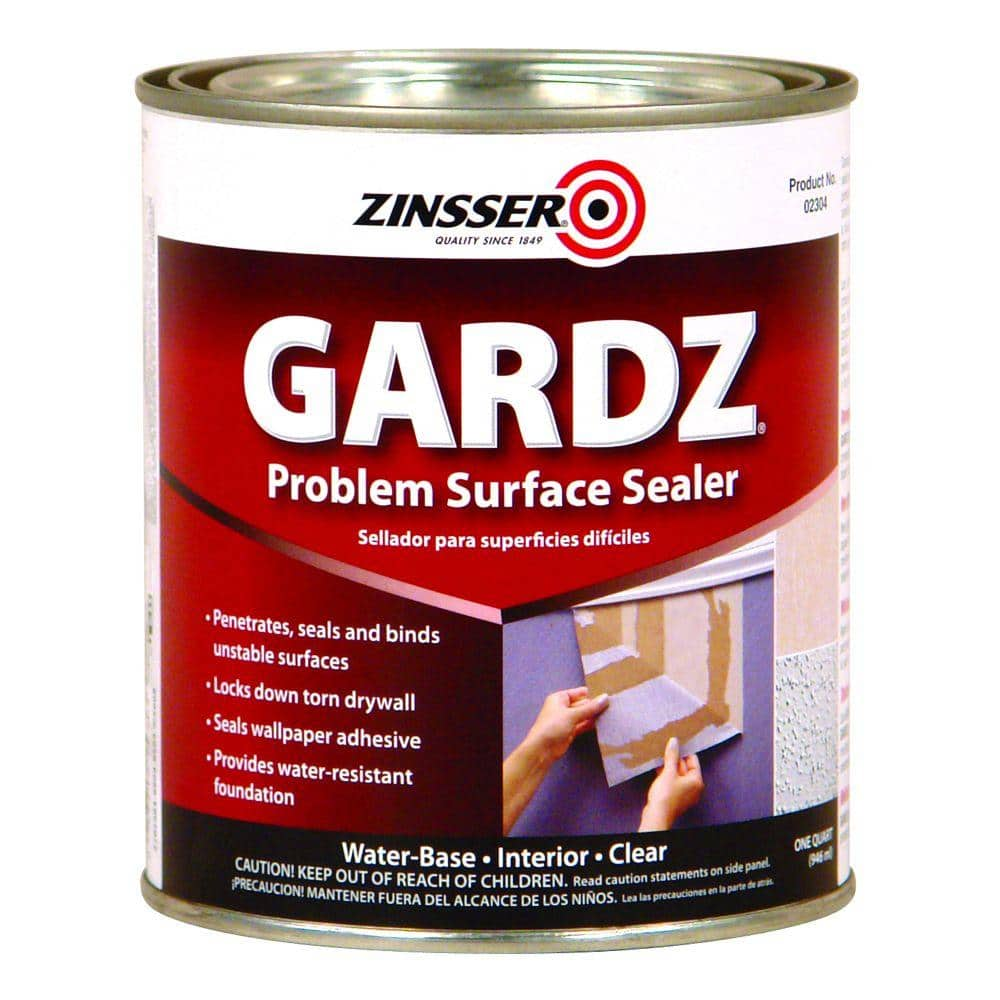
Zinsser Gardz is a clear, water-based primer-sealer for fragile, porous, or damaged interior surfaces. It soaks in and hardens soft materials like joint compound, torn paper on drywall, plaster, and old adhesive residue. Think of it like a liquid brace that locks weak surfaces so paint does not bubble or peel.
It dries to a hard, clear film with a slight sheen. You can paint over it with latex or oil finishes. It is low odor, quick to dry, and easy to clean up with water. When a wall feels dusty, chalky, or “thirsty,” Gardz stops it from sucking in your paint and failing later.
Is Zinsser Gardz a primer or a sealer?
If you ask is zinsser gardz a primer, the practical answer is yes—specifically, a problem-surface primer-sealer. It is not a typical white, hiding primer. It is a clear, penetrating primer that stabilizes and seals, so your topcoat sticks and lays down smooth.
Don’t let torn drywall paper ruin your finish—while 123 is a great general primer, only Zinsser Gardz vs 123 can truly seal those “fuzzy” brown patches to prevent bubbling.
What Gardz does well:
- Seals porous and damaged drywall so paint does not raise the nap or bubble.
- Locks down chalky, dusty, or friable surfaces to prevent peeling.
- Preps walls after wallpaper removal and adhesive washing.
What Gardz does not do:
- It does not block stains like water, smoke, marker, or tannin.
- It is not a bonding primer for glossy tile, melamine, or slick trim.
- It does not provide color or hide; you still need paint for that.
The short answer to is zinsser gardz a primer is yes, but it is a specialized primer for a specific set of problems, not a one-size-fits-all product.
When to use Gardz: real-world cases
From rental turns to high-end remodels, here are jobs where Gardz saved me time and callbacks.
- After wallpaper removal. Even after you scrub, walls can weep paste. Gardz locks in residue and stops bubbling.
- Torn drywall paper. Skim the area, sand, then Gardz to harden the surface so paint stays flat.
- Chalky old paint. When a swipe of your hand leaves chalk, Gardz ties it down fast.
- Fresh joint compound and skim coats. It seals porous mud and evens out absorption for a uniform finish.
- Peeling textured ceilings or calcimine paint. Gardz consolidates soft texture so it does not shed under paint.
Zinsser Gardz vs Peel Stop (2025) – Which Primer Works Best for Problem Walls?
How to apply Gardz: step-by-step
- Clean the surface. Remove dust, loose material, and soap residue. Rinse walls after wallpaper stripping.
- Fix defects. Patch, skim, and sand to a smooth, even profile.
- Test a small spot. If the wall drinks it fast, you may need a second coat later.
- Apply generously. Use a brush for edges and a 3/8-inch roller for fields. Let it soak in and level.
- Let it dry. Follow label times. Most projects can be topcoated the same day.
- Topcoat. Apply your finish paint, or add a white primer if you want extra hide.
Tip from the field: Roll slowly at first. If you rush, you can foam it up. Also, if you asked is zinsser gardz a primer, treat it like a penetrating primer-sealer—give it time to soak and bind.
Pros, cons, and limitations
Pros
- Deeply seals and hardens weak surfaces.
- Stops joint-compound flashing and paint bubbling.
- Low odor, water cleanup, quick dry.
Cons
- No stain blocking; you need a stain-blocking primer for that.
- Clear film offers no hide; you still need color coats.
- Not ideal for glossy, dense, or exterior substrates.
Limitations
- Best for interior problem walls. Check the label before any exterior use.
- Do not expect it to bond to slick surfaces like tile or epoxy paint.
If you frame the question as is zinsser gardz a primer for problem walls, the pros far outweigh the cons in that lane.
Gardz vs other primer types
Drywall/PVA primer
- Use PVA to prime new drywall for basic paint jobs.
- Use Gardz when drywall is damaged, dusty, or patched. It outperforms PVA on fragile areas.
Stain-blocking primer
- Use a dedicated stain blocker for smoke, water, or marker stains.
- Gardz does not block stains. You can apply a stain blocker over Gardz if needed.
Bonding primer
- Use a bonding primer on glossy trim, tile, or slick factory finishes.
- Gardz is for porous and weak surfaces, not slick ones.
So, when someone asks is zinsser gardz a primer, the nuance is this: it is a primer-sealer for porosity and fragility, not for stain or gloss.
Coverage, dry time, and compatibility
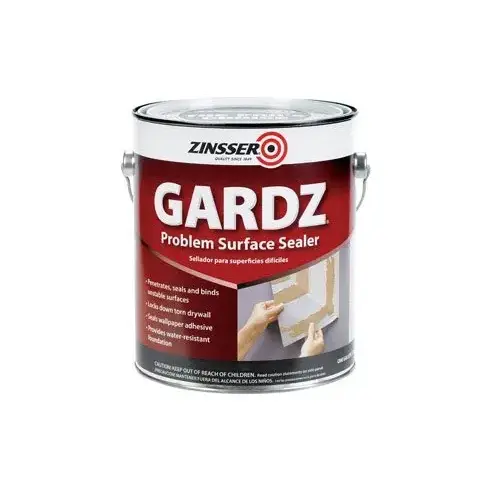
Coverage depends on how thirsty the surface is. Expect about 200–400 square feet per gallon. Damaged or highly porous areas may need more. Let the first coat soak in. Add a second coat only if the surface still looks flat and thirsty.
Typical dry times:
- Touch dry in about 30–45 minutes, depending on weather.
- Ready to topcoat in 1–3 hours in normal conditions.
Compatibility:
- Topcoat with latex or oil paints once dry.
- Works well under wallcovering.
- Skim coats can go under or over Gardz. If you skim over it, Gardz can also be used again to seal the new mud.
If you are still weighing is zinsser gardz a primer for your situation, check the substrate first. If it is porous or weak, you are in the right zone.
Common mistakes and troubleshooting
Mistakes to avoid
- Painting over active moisture or leaks. Fix the source first.
- Skipping stain blocker on water or smoke marks.
- Rushing dry time in cold, damp rooms.
Troubleshooting tips
- Bubbles after painting: The wall was still weak. Seal with Gardz, let dry, then repaint.
- Uneven sheen: The surface absorbed unevenly. Add a second coat of Gardz or a coat of quality primer.
- Residual paste bleed: Rewash with warm water, let dry, then another coat of Gardz.
This is where pros who ask is zinsser gardz a primer learn that patience and prep make all the difference.
Safety, ventilation, and cleanup
Work with good airflow. Open windows or run a fan to move air out. Wear gloves and safety glasses during prep and rolling. Avoid spraying without proper PPE.
Storage and cleanup are simple. Clean tools with warm, soapy water. Keep the can sealed tight and away from freezing. If you wonder is zinsser gardz a primer you can trust in lived-in spaces, the low odor and easy cleanup help a lot.
Frequently Asked Questions of is zinsser gardz a primer
Is Zinsser Gardz a primer or just a sealer?
It is both. Gardz is a penetrating primer-sealer for porous, damaged, or chalky surfaces but it is not a stain blocker.
Can I paint directly over Gardz?
Yes. Once dry, you can apply latex or oil paint directly. Many pros still add a white primer if extra hide or uniform sheen is needed.
Will Gardz block water stains, smoke, or marker?
No. Use a dedicated stain-blocking primer for those issues. Apply it over Gardz if you already sealed a fragile surface.
Can I use Gardz on exterior surfaces?
It is designed for interior problem surfaces. Always read the label for any exterior use and consider products made for outside exposure.
Should I use Gardz before or after skim coating?
You can do both. Many pros seal damaged areas with Gardz, skim, sand, then re-seal with Gardz before paint for a uniform finish.
How many coats of Gardz do I need?
Often one coat is enough on lightly porous surfaces. Very thirsty or damaged areas may need a second coat for a uniform, sealed look.
Conclusion
For anyone asking is zinsser gardz a primer, the clear answer is yes—when the job is about stabilizing weak, porous, or damaged walls. It will not block stains or bond to slick surfaces, but it will save fragile drywall and stop paint failures on problem walls. My best advice: match the primer to the problem, and Gardz will pay you back with smoother coats and fewer callbacks.
Ready to get better results? Try Gardz on your next wallpaper-removal or torn-drywall repair. If you found this helpful, subscribe for more pro-tested painting tips or drop a question in the comments.
Related posts:
 Zinsser Gardz vs Peel Stop (2026) – Which Primer Works Best for Problem Walls?
 Which Zinsser Primer to Use on Varnished Wood (2026) – Pro Tips for Smooth, Long‑Lasting Paint
 Zinsser Gardz vs 123 – Surface Prep, Stain Blocking & Best Uses Compared
 What Is Zinsser Gardz Used For? (2026) – Sealing Drywall, Repairs & Problem Surfaces