When To Use Wood Brightener?
Wood brightener should be used after cleaning or stripping wood surfaces to restore their natural color and prepare them for finishing. It neutralizes leftover cleaners, removes tannin stains, and reverses graying caused by sun and weather exposure. Using a wood brightener is especially important before staining decks, fences, or siding to ensure even stain absorption and a uniform finish.
Use wood brightener after cleaning or stripping, before staining, to neutralize and restore color.
If you want fresh, even wood color that holds stain well, this guide is for you. I’ll explain when to use wood brightener in clear steps, with real examples. You’ll learn how it helps after washing and stripping, how to avoid mistakes, and how to lock in a pro finish that lasts.
What is a wood brightener?
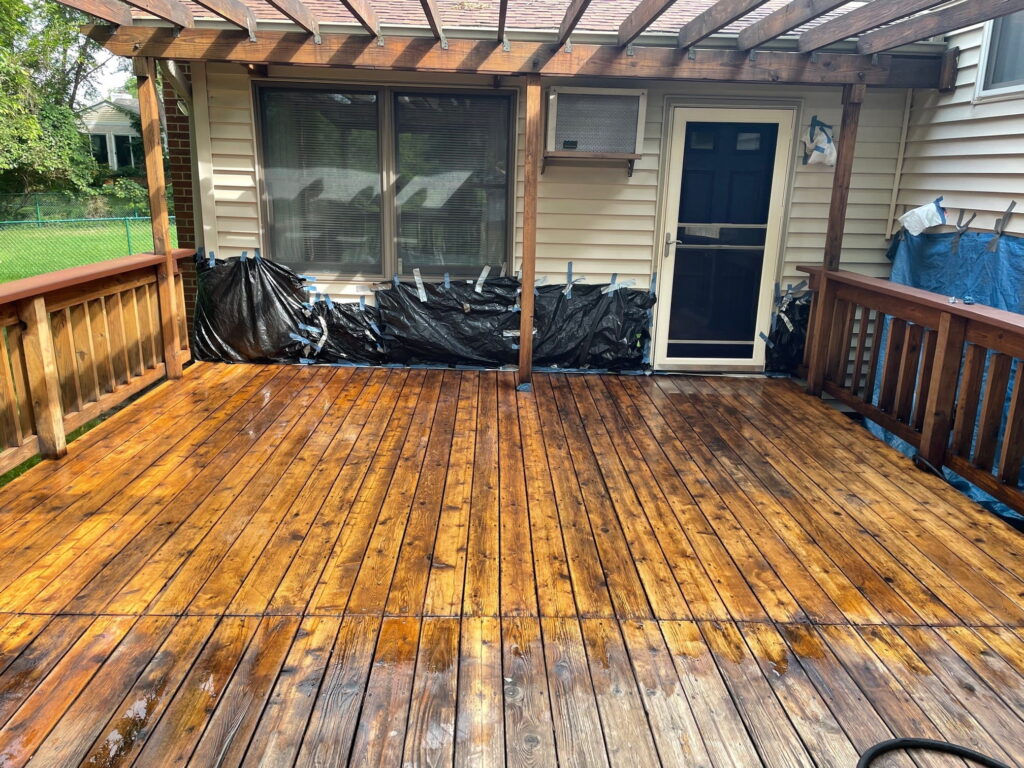
A wood brightener is a mild acid wash. It restores wood color after cleaning or stripping. It also brings the pH back to normal so stain can bond. Most products use oxalic acid or citric acid. They remove gray oxidation, dark tannin marks, and light rust streaks. They also open the grain so sealer soaks in well.
After a strong cleaner or stripper, wood can look dull and blotchy. The surface pH is often high. Brightener lowers the pH and evens the color fast. I have seen gray cedar turn honey-gold in minutes with a good brightener.
8 Scenario: When to use a wood brightener
Knowing when to use wood brightener saves time and fixes many finish issues. Use it in these cases:
- After stripping old stain. Strippers are alkaline. Brightener neutralizes them and resets color.
- After an oxygen cleaner wash. Sodium percarbonate leaves wood with a high pH. Brightener brings it back down.
- Before staining or sealing. It opens the grain and improves stain take and color evenness.
- On gray, UV-worn wood. It lifts surface oxidation and revives natural tones.
- On tannin or metal stains. It helps with cedar bleed, iron streaks, and nail runoff.
- After pressure washing. It calms furring and reduces blotches.
- On new softwoods with mill glaze. A light clean then brightener helps stain soak in.
- On hardwoods like ipe or mahogany. It evens color after prep for a richer, deeper tone.
If you ask when to use wood brightener for decks, fences, or furniture, the answer is simple: use it after any wash or strip, and before any stain. If you wonder when to use wood brightener on cedar, redwood, or pine, it is best right after cleaning day, while the wood is still fresh and damp. For many jobs, I plan my day around it: clean in the morning, brighten mid-day, rinse, then let it dry before staining.

Signs your wood needs brightening
Watch for these cues. They tell you when to use wood brightener:
- The color is dull or gray after washing.
- You see dark patches or tannin bleed spots.
- Water beads in some areas but soaks in others.
- The wood feels slightly fuzzy or raised.
- Stain tests look uneven on a small hidden spot.
A quick brightener pass often fixes all five at once.
Should I Use Wood Brightener After Sanding?
How to use a wood brightener step by step
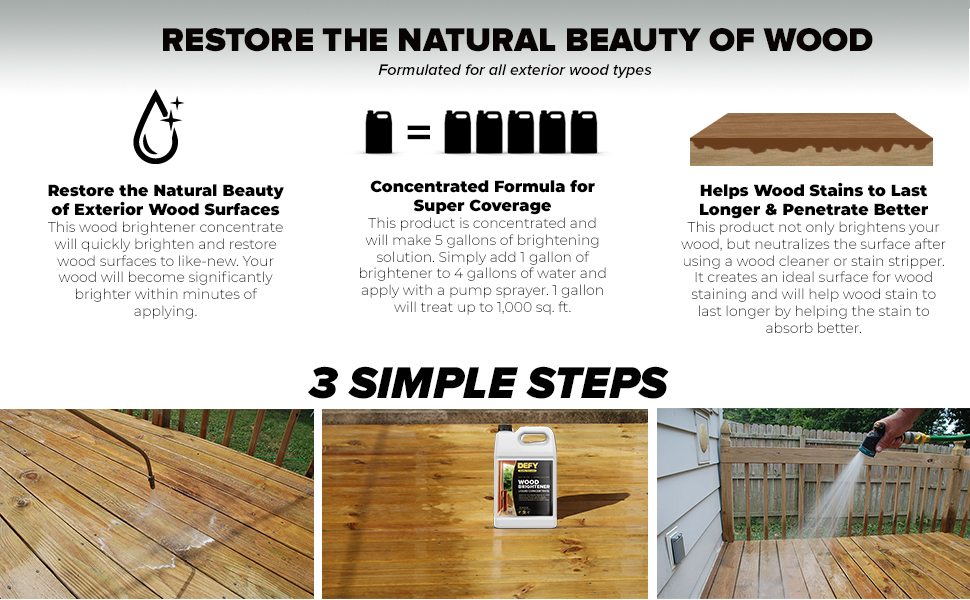
Follow this simple process whenever you plan prep work. It fits any deck, fence, siding, or outdoor furniture.
- Rinse the wood after cleaning or stripping. Remove loose debris.
- Mix the brightener per the label. Use clean water and a plastic pail.
- Wear gloves and eye protection. Protect skin and nearby plants.
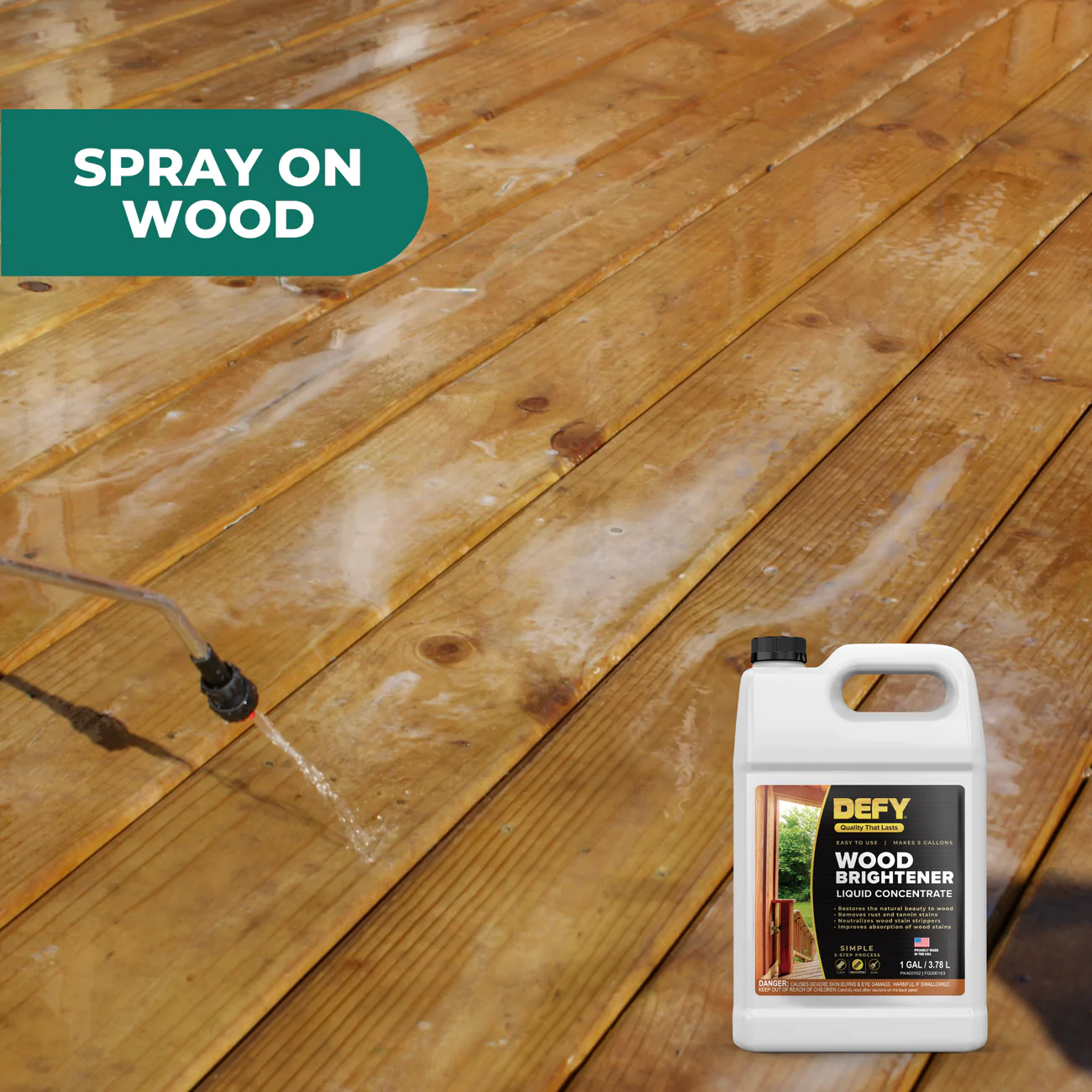
- Apply with a pump sprayer from bottom up. Keep the surface wet.
- Let it dwell 5–15 minutes. Do not let it dry in the sun.
- Lightly brush problem spots. Focus on stains and blotches.
- Rinse well with low pressure. Work with the grain.
- Check color. Repeat on stubborn stains if needed.
- Allow the wood to dry fully before staining. Most decks need 24–48 hours, weather depending.
Pro tip from job sites: mist tough areas again to keep them wet during dwell time. This prevents flash drying and streaks.
Wood Cleaner Vs Wood Brightener– Best Tips for Clean
Choosing the right wood brightener
Different woods and jobs call for different products. Here is how I match them.
- Oxalic acid powders. Great for tough tannin stains and rust marks. Strong and fast. Rinse well.
- Citric acid liquids. Gentler option for softwoods and light refresh jobs. Good for regular maintenance.
- Additives or blends. Some include surfactants for better wetting. Helpful on rough grain.
I use oxalic on cedar, redwood, and stained hardwoods after stripping. I reach for citric on routine deck cleanings when the question is simply when to use wood brightener to boost color before a new clear coat. Always test a small area first.

Safety, environmental, and surface protection
A brightener is mild acid, but you should still work smart.
- Wear gloves, eye protection, and old clothes.
- Pre-wet plants and rinse them after use.
- Shield metals and glass. Acids can etch soft metals.
- Mix only what you need. Never mix acids with bleach or ammonia.
- Work in shade or on a cool day. Keep surfaces wet during dwell.
- Control runoff. Divert to gravel or soil, not storm drains.
I also keep baking soda on hand. A light sprinkle on a spill helps neutralize in a pinch. Then rinse well.

Common mistakes to avoid
A few errors can ruin a good prep day. Here is what to skip.
- Skipping brightener after alkaline stripper. This leads to blotchy stain and poor adhesion.
- Letting the product dry on the surface. It can streak and reduce effect.
- Overconcentration. Strong mixes can cause wood burn or uneven color.
- Rinsing too fast. Give it time to work.
- Staining too soon. Wood must dry to the right moisture level.
- Using on painted or sealed film finishes. Brightener does not strip paint.
- Working in hot sun or high wind. It dries too fast.
When to use wood brightener comes down to good timing. Right after cleaning or stripping, before stain, and with steady dwell time.

Maintenance schedule and real-world examples
You do not need to brighten every time you wash. Use these simple rules.
- Annual cleaning. Brighten if wood looks dull or pH was raised by the cleaner.
- After any stripping. Always brighten. This is non-negotiable.
- Before any stain or sealer. Brighten to even tone and open grain.
From my jobs:
- A cedar deck, stripped in spring. It looked dark and tired. One oxalic pass turned it warm and even. The stain went on smooth and held color all season.
- A mahogany door with water streaks. A light citric wash cleared tannins without lifting fibers. The finish popped.
- Teak chairs with silver gray patina. Brightener brought back honey tones in minutes, ready for oil.
If you are not sure when to use wood brightener, do a quick test on a small board. The color shift will tell you what to do.

Product and tool checklist
Keep a simple kit ready. It cuts setup time and stress.
- Pump sprayer with a fan tip
- Measuring scoop or cup
- Oxalic or citric brightener
- Soft brush and small detail brush
- Garden hose with gentle nozzle
- Gloves, eye protection, and mask
- Plastic sheeting and tape for nearby metal
- Clean bucket and fresh water
- Moisture meter or a simple stain test rag
Having this kit on hand makes it easy to decide when to use wood brightener and get it done right away.
Frequently Asked Questions of When to use wood brightener?
How do I know when to use wood brightener on my deck?
Use it after cleaning or stripping, before staining. If the deck looks dull, gray, or blotchy, brightener will help.
Can I skip brightener if I used an oxygen cleaner?
You can, but it is risky. Oxygen cleaners raise pH, and brightener brings it back, which helps stain bond.
Will wood brightener remove old stain by itself?
No. It is not a stripper. Strip or clean first, then brighten to even color and neutralize.
Is wood brightener safe for plants and grass?
It can stress plants. Pre-wet them, cover if needed, and rinse well after. Keep runoff away from beds.
How long should I wait to stain after brightening?
Let the wood dry 24–48 hours, weather depending. Do a quick water drop or moisture check before staining.
Does wood brightener work on hardwoods like ipe?
Yes, but use the right product and dilution. A test spot is wise, since hardwoods are dense and dark.
Can I use brightener on interior wood?
It is made for exterior use. For interior projects, use products made for indoor work and control fumes.
Conclusion
A bright, even surface is the base of a great finish. Use a cleaner or stripper first, then a wood brightener to reset color and pH. When to use wood brightener is simple: after prep and before stain, plus anytime wood looks dull or blotchy.
Walk your project today. If the wood is gray, patchy, or fresh from a wash, brighten it. You will get richer color, better bonding, and longer life from your stain. Want more field-tested tips like this? Subscribe, ask a question, or share your project in the comments.