
The right roller nap depends on the surface texture you’re painting. Short naps (¼”–⅜”) work best for smooth surfaces like walls or doors, providing a fine, even finish. Medium naps (½”–¾”) are ideal for slightly textured surfaces such as lightly textured walls or ceilings. Long naps (1”–1½”) are used for rough or porous surfaces like stucco, brick, or concrete to hold more paint and cover uneven areas. Selecting the correct nap ensures smooth application, better coverage, and a professional-looking finish.
Whether you’re tackling rough plaster or brand-new drywall, selecting the best nap for painting walls is the secret to even distribution.
Choose nap length by surface texture, paint type, and desired finish. If you want a smooth, pro look, the roller cover matters more than most people think. In this guide, I’ll show you how to choose roller nap for painting with simple rules, real examples, and pro tips from years on the job. You’ll learn when to go short, when to go long, and which materials match your paint and surface so your finish looks clean, even, and fast.
How to choose roller nap for painting: the basics
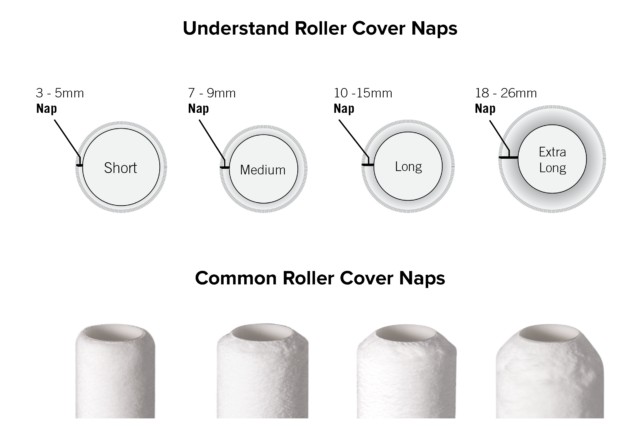
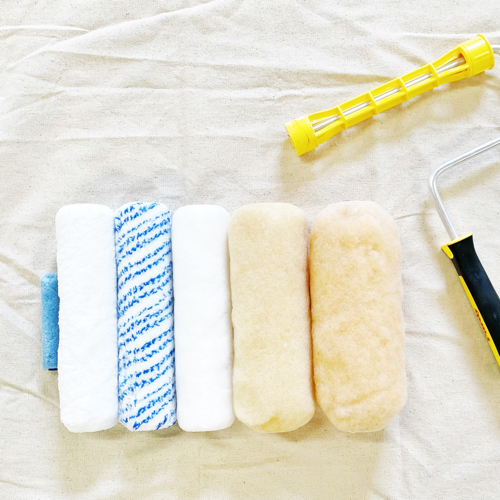
Nap is the thickness of the roller cover’s fiber. It ranges from 1/4 inch to 1-1/4 inches. Short naps leave a smoother finish. Long naps carry more paint and hide texture.
Use this as a quick baseline:
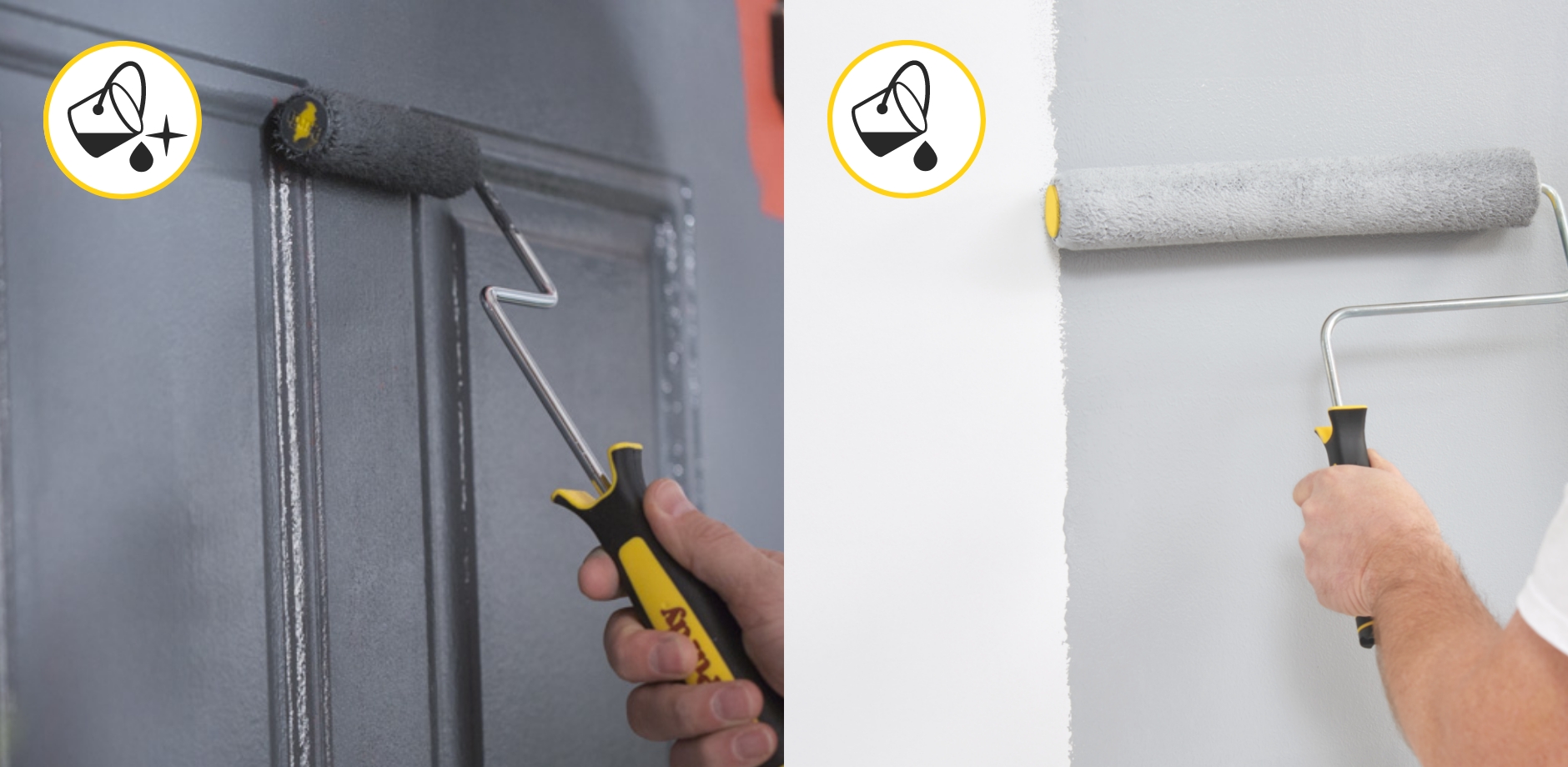
- 1/4 inch: Ultra-smooth surfaces like doors, trim, and cabinets.
- 3/8 inch: Smooth to semi-smooth walls and ceilings. Most common for interior walls.
- 1/2 inch: Semi-smooth to light texture like orange peel or light popcorn.
- 3/4 inch: Rough surfaces like exterior siding, brick, or textured stucco.
- 1 inch to 1-1/4 inch: Very rough masonry and heavy stucco.
This is the core of how to choose roller nap for painting. You match nap length to the surface so the roller lays paint without leaving heavy texture or dry spots.
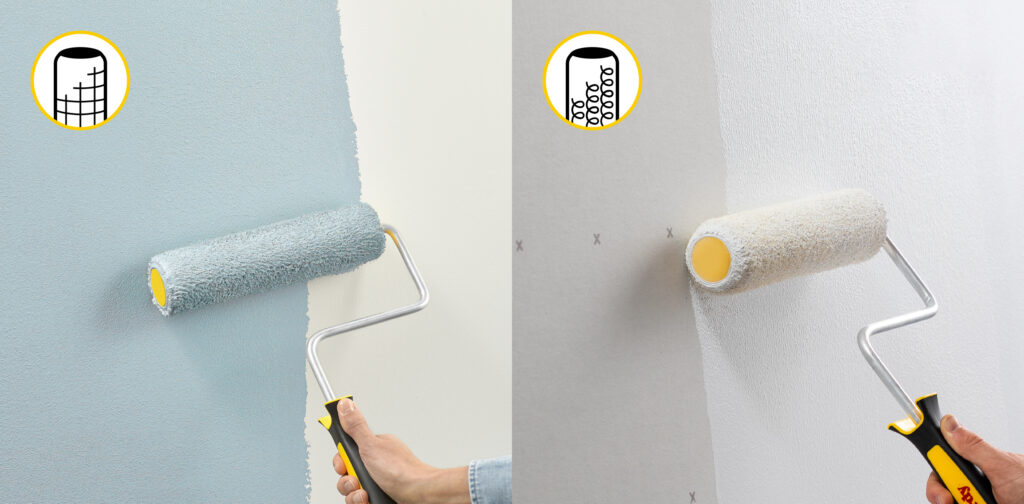
Surface guide: how to choose roller nap for painting by texture
Start with the surface in your hand. Feel it with your fingers. If it feels like glass, it needs a short nap. If it feels gritty or bumpy, it needs a longer nap.
Smooth surfaces
- Doors, trim, cabinets, metal: 1/4 inch nap. Microfiber or mohair for fine finish.
- New drywall sanded smooth: 3/8 inch woven cover for minimal roller marks.
Semi-smooth surfaces
- Previously painted walls: 3/8 inch microfiber or woven polyester.
- Light orange peel or eggshell texture: 1/2 inch knit or microfiber to bridge the peaks.
Rough surfaces
- Textured ceilings: 1/2 inch to 3/4 inch knit.
- Exterior siding, brick, stucco: 3/4 inch to 1 inch lambswool or high-capacity microfiber.
- Very rough masonry: 1 inch to 1-1/4 inch for deep grooves.
A simple rule for how to choose roller nap for painting: the deeper the texture, the longer the nap. That way, the fibers reach into low spots and deliver even coverage.
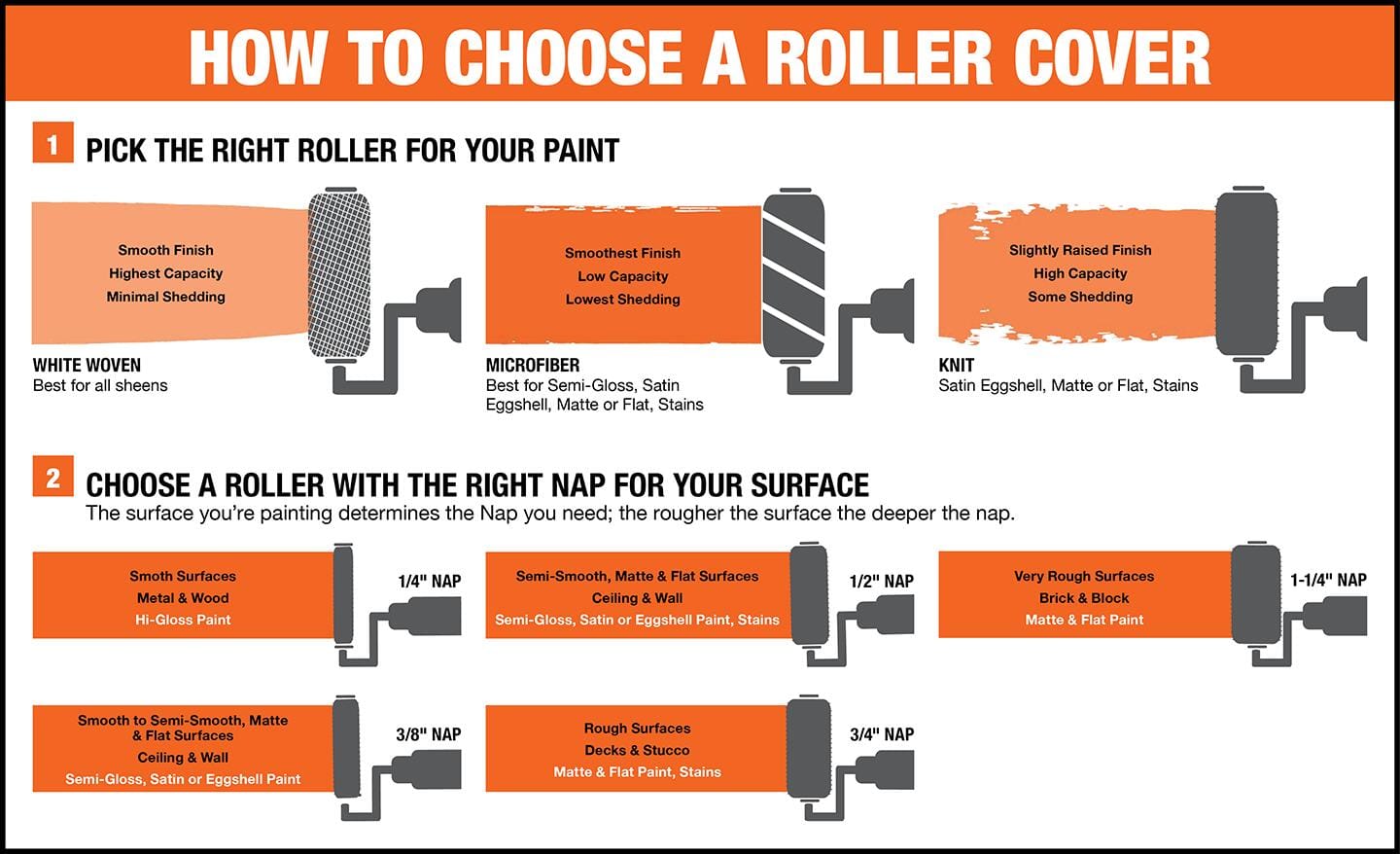
Paint type and sheen: how to choose roller nap for painting that matches your paint
Paint type and sheen change the choice too. Thicker paints and flat sheens are more forgiving. Thin paints and gloss sheens show every mark.
Latex vs oil
- Latex wall paints work well with microfiber or woven polyester.
- Oil paints and solvent-based enamels lay smoother with mohair or lambswool.
Sheen matters
- Flat and matte: 3/8 inch or 1/2 inch works well and hides minor texture.
- Eggshell and satin: 3/8 inch microfiber or woven for a balanced finish.
- Semi-gloss and high-gloss: 1/4 inch to 3/8 inch microfiber or mohair to reduce stipple.
Cover construction
- Woven covers resist shedding and leave fewer marks on smooth walls.
- Knit covers hold more paint and are better for textured surfaces.
- Microfiber levels well, limits splatter, and works for many latex paints.
- Lambswool carries a lot of paint and hugs rough surfaces.
Core size and density
- Standard 9-inch covers with a 1.5-inch or 1.75-inch core fit most frames.
- Denser, pro-grade cores flex less, reduce spatter, and last longer.
For how to choose roller nap for painting in kitchens and baths, lean toward woven microfiber in 3/8 inch with moisture-resistant paints. It lays smooth and resists splatter on ceilings and tight corners.
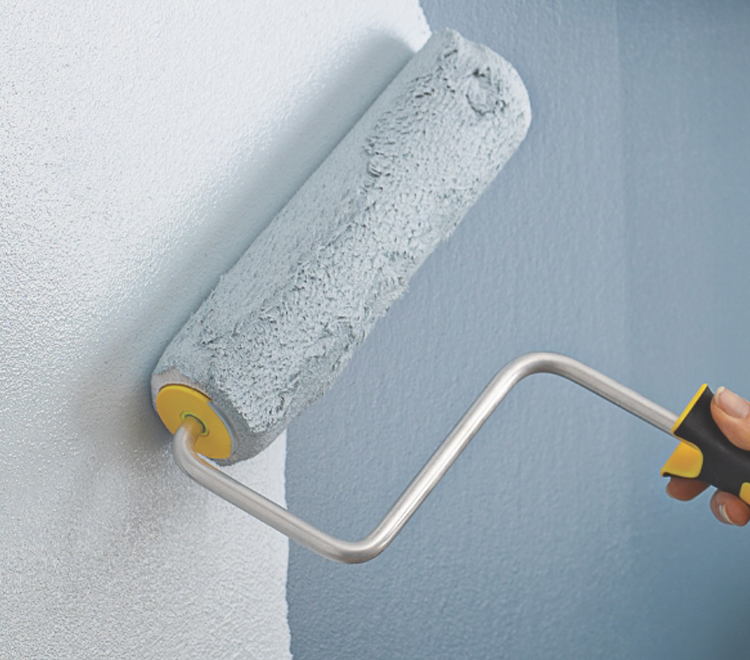
Finish quality and coverage trade-offs when you choose roller nap for painting
Every nap length is a trade. You balance finish quality, coverage, and speed.
Short nap (1/4 to 3/8 inch)
- Pros: Smooth finish, fewer roller marks, low splatter.
- Cons: Carries less paint, needs more trips to the tray.
Medium nap (1/2 inch)
- Pros: Good coverage on semi-smooth walls and light texture.
- Cons: Slightly more stipple than 3/8 inch.
Long nap (3/4 inch and up)
- Pros: High coverage, better on rough surfaces, hides flaws.
- Cons: More stipple and splatter, can leave heavy texture if overworked.
If you care most about a glassy look, go shorter. If you need speed and coverage on rough surfaces, go longer. That’s the heart of how to choose roller nap for painting without regrets.
Real-world scenarios: how to choose roller nap for painting in common projects
Here is how I choose in the field after many homes, rentals, and repaints.
- New drywall in living rooms
- 3/8 inch woven microfiber. Smooth, low splatter, tight finish on large walls.
- Repainting older walls with light texture
- 1/2 inch knit or microfiber. It fills tiny dents and orange peel.
- Ceilings
- Smooth ceilings: 3/8 inch microfiber to cut drips.
- Textured ceilings: 1/2 inch to 3/4 inch for better reach.
- Doors, trim, and cabinets
- 1/4 inch mohair or fine microfiber with enamel or cabinet paint. Tip-off with a brush if needed.
- Bathrooms and kitchens
- 3/8 inch woven microfiber with moisture-resistant latex. Clean edge, low roller marks.
- Exterior siding and fences
- 3/4 inch lambswool or high-capacity microfiber. Fast coverage with rough grain.
- Brick, stucco, and masonry
- 1 inch to 1-1/4 inch for deep joints and rough pits.
These picks make how to choose roller nap for painting a simple checklist. Match the surface, match the paint, pick the nap, and go.
Mistakes to avoid and pro tips when learning how to choose roller nap for painting
I’ve made these mistakes so you don’t have to.
Common mistakes
- Using 1/2 inch on smooth doors. It leaves texture you will see in the light.
- Using 3/8 inch on rough stucco. You will chase misses all day.
- Skipping the pre-wash. Loose lint sticks to the wall and ruins the finish.
- Mixing cheap frames with heavy covers. The frame flexes and leaves stripes.
Pro tips
- Pre-condition the cover. Rinse, spin, and shake off lint before first use.
- Tape test. Wrap painter’s tape around the cover, pull it off, and remove loose fibers.
- Load right. Roll the cover in the tray until saturated but not dripping.
- Use a pole. A short extension evens pressure and reduces wrist strain.
- Work in a W pattern. Then lay off in one direction to level the stipple.
- For how to choose roller nap for painting in bright rooms, test on a small panel. Strong light shows stipple fast.

Testing, prep, and maintenance for how to choose roller nap for painting that lasts
Good prep saves time and money.
Step-by-step
- Rinse the new cover with warm water. This removes loose fibers and sizing.
- Spin it dry on the frame inside a bucket. It stops drips and splatter.
- Test on a sample board or a hidden wall area. Check for lint and stipple.
- During breaks, wrap the cover in plastic or a zip bag. Keep it wet and clean.
- After latex paint, wash with warm soapy water, rinse well, and spin dry.
- After oil paint, clean with mineral spirits, then wash with soap and water.
- Store the cover in its sleeve to protect the nap shape.
These simple steps support how to choose roller nap for painting that holds up across jobs and keeps your finish consistent.

Budget vs pro-grade: how to choose roller nap for painting without overspending
Not all covers are equal. Cheap covers shed and leave tracks. Pro covers hold more paint and keep a steady finish.
What to look for
- Woven construction on smooth work. It resists lint and roller marks.
- High-density microfiber for latex wall paints. It levels well and cuts splatter.
- Lambswool or blends for rough exteriors. They carry more paint per dip.
- Solvent-resistant cores if you use oil or harsh cleaners.
- Heat-bonded fabric to the core to reduce shedding.
Life-cycle cost matters. A quality cover may cost more, but it can outlast three budget covers and cut your labor by hours. That is why I trust this approach for how to choose roller nap for painting when time and finish both matter.
Frequently Asked Questions of how to choose roller nap for painting
What nap is best for smooth walls?
Use a 3/8 inch woven microfiber for smooth walls. It gives a clean finish with fewer roller marks.
What roller nap should I use for doors and trim?
Use a 1/4 inch mohair or fine microfiber. It delivers a sleek finish that suits semi-gloss and gloss paints.
How do I pick nap length for textured ceilings?
Use 1/2 inch for light texture and 3/4 inch for heavier texture. Longer naps reach into the highs and lows for even coverage.
Is microfiber better than lambswool?
Microfiber levels well and limits splatter on walls. Lambswool carries more paint and shines on rough exteriors.
Will a longer nap cover faster?
Yes, longer naps carry more paint and cover faster. But they can add stipple and splatter, so match them to rough surfaces.
Do I need a different nap for oil-based paint?
Often, yes. Mohair or lambswool works well with oil-based paints and enamels for a smoother finish.
Conclusion
Choosing the right roller nap is simple once you match surface, paint, and finish goals. Start with texture, pick the right material, and test a small area before you commit. That is the smart path for how to choose roller nap for painting and get a clean, even result without wasted time.
Grab a couple of nap options, run a quick test panel, and lock in your choice. Want more tips like this? Subscribe for weekly how-tos, or drop a question in the comments and I’ll help you dial in your next project.
Related posts:
 What Is a Roller Nap? – Choosing the Perfect Roller for Walls and Ceilingswhat is a roller nap?
 Eggshell Paint Looks Patchy (2026)– Common Mistakes and Quick Fixes
 Best Nap for Painting Walls– Choosing the Right Roller for Every Wall Type
 A Guide To Roller Nap Lengths– Smooth, Medium, or Thick? Explained