
The best paint roller delivers smooth, even coverage with minimal splatter and depends on your project surface. For walls and ceilings, a ¾″–1″ nap roller balances paint load and finish quality; for textured surfaces, choose a 1½″–2″ nap to reach crevices. Look for rollers with high-density, shed-resistant fibers and a comfortable ergonomic frame to reduce fatigue. Premium options like microfiber or woven covers hold more paint and produce fewer streaks, making them ideal for both DIY and professional jobs.
The best Paint Roller delivers smooth coverage, sturdy frame control, and correct nap length.
You do not need a pro crew to nail clean, even walls. You need the right roller that holds more paint, sheds less lint, and glides without streaks. I have painted rental flips, kids’ rooms, and rough basements. A good roller saves hours and stress. It cuts down on trips to the tray and hides tiny wall flaws. If you want fewer drips and faster coats, this guide is for you. I tested popular picks and compared real handling, not just specs, to help you pick the best Paint Roller with confidence.
Best Nap for Painting Walls– Choosing the Right Roller for Every Wall Type
Wooster Sherlock 9-Inch Roller Frame

The Wooster Sherlock 9-inch frame is a pro favorite for a reason. It feels solid in the hand and keeps a steady line. The cage spins true, so the cover does not wobble. I get fewer stop marks and more even coats with it.
The quick-release end cap makes cleanup fast. I pop the cover off without touching wet paint. The shank is tough and resists bending. It also pairs well with a pole for ceilings and tall walls.
Pros:
- Sturdy cage keeps roller covers snug and aligned
- Quick-release for fast, clean cover removal
- Comfortable grip reduces hand fatigue on big jobs
- Smooth spin helps avoid track lines and chatter
- Works with threaded extension poles for reach
Cons:
- Frame only; you must buy covers separately
- A bit heavier than bargain frames
- Costs more than basic hardware-store frames
My Recommendation
If you value control and long-term reliability, start here. The Sherlock frame turns any good sleeve into the best Paint Roller for smooth walls. It shines in living rooms, hallways, and ceilings. It is also a toolbox staple for repeat projects.
| Best for | Why |
|---|---|
| Homeowners who paint often | Durable build saves money over many jobs |
| Ceilings and tall walls | Works well with extension poles for reach |
| Smooth, even finishes | True spin reduces marks and uneven lines |
Pro Grade 10-Piece Paint Roller Kit
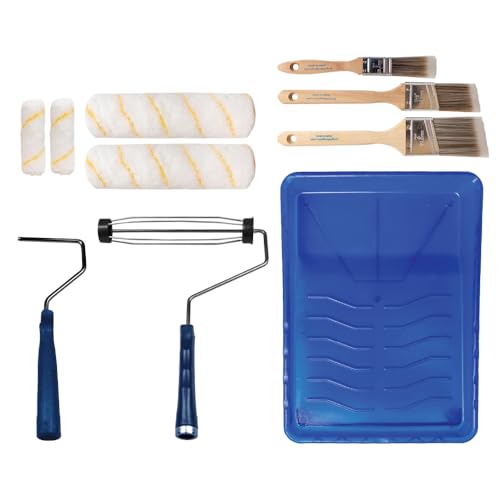
This Pro Grade kit is a full starter pack for walls and trim. It usually includes a 9-inch frame, roller covers, a tray, and a brush. I like it for first apartments, rentals, and quick refresh jobs. It gives you everything in one box at a fair price.
The covers hold paint well and do not shed much. You can wash and reuse them if you clean soon after use. The brush handles corners and edges without fuss. It is easy for a beginner to get clean lines with this kit.
Pros:
- All-in-one set for walls, edges, and small areas
- Good absorbency for most latex paints
- Reusable covers if cleaned right away
- Tray is sturdy enough for several jobs
- Great value for new homeowners
Cons:
- Frame is not as rigid as premium models
- Tray can flex if overloaded with paint
- Brush is fine, but not a pro-tier cut-in brush
My Recommendation
On a budget and need a quick setup? This kit is ideal. It can serve as the best Paint Roller starter bundle for small homes and rental flips. You can add better sleeves later if you need a finer finish.
| Best for | Why |
|---|---|
| Beginners and first-time painters | Complete set reduces decisions and stress |
| Quick room makeovers | Enough tools to cover walls and trim fast |
| Value shoppers | Solid quality without a high price tag |
Pro Grade 1/2 x 9 Microfiber Covers (5-Pack)

These 1/2-inch microfiber sleeves are my go-to for walls and ceilings. Microfiber holds a lot of paint and releases it smoothly. The 1/2-inch nap is a sweet spot for most homes. It hides tiny flaws and keeps texture even.
With five covers in a pack, I can batch big rooms. I swap sleeves between coats to stay fresh. They wash well when cleaned fast. They also shed less lint than many budget sleeves.
Pros:
- High paint load for faster coverage
- 1/2-inch nap balances smoothness and hiding
- Good for matte, eggshell, and satin paints
- Low lint for a clean finish
- Five-pack supports whole-home jobs
Cons:
- Not ideal for very rough walls or stucco
- Can feel heavy when fully loaded with paint
- Requires prompt cleaning to last longer
My Recommendation
If you own a solid frame, add these sleeves next. They can turn your setup into the best Paint Roller for everyday rooms. I use them for living spaces, kitchens, and bedrooms. They cover large areas fast and keep edges tidy.
| Best for | Why |
|---|---|
| Walls and ceilings | Great paint load and smooth layoff |
| Latex interior paints | Microfiber pairs well with common finishes |
| Large rooms | Five-pack means fewer supply runs |
Bates 11-Piece Paint Tray Set

The Bates 11-piece set is a popular bundle for house projects. You get a 9-inch frame, roller covers, a tray, and a brush. Most sets also include mini rollers for tight spots. It is a simple, all-around kit for interior work.
The tray is easy to carry around small rooms. The covers work fine for most wall paints. I like the mix of full-size and mini options. It helps reduce tape and ladder moves.
Pros:
- Complete kit for walls and trim
- Mini rollers help in corners and behind fixtures
- Good value for multi-room projects
- Lightweight tray for quick moves
- Easy to use for first-time painters
Cons:
- Frame rigidity is average
- Tray may flex with heavy loads
- Covers are good, but not pro-grade
My Recommendation
I suggest this for weekend DIY jobs or first homes. It is a handy package for touch-ups and full rooms. For many, it feels like the best Paint Roller kit for a one-time project. You can upgrade sleeves if you want a finer finish later.
| Best for | Why |
|---|---|
| DIY weekend projects | All-in-one kit reduces shopping time |
| Apartments and small homes | Lightweight tray and compact tools |
| Budget-friendly makeovers | Good balance of cost and function |
PinStone 9-Inch Extendable Roller Kit (6pcs)
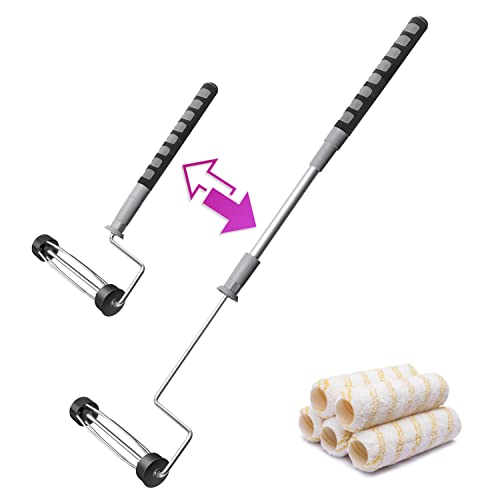
The PinStone kit stands out with its built-in short pole. It extends from about 18 to 36 inches. That reach is perfect for ceilings and tall walls. You also get five microfiber covers in 1/2-inch nap.
The frame feels steady for most tasks. The pole lock holds position well. I like it for stairwells and above cabinets. It saves time versus moving a ladder for each pass.
Pros:
- Integrated extendable handle for extra reach
- Five 1/2-inch microfiber covers included
- Good for ceilings and tall accent walls
- Less ladder use means faster work
- Setup is quick for one-person jobs
Cons:
- Not as long as full extension poles
- Frame rigidity is decent, not heavy-duty
- Pole lock can loosen if overtightened
My Recommendation
If you dread ladders, look here. This kit helps you reach without lugging extra gear. For many, it feels like the best Paint Roller for ceilings in small spaces. It is a smart add for homeowners who repaint each year.
| Best for | Why |
|---|---|
| Ceilings and upper walls | Built-in extension for easy reach |
| Stairwells | Less ladder movement on each section |
| Annual repaints | Reusable covers and flexible handle |
How I Pick the best Paint Roller
I look at four things: frame stability, sleeve fabric, nap length, and cleanup. A steady frame keeps the cover straight and spinning true. That prevents chatter and lap marks. It also reduces strain on your wrist and shoulder.
Sleeves matter a lot. Microfiber holds more paint and releases it smooth. Woven or knit polyester can be shed-resistant but vary in load. Foam is for doors and cabinets, not walls.
Nap length depends on your surface. Use 1/4 to 3/8 inch for very smooth walls and doors. Use 1/2 inch for most interior walls and ceilings. Step up to 3/4 inch for textured walls or light stucco.
Cleanup and reuse will save money. Rinse right after you finish. Spin out water and hang sleeves to dry. A good cleaning routine turns a good roller into the best Paint Roller for value.
Real-World Use Tips for a Flawless Finish
Prime your tray with a thin film of paint. Aim for even loading. Roll the sleeve in the tray well and then off on the ridges. Do not submerge the sleeve all at once.
Keep a wet edge while rolling. Work in small sections. Overlap your passes by one-third. This helps avoid lap marks.
Use light pressure and let the sleeve do the work. Heavy pressure causes ridges and splatter. Reload often to keep flow steady. The best Paint Roller makes this feel natural.
Cut in one wall at a time. Then roll that wall while the cut line is still wet. This blends the edge and hides brush marks. Your finish will look even and calm.
Coverage, Texture, and Nap: A Quick Guide
For smooth drywall, choose 3/8 to 1/2 inch nap. This is the best Paint Roller setup for most rooms. Use microfiber for maximum load and easy release. Woven sleeves can add a finer texture.
For lightly textured walls, 1/2 to 3/4 inch nap works better. It helps paint settle into small pits. Do not crush the roller with pressure. Let the fabric do the job.
Use foam rollers on doors and cabinets. They lay off glossy paint well. Keep a light touch and tip off with the last pass. You will get fewer bubbles and lines.
Maintenance: Make Your Investment Last
Rinse sleeves in warm water until clear. Use a mild soap for latex paint. Spin dry by hand or with a spinner. Shape the nap and let it air dry.
For oil-based paints, follow the paint label for cleanup. Use the right solvent in a ventilated area. Dispose of waste per local rules. Safety comes first.
Clean frames with warm water and a brush. Dry the cage and shank to avoid rust or buildup. Store your frame flat to keep it straight. This care turns a solid tool into the best Paint Roller over time.
FAQs Of best Paint Roller
What nap length should I use for my walls?
Use 3/8 to 1/2 inch for most interior walls. Use 1/4 inch for very smooth surfaces. Use 3/4 inch for textured walls.
Are microfiber sleeves better than woven sleeves?
Microfiber holds more paint and releases it smooth. Woven sleeves can shed less and leave a fine texture. Pick based on your finish goals.
How do I avoid roller marks and lap lines?
Keep a wet edge and work in small sections. Overlap passes and use light pressure. Reload often to keep flow even.
Can I reuse roller covers?
Yes, if you clean them right away. Rinse until water runs clear. Spin dry and store dry.
What is the best Paint Roller for ceilings?
Use a 1/2-inch microfiber sleeve with an extension pole. A steady frame and light pressure help reduce drips.
Final Verdict: Which Should You Buy?
The Wooster Sherlock frame with a 1/2-inch microfiber sleeve is my top pick. It feels balanced, cleans fast, and lays paint smooth. For kits, the Pro Grade 10-piece and Bates sets are strong values.
Need reach without a ladder? The PinStone extendable kit is smart. For extra sleeves, grab the Pro Grade microfiber 5-pack. Any of these can be the best Paint Roller for your next room.
Related posts:
 What Is a Roller Nap? – Choosing the Perfect Roller for Walls and Ceilingswhat is a roller nap?
 Best Paint for Kitchen Cabinets Without Sanding – No Prep, No Mess, Long-Lasting Results | Expert Tested
 Best Marine Paint for Metal (2026) – Long-Lasting Protection Against Saltwater & Corrosion | Expert Tested
 Best Heat Gun For Removing Paint From Wood– Powerful, Safe & Expert‑Tested Models