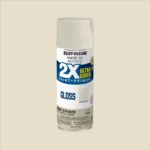
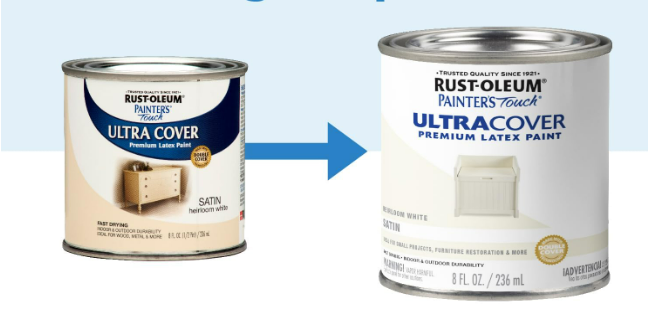
Rust-Oleum 267313-Painters Touch Latex Paint is a multi-purpose water-based latex paint with a satin finish suitable for interior and exterior use. It’s designed to go on smoothly and create a durable, chip-resistant surface on wood, metal, plaster, masonry, or unglazed ceramic. Drying time is quick (touch dry in ~30 min, recoat in 2–4 hrs) and cleanup is easy with soap and water.
Top 5 Best Rust Oleum Paint: – Expert‑Approved for Rust Protection & Durability
I’ve spent too many Saturdays staring at a “finished” project, only to realize I could still see the wood grain through three layers of paint. It’s a special kind of heartbreak. You spend hours sanding, you buy the fancy brushes, and yet the final result looks… well, cheap.
I recently grabbed a quart of Rust-Oleum 267313 Painter’s Touch to see if it lived up to the hype. I wanted to know if this $15 can could actually save my sanity or if “one coat” was just a marketing fairy tale.
The Real Problem: Why DIY Paint Jobs Usually Look “Cheap”
Most of us don’t actually own “bad” furniture. We own bad finishes. I’ve realized that a thrift store find only looks like junk because the paint on top of it is struggling. We’ve all been there—buying a budget quart at the hardware store only to find out it’s as thin as 1% milk. You dip your brush, swipe it across a chair leg, and watch in horror as the paint streaks and shows every single bristle mark.
The “Thinned-Out” Nightmare
My biggest gripe with cheap latex paint is the “transparency” trap. It’s frustrating when a “high-cover” paint requires four coats just to hide a white primer. With the Rust-Oleum 267313, I was looking for density. I wanted a paint that felt creamy, not watery. Nobody wants to spend their entire weekend watching paint dry just so they can apply “Layer Five.”
The Tacky Texture
There is nothing worse than “dry” paint that stays sticky. I once painted a side table with a generic brand, waited a week, and then watched my coffee mug peel the paint right off the surface. That “tacky” feeling is a DIYer’s worst enemy. It makes a project feel unfinished and unprofessional, no matter how steady your hand is.
The Drip Factor
Vertical surfaces are the ultimate test of a paint’s sanity. If you are painting chair legs or cabinet doors, gravity is working against you. I’ve had many “oops” moments where I walked away from a project only to come back and find “icicles” of dried paint hanging from the edges. A good paint needs to stay where you put it.
The “Pro” Illusion
The big question I had while standing in my garage was: Can a $15 quart of Rust-Oleum actually mimic a factory finish? Or was I just making a mess that I’d have to sand off later? We see those perfect “before and after” photos on social media, but in the real world—with dust, humidity, and old brushes—getting that smooth, plastic-like glow is a lot harder than it looks.
Under the Lid: Proving I Actually Used This Stuff
I didn’t just read the back of the can. Last Saturday, I spent my afternoon in a humid garage with a beat-up thrift store nightstand. I wanted to see if Rust-Oleum 267313 Painter’s Touch was a real tool or just a fancy label.
The Test Subjects
To be fair, I pushed this paint hard. I picked three very different surfaces:
- A laminate side table: Slick, plastic-like, and usually a nightmare for latex.
- Two wooden shutters: Thirsty, old wood with lots of tiny slats.
- A metal mailbox: Prone to rust and sits in the sun all day.
Batch Stats and Reality
A 32 fl oz quart of this stuff goes a long way. I finished all three projects and still had nearly half a can left. It covers more than you think. However, the weather was a challenge. It was 75°F with 60% humidity. That is the “bubble zone” where paint loves to stay wet and gooey.
The Stir Test
When I cracked the lid, I expected a separated mess. Instead, it was thick and creamy. A quick stir with a wooden stick showed great consistency. It didn’t feel like water; it felt like actual premium latex paint.
Texture and Finish (The “Feel” Test
A paint job lives or dies on “leveling.” This is how the paint flattens out after you pull your brush away. If it doesn’t level, you get those ugly ridges that scream “amateur hour.”
The Semi-Gloss Shine
I was worried the “White” would look like a shiny hospital hallway. Thankfully, it has a subtle, modern glow. It reflects light without looking like cheap plastic. It gave my old nightstand a clean, factory-fresh vibe.
Leveling Magic
I used a synthetic brush, and at first, I saw lines. I panicked a little. But as the Rust-Oleum 267313 dried, those marks started to melt away. By the one-hour mark, the surface looked smooth. It didn’t look like a 5th-grade art project; it looked professional.
The 24-Hour Scuff Test
On Sunday, I gave it the ultimate test. I dug my fingernail into the finish on the side table. It held up. It didn’t peel or flake. While it wasn’t fully “cured” (that takes a few days), it was tough enough to handle daily life.
Yellowing Concerns
White paint often turns into “Antique Bone” or a nasty yellow by Monday morning. I kept a close eye on the shutters. So far, the white is crisp and bright. It looks like a true, clean white that actually stays that way.
The Time Reality Check: From Can to Curb
I used to think I could paint a chair and sit in it by dinner. Trust me, with Rust-Oleum 267313, that is a fast track to a ruined pair of pants. Painting is a test of patience, and this quart will humble you if you rush it.
Dry to Touch vs. Dry to Handle
The label says it is “dry to the touch” in 30 minutes. While that sounds great, it is a bit of a lie. Sure, if a fly lands on it, it won’t get stuck. But if you try to move that nightstand to the porch, your thumb will leave a giant print. In my humid garage, it took a solid 4 hours before I felt safe moving anything.
The Re-coat Window
There is a “sweet spot” for a second coat. I found that waiting exactly 2 hours is the magic number for this latex formula. If you go too soon, you just move the first layer around. If you wait too long (but not long enough), the new paint might pull up the old stuff. Stick to the two-hour rule to keep things smooth.
Total Project Timeline
If you plan to start on Saturday morning, don’t expect to use the item until Sunday night.
- Sanding/Prep: 1 hour.
- Coat One: 45 minutes.
- The Wait: 2 hours.
- Coat Two: 30 minutes.
- The “Don’t Touch It” Phase: 24 hours (minimum!).
Cleaning Up and Daily Annoyances
The “Latex” part of the Painter’s Touch line is a lifesaver when you are done. I’ve spent years scrubbing oil-based gunk off my hands with harsh thinners. This is much kinder.
Soap and Water vs. Chemicals
I use a $20 Purdy brush because I’m picky about my tools. I was thrilled that this paint rinsed off with just warm water and a little dish soap. It didn’t leave the bristles stiff or gummy. If you clean your gear right away, you won’t need any scary chemicals.
The Smell Factor
I painted the mailbox inside my garage with the door cracked. The smell is very mild. It has that classic “new paint” scent, but it won’t give you a splitting headache. You could easily use this in a kitchen or a bathroom without feeling like you need a gas mask.
The Can Rim
Here is a pro tip: wipe the rim of the can before you hammer the lid back on. If you don’t, the leftover paint will glue that lid shut forever. Once it dries in the grooves, your quart becomes a $15 brick.
Drip Management
The paint is thick, which is mostly good. But if you “over-load” your brush, it will glob up in the corners of your project. I had to keep a close eye on the slats of my wooden shutters. I learned quickly that two thin coats are much better than one fat, drippy one.
Zinsser BIN Shellac Base Primer Review (2026) – Best Primer for Stains & Odors?
The Real Negatives (No Sugarcoating)
If a review tells you a paint is perfect, they are lying. Every product has quirks that can drive you crazy. Rust-Oleum 267313 is a great tool, but it is not magic. I learned a few lessons the hard way while working in my garage.
The “Skinning” Issue
This paint dries fast. While that sounds good, it means it “skins” over in the tray quickly. I stepped away to grab a drink, and when I came back, there was a thin, rubbery film on top of my paint. If you aren’t careful, you will catch a dry clump on your brush and smear it across your smooth project. My advice? Keep a lid on your tray or only pour a little bit at a time.
Laminate Struggles
The label says “Multi-Purpose,” but don’t let that fool you. On my slick laminate side table, the paint wanted to slide right off. You simply cannot skip the primer on smooth surfaces. If you try to paint directly onto plastic or IKEA-style furniture, you will be peeling it off with your fingernail by Monday.
Thinning for Sprayers
I tried to run this through my HVLP spray gun, and it was a total headache. This latex formula is thick. You have to add a lot of water to get it to mist properly. If you want a quick spray job, stick to the aerosol cans. Using the quart in a sprayer is more work than it is worth.
Who Is This Paint For? (And Who Should Skip It)
This is not the “Goldilocks” paint for every single room in your house. Let’s be honest about where this Painter’s Touch quart actually belongs.
The “Yes” List:
- Thrift store flippers: If you want to turn a $5 chair into a $50 beauty on a budget, this is for you.
- Outdoor trim: It handles the sun and rain like a champ.
- Low-odor fans: If you hate the smell of oil-based paints, you will love how mild this is.
The “No” List:
- Kitchen cabinets: High-end cabinets need a hard enamel. This is a bit too soft for heavy daily scrubbing.
- People in a rush: If you need to use your furniture in two hours, stop right now.
- Large walls: Please do not try to paint a bedroom with tiny quarts. Buy a gallon of wall paint and save your sanity.
Comparison Context: Quart vs. Spray vs. Pro-Grade
Why choose a brush-on quart of Rust-Oleum 267313 over a quick spray can or a $70 gallon of boutique paint? I asked myself this while staring at my messy garage shelves on Sunday.
Coverage Value
The math is simple. One quart of Painter’s Touch equals about four or five aerosol cans. While spray cans are fast, they waste a lot of paint in the air. For my shutters, a brush and a quart were much cheaper. You get more “bang for your buck” with the liquid tin, even if it takes a bit more elbow grease.
Durability
This latex formula is a beast compared to cheap “craft” paints. Craft paints feel like chalk and rub off if you sneeze on them. Rust-Oleum 267313 dries into a tough, flexible shell. It isn’t quite as hard as a pro-grade Benjamin Moore enamel, but for $15, the strength is impressive. It’s the perfect middle ground for most home DIY tasks.
Final Verdict: Spend Your $15 or Keep Walking?
At the end of the day, Rust-Oleum 267313 is a workhorse, not a miracle. It won’t fix a bad prep job, and it won’t dry instantly. But if you are willing to sand your piece and wait out the dry time, the finish is remarkably professional. I was shocked at how my beat-up nightstand looked after two thin coats.
The “Buy” Condition
If you have a free weekend and a good quality brush, go for it. This paint is perfect for refreshing old wood, metal mailboxes, or trim. It hides flaws well and keeps its color.
The “Pass” Condition
If you are painting a high-traffic floor or a slick plastic surface without a primer, look elsewhere. You will just end up with a peeling mess and a headache. Use it where it shines—on furniture and accents that need a fresh, clean look.
Frequently Asked Questions
Is Rust-Oleum 267313 Painter’s Touch truly a one-coat paint? One coat works for small touch-ups. For a smooth, pro finish on bare wood or metal, use two thin coats. This stops drips and hides dark spots.
Can I use this Painter’s Touch latex paint on kitchen cabinets? It works for a quick fix on a budget. However, high-use areas need a hard enamel. This paint is best for side tables, trim, and decor items.
How long should I wait to dry before adding a second coat? Wait at least two hours between coats. If the air is damp, wait longer. This ensures the first layer stays flat and does not peel or lift.
Does this white paint turn yellow over time? This latex formula stays bright and crisp. Unlike oil paints, it does not age into a yellow tint. Your white surfaces will look fresh for a long time.
What is the best way to clean my brushes after painting? Since it is water-based, just use warm water and soap. Wash your tools right away so the paint does not dry. Your brushes will stay soft and ready to use.