Zinsser vs Kilz: Zinsser primers are known for superior stain blocking and specialty formulas like mold-killing and shellac-based options, making them ideal for tough surfaces and heavy stains. Kilz primers, on the other hand, are praised for affordability, strong adhesion, and all-purpose performance for everyday interior and exterior projects. Both brands offer reliable coverage, but Zinsser often excels in stain sealing, while Kilz delivers solid value for general use.
Best Paint Primer – Expert-Recommended Primers for Every Surface
It’s weekend morning. You’re standing in the paint aisle, staring at a bathroom ceiling water stain the size of a dinner plate. You’ve got two white cans in front of you: Zinsser and Kilz. Both claim to be the best. Your budget is tight, your time is shorter, and you’re genuinely unsure which one won’t let that ugly yellow ring peek back through in a month.
I’ve been there. I’ve spent my weekends covered in white speckles, priming everything from smoke-damaged rentals to slick kitchen cabinets. I’ve used the cheap stuff that failed and the expensive stuff that saved the day. By the end of this, you’ll know exactly which can to grab so you can get back to your weekend.
Zinsser and Kilz at a Glance: What You’re Actually Choosing Between
The short answer is that Zinsser is often the “problem solver” for tough jobs, while Kilz is the “reliable workhorse” for everyday DIY projects. Both brands offer excellent interior primer and exterior primer options, but they excel in different areas based on their chemical formulas.
What Is Zinsser?
Zinsser has been around since 1849. That is over 170 years of figuring out how to make paint stick to things. Now owned by Rust-Oleum, they are the go-to for professional contractors.
If you walk into an old house that smells like thirty years of cigarette smoke, a pro will almost always reach for Zinsser BIN. It’s a shellac-based primer that seals odors like a vault. Their lineup, including Bulls Eye 1-2-3 and Cover Stain, is built for “problem surfaces” where standard paint just won’t bond.
What Is Kilz?
Kilz is the household name. Launched in 1974 and now part of the Behr family (you’ll see them all over Home Depot), it’s the brand your dad probably used in the garage.
Kilz is famous for being user-friendly and budget-friendly. Kilz Original is an iconic oil-based primer that has covered millions of water stains. While they might not have a shellac option, their water-based primer lines like Kilz 2 are perfect for refreshing a bedroom or prepping new drywall without breaking the bank.
Side-by-Side Snapshot
| Feature | Zinsser | Kilz |
| Best Known For | Extreme stains & professional “saves” | Value & everyday DIY reliability |
| Top Product | Bulls Eye 1-2-3 / BIN Shellac | Kilz Original / Kilz 2 |
| Stain Blocking | Elite (Especially shellac/oil) | Very Good (Especially oil) |
| Odor Blocking | Best in class (BIN) | Strong (Restoration/Original) |
| VOC Levels | Varies (BIN is very high/stinky) | Varies (Kilz 2 is very low) |
| Typical Price | Mid to Premium | Budget to Mid |
| Pro vs. DIY | Leans Professional | Leans DIY |
Breaking Down the Formula Types: Oil, Water, and Shellac
The secret to a great paint job isn’t the brand name; it’s matching the formula to your surface. Choosing between oil-based primer, water-based primer, and shellac is where the real work happens.
Oil-Based Primers: What They Do That Others Can’t
Oil-based primers are the heavy hitters for stain-blocking. They soak into porous surfaces like bare wood or old plaster and create a shield.
- The Good: They stop tannin bleeding from wood and keep rust or grease from ruining your topcoat.
- The Reality: They take longer to dry (up to 24 hours). I once used an oil-based primer on a Sunday morning, thinking I’d be done by lunch. I spent the afternoon smelling mineral spirits and waiting for it to stop being tacky. You also need chemicals to clean your brushes.
- The Pick: Zinsser Cover Stain or Kilz Original.
Water-Based (Latex) Primers: The Modern Workhorse
These are for your “normal” rooms. They have low VOC levels, which means your house won’t smell like a chemical factory, and you can clean your brushes with plain soap and water.
- The Good: Fast drying time (usually 1 hour). You can prime and paint a whole room before football starts on Sunday.
- The Bad: They struggle with heavy stains. If you use a basic water-based primer on a dark water spot, you’ll often see that spot “bleed” back through the wet paint.
- The Pick: Zinsser Bulls Eye 1-2-3 or Kilz 2 All-Purpose.
Shellac-Based Primers: The Secret Weapon (Zinsser BIN)
This is a niche category where Zinsser rules alone. Shellac primer is made from natural resin and is the ultimate sealer.
- The Good: It blocks smoke damage and pet odors that nothing else can touch. It also sticks to glossy surfaces like glass or tile.
- The Sensory Detail: I’ll be honest—the smell of BIN is intense. It’s a sharp, medicinal scent that stays in your nose. But when you see it dry in 45 minutes and realize that 30-year-old smoke smell is finally gone, it’s worth every sniff.
- The Catch: Kilz doesn’t really have a direct shellac rival, so for extreme smells, Zinsser wins by default.
Breaking Down the Formula Types: Oil-Based, Water-Based, and Shellac
The formula you choose is actually more important than the brand on the can. Most people get lost in the marketing, but the chemistry determines if your paint will stick or peel. Think of it like this: water-based is for your “polite” walls, oil-based is for your “stubborn” stains, and shellac is the “nuclear option” for smells and oily wood.
Oil-Based Primers: What They Do That Others Can’t
Oil-based primer is the best choice for sealing porous surfaces like bare wood and stopping tough stains from bleeding through. It penetrates deep into the surface to create a solid shield that water-based options just can’t match.
- Ultimate Stain Blocking: This is your go-to for tannin bleeding in cedar or oak. It also stops rust, grease, and nicotine from ruining your new paint.
- The Wait Time: Be prepared to wait. It can take up to 24 hours to dry. I once used this on a Saturday, thinking I’d be done by lunch. I ended up missing Sunday football because the walls were still tacky.
- The Cleanup: You’ll need mineral spirits to clean your brushes. The smell is strong, and the process is messy. Always open a window or wear a mask.
- Zinsser vs. Kilz: Zinsser Cover Stain is a beast for exterior wood, while Kilz Original is the classic choice for interior ceiling stains. Both are excellent, but Kilz Original dries a bit faster.
Water-Based (Latex) Primers: The Modern Workhorse
Water-based primer is the right pick for everyday jobs like new drywall, refreshing a bedroom, or light color changes. It is the most popular choice for DIYers because it is easy to use and has very low VOC levels.
- Fast and Easy: Most of these dry in just one hour. You can prime in the morning and paint the topcoat after lunch. Plus, you can clean your brushes with just soap and water.
- The Limits: They aren’t great for heavy water stains or deep wood tannins. If you use Kilz 2 All-Purpose on a dark water spot, that yellow ring might pop back up while the paint is still wet.
- A Note on Wood: If you are doing a cabinet refinishing primer job, be careful. Water-based formulas can raise the grain of the wood, making it feel fuzzy or rough. You’ll need to sand it smooth before your final coat.
- Comparison: Zinsser Bulls Eye 1-2-3 is famous for its paint adhesion on glossy surfaces. Kilz 2 is a fantastic, budget-friendly option for general walls.
Shellac-Based Primers: The Secret Weapon (Zinsser BIN)
Shellac primer is the only thing that works for extreme smoke damage, fire odors, and oily knots in pine. It creates the tightest seal known to the paint world.
- The Power of Shellac: It is made from a natural resin that blocks odors that oil and water can’t touch. I used this in a rental house where the previous owner smoked for 20 years. One coat of Zinsser BIN, and the smell was gone. It felt like a miracle.
- The Smell: The scent is unforgettable. It smells like strong medicinal alcohol. It hits your nose fast, but the good news is the smell disappears quickly as it dries.
- The Speed: It dries in about 45 minutes. It’s thin and watery, so watch out for drips on your shoes!
- The Gap: There is no Kilz version of this. If you need a shellac-based seal, you are buying the Zinsser BIN red can. It is the undisputed king for odor blocking.
Stain Blocking Power: The Real Test of a Primer
A primer’s true value is measured by its ability to keep the past in the past. If a primer can’t stop a stain from bleeding through your fresh topcoat, it is just expensive white paint. While both brands claim victory here, the “best” choice depends entirely on whether you are fighting a light water ring or a house that smells like an ashtray.
Water Stains and Ceiling Damage
To stop water stains for good, you need a primer that creates a waterproof seal, as water-based paints will actually pull minerals from the stain up to the surface. If you use a cheap primer on a ceiling leak, you might see a yellow ghost reappear in six months.
- The Science: Water carries tannins and minerals. When you apply latex paint over primer that isn’t strong enough, the water in the paint reactivates the stain.
- The Heavy Hitters: For a bathroom ceiling after a slow pipe leak, I reach for Zinsser BIN. It dries so fast that the water never has a chance to move. Kilz Restoration is a great water-based alternative, but for severe damage, shellac is safer.
- Managing Expectations: Usually, one coat of a high-quality stain-blocking primer does the trick. However, if the stain still looks “vivid” after an hour, go for a second coat. You want a flat, matte white finish with zero yellow peeking through.
Smoke and Fire Damage
For smoke damage, Zinsser BIN is the undisputed champion because its shellac formula traps odor molecules better than any oil or water-based product. Smoke carries oily resins that soak deep into drywall, making odor blocking a nightmare.
- Personal Story: I once renovated a home where the owner smoked for 30 years. The walls were literally sticky. We tried a standard water-based primer first—big mistake. The smell came right back. We switched to BIN, and the relief of walking into a room that finally smelled like nothing was incredible.
- The Kilz Alternative: Kilz Restoration (formerly Kilz Max) is their best answer for moderate smoke. It is much easier to apply and has lower VOC levels, making it better for your lungs. But for a “fire-damaged” level of stink? Stick with the Zinsser shellac.
Tannin Bleed, Knots, and Wood Surfaces
Tannin bleeding happens when natural oils in wood—like cedar, redwood, or oak—seep through the paint, leaving ugly brown streaks. This is a massive headache during cabinet refinishing primer projects or when painting a new fence.
- The Yellow Bleed Test: Apply your primer and wait. If it turns yellow or pinkish within an hour, the tannins are winning.
- Pro Tip: Always spot-prime knots in bare wood with an oil-based or shellac primer. Even if you plan to use water-based paint everywhere else, those knots need the “heavy duty” stuff.
- Winner: Zinsser Cover Stain is a classic oil-based pick for exterior wood. Kilz Original is a reliable choice for interior wood trim and baseboards.
Mold, Mildew, and Moisture Resistance
There is a huge difference between a primer that resists mold and one that kills it. You should never, ever paint over active, fuzzy mold—clean it first, or you are just hiding a growing problem.
- Kilz Premium: This is perfect for high-humidity bathrooms. it doesn’t kill mold, but it prevents new spores from sticking to your walls.
- Zinsser Mold Killing Primer: This is a specialty product. It contains an EPA-registered antimicrobial to kill any microscopic spores left behind after you’ve cleaned the surface.
- The Rule: If you see black spots, scrub them with bleach or vinegar first. Once the surface is dry and dead, then you bring in the primer to seal the deal.
Paint Adhesion: Getting the Topcoat to Actually Stick
Paint adhesion is the only thing standing between a beautiful room and a peeling mess. If your primer doesn’t bond to the surface, your expensive topcoat will eventually flake off like a bad sunburn. Think of primer as the glue that anchors your color; without it, you’re just painting on a prayer.
Priming New Drywall and Fresh Patches
New drywall is incredibly thirsty. If you skip primer, the porous paper and mud will suck the moisture out of your paint unevenly. This creates “flashing,” where some spots look dull and others look shiny.
- The Solution: For large areas of new construction, a PVA primer is the standard, cheap choice. But if you want a better finish, Zinsser Bulls Eye 1-2-3 is a fantastic all-in-one. It levels out the texture so your wall looks smooth.
- Fresh Patches: I once skim-coated an entire bedroom after pulling down old wallpaper on a Tuesday. The walls were a patchwork of grey mud and white paper. Using Kilz 2 All-Purpose saved me. It’s budget-friendly and sealed those thirsty patches perfectly so the topcoat went on in just two easy coats.
- Why it matters: Skipping this step means you’ll likely use twice as much expensive paint just to get the color to look even.
Priming Over Glossy or Slick Surfaces
Getting paint to stick to a glossy surface—like old semi-gloss trim or laminate cabinets—is the ultimate DIY challenge. Most paint will just slide right off or peel at the first bump of a vacuum cleaner.
- The Secret: You need a high-level adhesion primer. While some cans say “no sanding required,” my personal rule is to always give it a quick scuff with 220-grit sandpaper anyway. It gives the primer “teeth” to grab onto.
- Zinsser Bulls Eye 1-2-3: This is the gold standard for stickiness. It bonds to glossy paint, tile, and even metal without much fuss.
- Kilz Adhesion: This is a specialty product designed specifically for the slickest surfaces. If you are doing a cabinet refinishing primer job on laminate or IKEA-style furniture, this is the one you want.
- Sensory Detail: You can actually feel the difference. When a primer has good adhesion, it feels slightly “rubbery” and tough under your fingernail once dry, rather than chalky.
Bare Wood, Metal, and Masonry
Different materials have different needs. Bare wood can warp if you use too much water, while metal will rust if you don’t seal it from the air.
- Bare Wood: Water-based primers can “raise the grain,” making the wood feel hairy. If you want a glass-smooth finish on a tabletop, use an oil-based primer like Zinsser Cover Stain.
- Metal: Standard primers won’t stop rust. You need a dedicated rust-inhibitive formula.
- Masonry: Concrete and brick are “alkaline,” which can eat through normal paint. Look for a primer that is “alkali-resistant.”
- Zinsser Gardz: This is a hidden gem. If you have “furry” drywall after removing wallpaper, Gardz seals it into a hard, moisture-proof shell. It’s thin like water, but it saves damaged walls like nothing else.
Project-by-Project Breakdown: When to Use Zinsser vs Kilz
Sometimes you don’t need a deep dive into chemistry; you just need to know which can to grab for the job at hand. Here is how I choose based on the mess I’m facing.
Painting Over Stains (Water, Grease, Crayon, Marker)
Stains are sneaky. They love to wait until your topcoat is dry to show their ugly faces.
- Light Stains: For a pencil mark or a small coffee splash, Kilz 2 or Zinsser 1-2-3 works fine.
- Grease and Crayon: Kitchen walls above a stove are coated in oily residue. You must use an oil-based primer here. Kilz Original is the classic choice to lock that grease down so it doesn’t rot your paint from the inside out.
- Marker: Permanent marker is surprisingly tough. I’ve seen it bleed through three coats of latex. A quick hit with a shellac-based spray (like BIN) is the only way to kill it for good.
Cabinet Painting and Kitchen Refinishing
Cabinets take a beating. They get hit by greasy fingers, slammed shut, and scrubbed with cleaners. This is a high-stakes project where you cannot afford a mistake.
- My Go-To: For raw wood cabinets, I always use Zinsser BIN. It blocks the knots and dries so hard that you can sand it to a factory-smooth finish within the hour.
- The Budget Choice: If the cabinets are already painted and in good shape, Kilz Adhesion provides a great bond for a new color.
- The Reality: Cabinet painting is a long, tedious weekend. It’s emotional! You’ll be tired of the mess by Sunday night, but using the right primer ensures you won’t have to do it again in a year.
Bathroom and High-Humidity Rooms
Bathrooms are like tropical rain forests. Steam and moisture vapor will get behind your paint and cause it to bubble if you aren’t careful.
- The Must-Have: You need a mold-resistant primer.
- Kilz Premium: It’s thick, hides well, and has a great mildew-resistant finish. It’s my favorite for a “fresh start” in a guest bath.
- Pro Tip: Always run your exhaust fan while priming and for 24 hours after. Moisture is the enemy of a fresh bond.
Zinsser Product Line Deep Dive
Zinsser is the brand you choose when you need a specific solution for a problem surface. While other brands offer general-purpose coatings, Zinsser specializes in “problem-solver” primers that address everything from peeling paint to severe smoke damage. After years of testing these on various job sites, I have found that each can in their lineup serves a very distinct purpose.
KILZ 2 Review: Does This Primer Actually Solve the Problem?
Zinsser BIN Shellac-Based Primer
Zinsser BIN is the undisputed king of odor blocking and extreme stain sealing. It is a shellac-based formula, meaning it uses a natural resin to create a seal so tight that even the smell of a house fire cannot get through it.
- When to Use It: Reach for the red can if you are dealing with smoke damage, pet odors, or sap bleeding from wood knots.
- The Speed Factor: It dries to the touch in about 15 minutes. You can usually recoat the entire surface in under 45 minutes.
- The Sensory Reality: Be warned—the smell is intense. It smells like a nail polish factory. You must have windows open.
- Cleanup: You cannot use water. You need denatured alcohol to clean your brushes. I usually keep a dedicated “shellac brush” in a jar of alcohol just for this stuff.
- Pro Tip: It is very thin and watery. If you aren’t careful, it will run down your arm and onto the floor before you even start brushing.
Zinsser Bulls Eye 1-2-3
Zinsser Bulls Eye 1-2-3 is the best all-around interior primer for daily DIY projects. It is a water-based formula that offers incredible paint adhesion without the harsh fumes or messy cleanup of oil or shellac.
- The Workhorse: This is my go-to for new drywall, trim, and even glossy surfaces. It sticks to almost anything, including metal and glass.
- Low Stress: It has low VOC levels, so it won’t give you a headache while you work in a small bathroom.
- Fast Drying: You can apply your topcoat in about an hour.
- The Limit: It is great for light water stains, but for a “dinner plate” sized ceiling stain, it might require two coats to stop the bleed.
Zinsser Cover Stain (Oil-Based)
Zinsser Cover Stain is a high-performance oil-based primer designed for exterior wood and heavy-duty interior stains. It bridges the gap between the stickiness of 1-2-3 and the sealing power of BIN.
- Exterior Champ: If you are painting a cedar fence or old wood siding, this is the one. It stops tannin bleeding cold.
- Interior Use: It is excellent for kitchen grease or nicotine stains on a ceiling.
- Dry Time: It takes about an hour to dry, but I usually wait 24 hours before topcoating to ensure the seal is rock-hard.
- Sensory Detail: It has that classic “paint” smell that lingers. It reminds me of the projects my dad used to work on in the garage on Saturday afternoons.
Zinsser Gardz, Peel Stop, and Mold Killing Primer
Zinsser also offers “specialty” nodes that solve niche problems that would ruin a normal paint job.
- Gardz: This is a clear, watery sealer. Use it on “fuzzy” drywall after you pull off old wallpaper. It turns soft, damaged gypsum into a hard, paintable surface. It’s a total lifesaver.
- Peel Stop: If your old paint is flaking and cracking, this primer acts like glue. it seeps into the cracks and bonds the old paint to the wall.
- Mold Killing Primer: This is an EPA-registered coating. It doesn’t just resist mold; it kills the spores left on the surface. I used this last March in a damp basement project, and the walls have stayed perfectly clean ever since.
Kilz Product Line Deep Dive
Kilz is the brand you grab when you want a reliable result without breaking the bank. While Zinsser feels like a toolbox of specialty gadgets, Kilz is the reliable set of hammers and screwdrivers that every DIYer grew up with. They have spent decades perfecting the balance between cost and performance, evolving from a single famous can into a full fleet of primers for almost any home project.
Kilz Original (Oil-Based)
Kilz Original is the “old faithful” of the paint world. Since 1974, it has been the go-to for blocking tough stains and sealing raw wood. If you have spent any time on a DIY forum, you have seen this recommended for everything—and for good reason.
- The Classic Strength: It excels at blocking water stains, nicotine, and grease.
- Speedy Seal: It dries to the touch in just 30 minutes. You can usually apply your topcoat in about an hour, which is lightning-fast for an oil-based primer.
- The Trade-off: The VOC levels are quite high. It has a sharp, chemical smell that lingers. If you use this on a hot Tuesday in a small room, you better have every window open and a fan running.
- Best For: Wood trim, baseboards, and those stubborn stains that water-based primers just can’t touch.
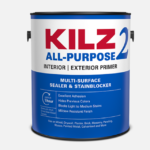
Kilz 2 All-Purpose (Water-Based)
Kilz 2 All-Purpose is the everyday workhorse for standard room repaints. It is a water-based primer that is easy to use, easy to clean up, and very easy on your wallet.
- User Friendly: There is almost no odor, and you can clean your brushes with just soap and water.
- Versatility: It works well on new drywall and previously painted surfaces. I often buy this in the big 5-gallon buckets when I’m flipping a whole house because it provides consistent coverage for a great price.
- The Limit: It is an “all-purpose” tool, not a specialist. If you try to use this on a heavy rust spot or deep smoke damage, the stain will likely bleed through. It is for “clean” jobs, not “problem” jobs.
Kilz Premium and Kilz Restoration
These are the “upgraded” versions of the classic line. They are designed to bridge the gap between basic DIY needs and professional-grade power.
- Kilz Premium: This is my favorite for bathrooms. It is a mold-resistant primer that is much thicker than Kilz 2. It hides old colors better, meaning you might only need one coat of your expensive finish paint.
- Kilz Restoration: This used to be called Kilz Max. It is a water-based primer that acts like an oil-based one. It is their “heavy hitter” for odor blocking and tough stains.
- Honest Take: It is great for pet smells or moderate smoke. However, if the house smells like a heavy fire, it still doesn’t quite beat the shellac power of Zinsser BIN.
Kilz Adhesion and Specialty Lines
Kilz also has a few “secret weapons” for surfaces that usually hate paint.
- Kilz Adhesion: This is a high-tech adhesion primer. It is designed to stick to slick, non-porous surfaces like tile, glass, or laminate. I used this last summer on some old metal patio furniture, and the paint is still holding strong.
- Kilz Latex PVA: This is a very thin, cheap primer specifically for fresh construction drywall. It seals the “thirsty” paper so your first coat of paint looks even.
Application, Dry Time, and Coverage: The Practical Details
Picking the right can is only half the battle. To get a professional finish, you have to apply it correctly and respect the clock. Most DIY projects fail here because we get impatient. I learned the hard way that a primer that feels dry to the touch isn’t always ready for paint. If you rush, you risk the paint wrinkling or peeling off in sheets later.
Brush, Roller, and Spray Application Tips
The way you put the primer on matters as much as the formula itself. Each tool serves a different purpose based on the project size and the surface texture.
- Brushing: Use a high-quality synthetic brush for water-based primers. If you are using oil-based Zinsser Cover Stain or Kilz Original, use a natural China bristle brush for the smoothest stroke.
- Rolling: For walls, a 3/8-inch nap roller is the standard. If you are priming a rough ceiling, go for a thicker 1/2-inch nap.
- Spraying: This is the fastest way to get coverage area on large jobs. Airless sprayers work best for thick primers like Kilz Premium.
- Temperature Matters: I once tried to prime a garage door on a cold morning in November. The primer turned into a gummy mess because it was too cold to flow. Keep your workspace between 50°F and 90°F for the best bond.
Coverage Rates and Cost Per Square Foot
Most primers cover about 300 to 400 square feet per gallon. However, your mileage will vary based on how “thirsty” the surface is.
| Product | Approx. Coverage (sq. ft.) | Best Value Scenario |
| Kilz 2 All-Purpose | 350–400 | Large, clean drywall projects |
| Zinsser Bulls Eye 1-2-3 | 350–400 | General interior/exterior use |
| Zinsser BIN Shellac | 250–300 | Spot-priming knots and stains |
| Kilz Original | 300–350 | Heavy stain blocking |
Zinsser BIN covers less because it is very thin andaks into the wood quickly. While it costs more per gallon, it often saves you money because you only need one coat to block a stain that might take three coats of cheaper stuff.
Dry Time, Recoat Windows, and Cure Time
There is a big difference between “dry to the touch” and “ready to recoat.”
- Water-based: Usually dry in 30 minutes and ready for paint in 1 hour.
- Oil-based: Often takes 1 to 2 hours to dry, but I highly recommend the “overnight wait” rule. It ensures the resins have hardened.
- Shellac (BIN): Dries in 15 minutes. You can recoat in 45 minutes. This is a lifesaver when you’re in a time crunch.
VOC, Safety, and Indoor Air Quality
The smell of a primer is your first clue about its chemical makeup. VOC levels (Volatile Organic Compounds) are the gases released as the primer dries. Some are harmless, but others require serious safety gear and ventilation.
What VOC Levels Actually Mean
VOCs are what give paint that “new house” smell. High levels can cause headaches or dizziness if you don’t have fresh air flowing through the room.
- Low-VOC: These are usually water-based like Kilz 2 or Zinsser 1-2-3. They are much safer for indoor use around kids and pets.
- High-VOC: Oil and shellac primers are the heavy hitters. Zinsser BIN is particularly pungent because it uses denatured alcohol.
- The “Leave the Building” Test: If your eyes start watering, you need more fans. When I use BIN on a smoke-damaged room, I wear a respirator with organic vapor cartridges. It makes the job much more comfortable.
Safe Use in Homes with Kids and Pets
If you are painting a nursery or a kitchen, safety is the top priority.
- Plan Your Timing: If you must use a high-VOC primer, do it on a day when the family can stay out of the house for a few hours.
- Ventilation: Open windows on opposite sides of the house to create a cross-breeze.
- Re-entry: For water-based primers, the room is usually fine to sleep in the same night. For oil-based, wait at least 24 hours until the scent is totally gone.
- Sensory Detail: A well-ventilated room should smell faint, not sharp. If the air feels “heavy,” keep those fans running!
Price Comparison: What You’re Really Paying For
A cheaper price tag at the store can lead to a much more expensive project in the long run. To get the best value, you have to look at how much a gallon covers and how many coats it takes to kill a stain. I have spent many Saturday mornings at Home Depot comparing cans. I’ve learned that saving five dollars on a budget primer often means I have to buy twice as much paint later to hide the bleed-through.
Price Per Gallon Across Product Lines
Primer costs can be split into three tiers. Prices change by store, but the hierarchy usually stays the same.
- Budget Tier ($20–$25): Kilz 2 All-Purpose is the entry point. It is great for fresh drywall in a large room where you just need a base layer.
- Mid Tier ($25–$35): This is where you find Zinsser Bulls Eye 1-2-3 and Kilz Original. These are the workhorses. You pay a bit more for better paint adhesion and light stain blocking.
- Premium Tier ($45–$60+): Zinsser BIN and Kilz Restoration live here. These are “problem solvers.” They are expensive because they contain high-grade resins that block odors and oils that cheaper cans can’t touch.
Is a More Expensive Primer Worth It?
Yes, but only if the job is hard. If you are just changing a wall color from light blue to off-white, the budget tier is fine. But if you are painting over a dark red or a water stain, buy the good stuff.
I once tried to save money on a kitchen ceiling with a light-duty primer. Three coats later, the yellow stain was still there. I went back to the store, bought a small can of shellac, and it vanished in one go. I wasted three hours trying to save ten bucks. Don’t be like me.
Zinsser vs Kilz: Pros and Cons Side by Side
Both brands have earned their spot on my shelf, but they shine in different ways. Here is my honest take on where they succeed and where they fall short.
Zinsser Pros and Cons
Zinsser is the brand I trust for “scary” jobs. If a wall looks like it might reject paint, I reach for a Zinsser can.
Pros:
- BIN Shellac is the only thing that truly stops a heavy smoke smell.
- They have a professional reputation. Benjamin Moore and Sherwin-Williams fans often cross over just for Zinsser primers.
- Bulls Eye 1-2-3 sticks to glossy trim better than almost anything else.
Cons:
- It is often more expensive than Kilz.
- The specialty cans like Gardz or Peel Stop can be hard to find at smaller hardware stores.
- The shellac smell is truly pungent. It will clear out a room fast.
Kilz Pros and Cons
Kilz is the king of convenience. You can find it anywhere, and it works exactly as you expect for standard home repairs.
Pros:
- You can find it at every Home Depot and Walmart in the country.
- Kilz Original is a fantastic oil-based primer that dries very fast.
- It is very budget-friendly for large-scale DIY projects.
Cons:
- They do not make a shellac-based primer. If you need that “seal of steel,” they don’t have an answer.
- Kilz 2 is a bit thin. I often find it takes an extra coat compared to its Zinsser rival.
- The quality varies between the basic cans and the “Restoration” line.
Best Paint Roller – Expert-Tested Rollers for Walls & Ceilings
The Final Verdict: Which One Should You Buy?
The choice between Zinsser vs Kilz depends entirely on the specific mess you are trying to hide. If you are dealing with a “catastrophe” like fire damage or a deep ceiling stain, Zinsser is your best friend. For general room refreshes or new drywall where budget is key, Kilz is the reliable winner. I have spent years jumping between these two brands, and I have learned that the “best” primer is simply the one that matches your project’s level of difficulty.
Choose Zinsser When…
Reach for the blue or red Zinsser cans when the job is tough or technical. In my experience, Zinsser is the “problem solver” brand that pros use when they cannot afford a failure.
- Extreme Odors: If you are fixing a house where someone smoked for decades, Zinsser BIN is the undisputed champion. It seals in smells that make your eyes water.
- Tannin Bleeding: Use BIN or Cover Stain for knotty pine or cedar. It stops those yellow wood oils from ruining your white paint.
- Glossy Surfaces: If you are tackling cabinet refinishing and want to avoid heavy sanding, Bulls Eye 1-2-3 offers incredible paint adhesion on slick surfaces.
- Damaged Walls: If your drywall is chalky or peeling, specialty items like Zinsser Gardz work wonders to save the surface.
Choose Kilz When…
Kilz is my go-to for the “everyday” stuff. It is widely available and very easy to use for standard DIY tasks.
- General Painting: For a basic bedroom or living room update, Kilz 2 All-Purpose is a budget-friendly interior primer that gets the job done.
- Moderate Stains: Use Kilz Original for those typical water spots on a ceiling. It is a classic oil-based primer that has worked for fifty years.
- Bathrooms: Kilz Premium is a fantastic mold-resistant primer. It is thick, hides old dark colors well, and stands up to shower steam.
- Slick Modern Surfaces: If you are painting over laminate or tile, Kilz Adhesion is a specialized tool that creates a rock-solid bond.
When You Might Use Both in the Same Project
You don’t have to pick just one! Most pros actually mix and match. Last summer, I helped a friend fix up an old fixer-upper. We used a small can of Zinsser BIN to spot-prime some nasty rust spots and wood knots. Once those were sealed, we rolled the entire house with Kilz 2 to save money.
This “hybrid” approach gives you the high-end blocking power where you need it, without the high cost of using premium shellac on every single wall. It is the smartest way to manage your budget while ensuring your topcoat compatibility stays perfect.
Frequently Asked Questions (FAQ)
These are the actual questions people type into search engines at 10pm the night before a painting project.
Is Zinsser better than Kilz?
For heavy stain blocking and odor — yes, especially Zinsser BIN. For general everyday priming on budget — Kilz holds its own. Neither is categorically better; they’re better at different things.
Can I use Kilz as a primer and paint in one?
Kilz Complete Coat is a paint-and-primer-in-one. Standard Kilz products are primers only and should be topcoated.
Does Zinsser BIN really kill odors?
Yes — shellac’s tight molecular seal is uniquely effective at trapping odor compounds. It’s the closest thing to a guaranteed fix for smoke smell.
How many coats of primer do I need?
Usually one coat for general surfaces. Two coats for problem areas, bare wood, or dramatic color changes. BIN typically only needs one coat even on severe stains.
Can I use Kilz on new drywall?
Yes — Kilz 2 All-Purpose and Kilz Latex PVA are both solid options for new drywall.
Does Zinsser Bulls Eye 1-2-3 need to be sanded between coats?
Light scuff sanding is recommended between coats or before topcoat for best adhesion, but it’s not always required on flat surfaces.
Can I paint over Kilz with any paint?
Yes — Kilz primers are compatible with all topcoat paints: latex, oil-based, eggshell, semi-gloss, etc.
What’s the difference between Kilz Original and Kilz 2?
Kilz Original is oil-based with stronger stain blocking and higher VOC. Kilz 2 is water-based, lower VOC, and better for general-purpose use.
Is Zinsser BIN safe to use indoors?
With heavy ventilation — yes. It has high VOC from denatured alcohol. Use a respirator, open windows, run fans. Not ideal for small enclosed spaces.
What primer is best for bathroom ceilings?
Kilz Premium or Zinsser Mold Killing Primer for mold resistance. Zinsser BIN if there’s any pre-existing staining from moisture.