
When painting walls, choosing the right roller nap is key. For smooth walls, use a ¼” to ⅜” nap for even coverage. Slightly textured walls do best with a ½” nap, while rough or heavily textured surfaces need a ¾” to 1” nap to reach into crevices and get full coverage. Picking the right roller nap ensures a smooth, professional-looking finish every time. Choose 3/8-inch nap for smooth walls; 1/2–3/4-inch for textured surfaces.
Top-Rated Roller Nap Options on The Market
If you have a project planned, these options are favorites among professional painters for their durability and lack of lint shedding:
Product Nap Length Best Used For… Purdy White Dove Roller Cover 10mm (3/8″) The gold standard for smooth interior walls; leaves a virtually lint-free, professional-grade finish. Wooster Pro Fabric Roller 15mm (1/2″) A highly versatile choice for most standard household projects, especially on slightly textured walls. Linzer Super Task Roller Cover 13mm (1/2″) A durable, economical option for high-volume jobs where you need to move fast without sacrificing quality. Purdy Colossus Roller Cover 20mm+ (3/4″) Heavy-duty jobs where you need to deposit massive amounts of paint into rough surfaces like concrete or exterior siding.
Picking the right roller cover can make or break your paint job. If you’ve ever wondered what roller nap for walls gives that clean, even finish, you’re in the right place. I’ve painted hundreds of rooms, tested many covers, and learned the small choices that lead to big results. In this guide, I’ll show you exactly what roller nap for walls to use based on your surface, paint, and finish goals. Expect clear steps, real-life tips, and pro-level clarity—without the fluff.
How roller nap works and why it matters
Roller nap is the length of the fabric fibers on a roller cover. Shorter nap lays down a thinner, smoother coat. Longer nap holds more paint and reaches into texture.
This choice affects finish, speed, and cleanup. Pick too short, and you’ll see holidays and misses on texture. Pick too long, and you’ll see stipple and splatter on smooth walls. The right nap also reduces lap marks.
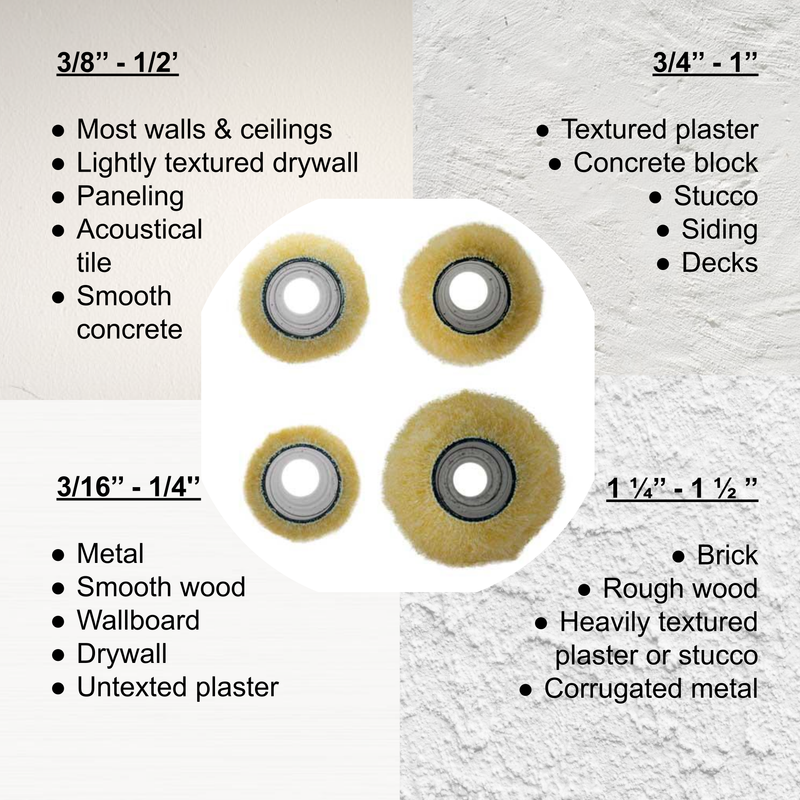
From years on job sites, the winning rule is simple. Smooth walls love 3/8-inch nap. Light texture needs 1/2-inch. Heavy texture calls for 3/4-inch or even 1-inch. If you are asking what roller nap for walls works best, start with surface smoothness, then match the nap.
Pro note: Do a 2-minute spot test on a small area. You will see right away if the nap is too short or too long.
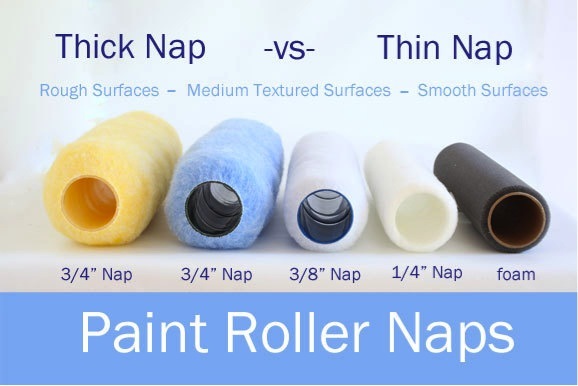
Best mm Roller for Painting Walls – Expert‑Recommended Rollers for Smooth Coverage
What roller nap for walls by surface and paint type
If you are unsure what roller nap for walls to grab, match it to your wall and paint. Use this clear guide.
- New, smooth drywall with flat or eggshell latex: 3/8-inch nap for a clean, even finish.
- Light orange peel or minor patching: 3/8–1/2-inch nap to hide slight texture and joints.
- Knockdown, heavy orange peel, plaster texture: 1/2–3/4-inch nap to reach low spots fast.
- Brick, stucco, cinder block: 3/4–1-inch nap for deep texture coverage.
- Semi-gloss or high-gloss on smooth walls: 1/4–3/8-inch nap to reduce stipple and improve leveling.
- Primers and sealers: 1/2-inch nap on most walls for strong coverage and bond.
- Oil-based or enamel on doors and trim near walls: 1/4-inch mohair or foam (but for walls, stick with 3/8-inch microfiber or woven if the wall is smooth).
Room-based picks that work:
- Living rooms and bedrooms with smooth drywall: 3/8-inch microfiber.
- Kitchens and baths with washable finishes: 3/8-inch woven or microfiber; 1/2-inch if walls have light texture.
- Ceilings with light texture: 1/2-inch knit or microfiber for speed and coverage.
Two quick answers people ask:
- Is 3/8-inch good for walls? Yes. It is the most common pick for smooth drywall with latex paint.
- Can I use 1/2-inch on smooth walls? You can, but you may see more stipple. Use 3/8-inch for a finer finish.
If friends ask me what roller nap for walls I trust most for new drywall, I hand them a 3/8-inch microfiber every time. When texture shows up, I move to 1/2-inch.
Nap sizes explained: when to use 1/4, 3/8, 1/2, 3/4, and 1 inch
Nap length changes how much paint a roller holds and how it lays off.
- 1/4-inch: Ultra-smooth surfaces and high-gloss paints. Least stipple.
- 3/8-inch: Smooth drywall. Best all-around for most walls.
- 1/2-inch: Light texture, fast coverage, great with primers.
- 3/4-inch: Heavy texture, rough surfaces, ceilings with texture.
- 1-inch: Masonry, stucco, deep grooves.
Pro tip from the field: If you wonder what roller nap for walls after patching, step up one size from what you would use on a brand-new smooth wall. That bump helps blend and hide minor defects.
Roller cover materials: microfiber, woven, knit, lambswool, mohair, and foam
Nap length is not the whole story. Fiber type changes the finish too.
- Microfiber: Great control and coverage with latex. Low splatter. My daily driver for walls.
- Woven polyester/nylon: Smoother finish, sheds less. Ideal for semi-gloss and satin.
- Knit polyester: Loads fast, covers fast. Can shed a bit more. Good for primers or flats.
- Lambswool: Holds lots of paint. Smooth flow. Great for oil and alkyd but higher cost and care.
- Mohair: Very short nap, super smooth finish. Used more on cabinets and doors than walls.
- Foam: Ultra-smooth but limited capacity. Not ideal for most walls.
Your paint type also guides what roller nap for walls works best. Flat and eggshell tolerate longer nap. Higher sheens need shorter nap and a woven or microfiber fabric to limit stipple.
Pro technique: prep, loading, and rolling for a flawless wall finish
Even the right nap fails without good technique. Here is the process I teach new painters.
- Prep and prime: Clean walls, degloss shiny spots, and prime patches. This evens absorption and stops flashing.
- De-lint the cover: Use painter’s tape on a new cover to remove loose fibers.
- Load the roller right: Use a tray or a 5-gallon bucket with a grid. Roll until the cover is fully wet but not dripping.
- Start with a W or M: Roll a 2–3 foot section. Then fill it in with light, even passes.
- Keep a wet edge: Overlap passes by one-third. Work top to bottom. Do not press hard.
- Back-roll lightly: One last, soft pass smooths stipple lines.
- Control the room: Keep air flowing, but avoid fans blasting the wall. Fast drying makes lap marks.
If you still wonder what roller nap for walls can hide minor defects, go with 1/2-inch microfiber and a quality flat or matte. It softens shadows and blends patches.

Common mistakes and quick fixes
I have made these mistakes, so you do not have to.
- Picking the wrong nap: Guessing what roller nap for walls is best leads to drag or heavy stipple. Test a small square first.
- Pressing too hard: This squeezes out paint and creates tracks. Let the roller do the work.
- Under-loading the cover: Dry rolling causes patchy color. Load more often.
- Skipping primer: Bare patches and joint compound flash through. Spot-prime repairs.
- Rushing cut-ins: Roll into your brushed edges while both are wet to avoid picture framing.
Quick fixes:
- Stipple too heavy: Switch to a shorter nap and add a touch more paint. Light back-rolling helps.
- Lap marks: Work in smaller sections and maintain a wet edge. Add Floetrol with latex if allowed by the manufacturer.
- Lint in paint: De-lint a new cover, and rinse it before use.
If you hit a wall and still ask what roller nap for walls makes lap marks fade, step down to 3/8-inch and slow your passes.
Will A Thick Nap Roller Hide Imperfections– Best Nap Size for Rough Walls
Quality, cost, and care: making roller covers last
Premium covers cost more but pay off. They shed less, hold paint better, and save time. Look for dense fabric, straight edges, and a moisture-resistant core.
Care tips that work:
- Between coats: Wrap a loaded roller in plastic or a tight bag to keep it wet for a day.
- Cleaning latex: Rinse in warm water with a little soap. Spin dry or roll on a clean board to remove water.
- Cleaning oil: Use the right solvent. Spin out. Store dry.
- Storage: Keep covers in a dust-free bag. Label by room and paint sheen.
I mark every core with the date, room, and what roller nap for walls I used. Next time, I skip the guesswork. This habit alone has saved me hours.
Frequently Asked Questions of what roller nap for walls
What roller nap for walls should I use on smooth drywall?
Use 3/8-inch nap for most smooth walls with latex paint. It gives a fine finish with low stipple and great coverage.
What roller nap for walls hides minor texture or repairs?
Choose 1/2-inch nap with a flat or matte paint. It softens shadows and helps blend small flaws.
Is 3/4-inch nap too big for interior walls?
It is fine for heavy texture, brick, or rough plaster. For normal drywall, 3/4-inch can leave noticeable stipple.
What roller nap for walls works best with semi-gloss?
Use 1/4–3/8-inch woven or microfiber for semi-gloss. Shorter nap reduces roller marks and helps the paint level.
Can I use the same roller nap for primer and topcoat?
Yes, but many pros use 1/2-inch for primer and 3/8-inch for the finish coat. This balance speeds priming and refines the final look.
What roller nap for walls should I use on orange peel texture?
Go with 3/8–1/2-inch depending on how deep the texture is. Start with 3/8-inch and step up if it does not reach the low spots.
Does paint type change what roller nap for walls I pick?
Yes. Higher sheens like semi-gloss prefer shorter naps. Flats and primers can use longer naps for better coverage.
Conclusion
The right roller nap is a small choice that changes everything. Match nap to surface, sheen, and speed, and your walls will look clean and even. If you forget, just remember this: smooth walls love 3/8-inch; texture needs 1/2–3/4-inch.
Ready to paint with confidence? Pick the right cover, do a quick test square, and roll. If you found this helpful, subscribe for more practical paint tips or drop your questions in the comments.
Related posts:
 What Is a 3/4 Nap Roller?– Best Surfaces & Tips for Smooth Coverage
 What Nap Roller for Textured Ceiling?– ¾″ vs 1″ Nap for Rough & Knockdown Textures
 What Is a 3/8 Nap Roller?– Ideal Surfaces and Professional Painting Advice
 What Is a Roller Nap? – Choosing the Perfect Roller for Walls and Ceilingswhat is a roller nap?