
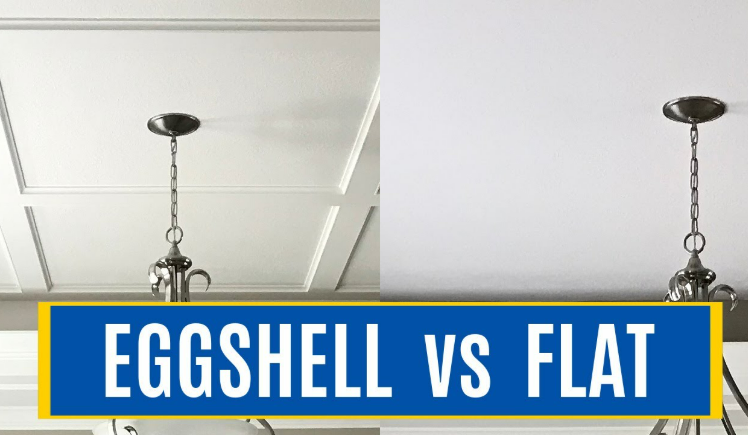
Eggshell paint vs flat: The main difference is the level of sheen. Flat paint has no shine and gives a smooth, matte finish that hides wall imperfections well, making it ideal for ceilings and low-traffic areas. Eggshell paint has a slight, soft sheen—similar to an eggshell—which makes it more durable and easier to clean, so it’s often used in living rooms, hallways, and bedrooms. In short, choose flat for maximum coverage and hiding flaws, and eggshell for a subtle shine with better washability and durability.
Eggshell paint and flat paint mainly differ in sheen, durability, and how they handle everyday life.
If you have ever painted a wall on a quiet Saturday morning and noticed the light hitting it differently by evening, you already know the main difference. Eggshell paint offers a soft, durable glow, while flat paint provides a matte, non-reflective finish that hides wall flaws well. Your choice depends on the room, how often people walk by, and how much you dislike seeing little dents or bumps on your wall.
Quick definition of eggshell paint
Think of eggshell paint as the “happy medium” of interior finishes. It is a low-sheen paint that offers a soft, velvety glow. It gets its name because the finish looks remarkably similar to the surface of an actual eggshell—slightly reflective but certainly not glossy.
- Low-sheen finish: It has a soft, velvety glow.
- Slight reflection: The finish mimics the surface of an eggshell.
- Washable: It handles light scrubbing better than matte or flat paint.
- Best spots: I love using this in living rooms, hallways, and bedrooms where things get a bit messy.
Quick definition of flat paint
Flat paint, often called matte paint, is a finish with zero shine or reflection. Because it absorbs light rather than bouncing it back, it is the absolute best choice for hiding dents, dings, nail pops, and uneven drywall. I find it perfect for ceilings or formal rooms that rarely get touched, as it provides a clean, smooth, and uniform look that helps wall flaws simply disappear.
- Zero shine: This finish is completely non-reflective.
- Matte look: Many people just call this matte paint.
- Flaw eraser: It is excellent at hiding dents, patches, and uneven drywall.
- Best spots: It is my go-to for ceilings or rooms that rarely get touched.
Where people usually get confused
I see people get tripped up by a few common things when picking paint. First, the names flat and matte are often used interchangeably, which can be frustrating. Second, it is hard to balance wanting a tough, washable wall with wanting that smooth, professional look. Finally, the way light hits your wall changes throughout the day, which can make a color look completely different once the sun goes down.
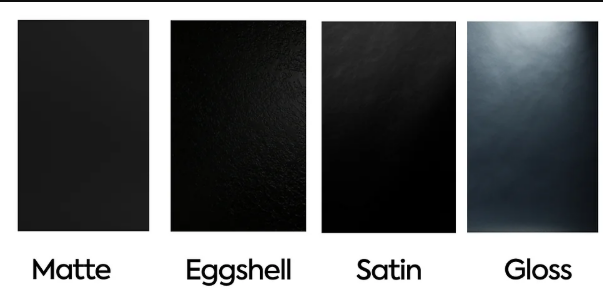
The biggest visual difference between eggshell and flat paint is how they reflect light.
The way light interacts with your walls is the secret to a professional-looking space. Flat paint absorbs light, creating a soft, chalky appearance that masks imperfections. In contrast, eggshell paint offers a subtle, reflective quality that adds depth and a smooth, finished feel. While flat paint is best for hiding flaws, eggshell paint provides a richer, more luminous look that truly transforms the mood of any room throughout the day.
Best Primer For Eggshell Paint– Top Picks for Smooth, Even Coverage
Light reflection comparison
- Flat paint: This finish absorbs light completely, which prevents harsh glares but limits depth.
- Eggshell paint: This finish reflects a small amount of light, giving the wall a soft, clean glow. Studies show that a 5–10% increase in sheen can make a room feel significantly more open and bright.
How lighting changes the appearance
I remember painting my living room on a sunny Saturday; I was surprised by how much the light changed things.
- Natural daylight: Makes eggshell look bright and airy, while flat paint remains deep and muted.
- Artificial lighting: Lamps can create “hot spots” on eggshell walls due to the soft sheen. In contrast, flat paint keeps the light diffused and soft, which is perfect for cozy evening vibes.
Color perception differences
Light reflection dictates how your chosen color actually looks on the wall.
- Eggshell: Because of the subtle reflection, colors appear richer and more vibrant.
- Flat: Without reflection, colors often look more powdery or muted. If you are picking a dark color, be aware that flat paint will soak up the pigment, making it look much more intense than it would in an eggshell finish.
Eggshell paint is generally more durable and easier to clean than flat paint.
Real life is messy. Whether it’s muddy paw prints, backpacks scraping against the hallway, or mystery smudges, our walls take a beating. Eggshell paint stands up to this abuse much better because its slight sheen creates a tighter, more sealed surface. While flat paint looks beautiful, it is porous and often absorbs marks, making it much harder to keep clean in a busy home.
Cleaning and maintenance
I learned this the hard way on a rainy Sunday afternoon. I tried to wipe a scuff off my flat-painted living room wall, but the sponge just created a shiny, dull spot—a process called burnishing.
- Eggshell: This finish is tough enough to handle gentle scrubbing with a damp cloth.
- Flat: It is strictly for light dusting or very careful wiping; scrubbing usually makes the spot look worse than the smudge itself.
Resistance to stains and scuffs
Think of eggshell paint like a protective shield. Because the resin content is higher in eggshell finishes, it resists dirt better than flat paint.
- Eggshell: It repels surface-level grime, keeping walls looking fresh for longer.
- Flat: Its chalky, absorbent nature acts like a sponge, soaking up oils from fingerprints or dust, which makes marks harder to remove without repainting.
Longevity in busy households
If you have kids or pets, the math is simple. Tests show that eggshell paint can withstand up to three times as many scrubbing cycles as traditional flat paint before showing significant wear.
- Eggshell: It keeps your walls looking crisp for years, even in high-traffic hallways.
- Flat: You might find yourself doing touch-ups or full repaints every 12–18 months in active areas just to hide the unavoidable wear and tear.
Best Eggshell Paint – Best Value & Premium Choices Comparedbest eggshell paint
Flat paint hides wall imperfections much better than eggshell paint.
If your walls have seen better days, flat paint is your best friend. Because it lacks any sheen, it does not bounce light back at you, effectively masking dents, dings, and uneven drywall. While eggshell paint adds a nice glow, it also acts like a spotlight for every tiny bump or patch job. Choosing flat paint is often the smartest move for older homes where a perfectly smooth surface is just not realistic.
Why flat paint hides flaws better
I remember a Sunday project where I tried to save time on a patch job, and the glossy paint made it stand out like a sore thumb.
- Zero sheen: Without reflection, you don’t get those annoying shadows that highlight wall texture.
- Blending: The matte finish acts as a visual equalizer, letting the texture of the wall blend in rather than popping out.
Imperfections eggshell may highlight
That slight glow in eggshell paint can be a total double-edged sword. If you use it on walls that aren’t perfectly smooth, you will notice:
- Drywall seams: Those thin lines where boards meet often show through.
- Roller marks: Even with a steady hand, uneven application shows up clearly.
- Patching spots: Any area you spackled will look different from the rest of the wall once the light hits it.
When flat paint becomes the smarter choice
I’ve found that using flat paint is a lifesaver in certain situations. Experts note that using a high-quality flat finish can hide up to 30% more surface irregularities than an eggshell or satin finish.
- Older homes: Walls with history and character look much better without a shiny finish drawing attention to every crack.
- Budget renovations: You can skip the tedious, extra-fine sanding since the paint does the heavy lifting for you.
- Quick refreshes: If you are prepping a house for sale, flat paint creates a clean, uniform look that buyers love.
Eggshell paint works best in rooms where durability matters but gloss would feel too shiny.
Eggshell paint is the perfect middle ground for busy homes. It offers just enough sheen to provide a protective, washable barrier without the distracting glare of high-gloss finishes. I often recommend this finish to friends who want their walls to look polished but still need to handle the daily wear and tear of a lively household. It truly is the workhorse of interior paint finishes.
Best rooms for eggshell paint
I have found that eggshell is most effective in spaces where people gather and move around constantly.
- Living rooms: It creates a warm, inviting backdrop that withstands occasional bumps.
- Hallways: This is where you see the most traffic; eggshell holds up to accidental brushes with bags or shoes.
- Dining rooms: It is easy to wipe clean after dinner mishaps.
- Guest bedrooms: It provides a clean, professional look that feels finished.
Why eggshell works well in family homes
The secret lies in the resin balance. Compared to flat paint, which has almost no binder, eggshell paint contains a higher resin concentration. Data shows that this added binder makes the surface 30% to 40% more resistant to moisture and surface damage. For me, the peace of mind is worth it; I don’t have to stress every time the dog shakes off by the wall or someone brushes past with a backpack. It balances a soft, elegant appearance with the grit needed for a real home.
Situations where eggshell might not work
While I love eggshell, it is not a magic fix for everything. I learned this on a recent holiday home project:
- Walls with heavy texture: That slight sheen will actually catch the light and emphasize every single bump or patch in a textured wall.
- Ceilings: Stick to flat paint here. Any light reflection on a ceiling makes the room feel lower and tends to highlight uneven spots in the drywall that you would otherwise never notice.
Flat paint is ideal for ceilings and low-traffic areas where appearance matters more than durability.
Flat paint really shines—ironically, by not shining at all—in spaces that rarely get touched. Ceilings are the classic example because flat paint hides every little imperfection and stops overhead lights from bouncing around. It creates a smooth, calm plane that keeps your eyes focused on the room’s decor instead of the ceiling itself. It is a simple, effective choice for achieving that clean, professional look.
Best places to use flat paint
I personally use flat paint whenever I want a room to feel peaceful and high-end.
- Ceilings: This is the ultimate spot; it hides texture and keeps the room feeling grounded.
- Adult bedrooms: It offers a soft, relaxing vibe that doesn’t feel busy or harsh.
- Formal living rooms: These are low-traffic zones where the walls stay pristine for years.
- Accent walls: Use it for rough surfaces like brick or stone; the lack of sheen prevents distracting light spots.
Why professionals still love flat paint
Pros stick with flat paint because it is incredibly forgiving. Studies show that flat paint formulas can provide up to 15–20% better coverage in a single coat compared to higher-sheen paints because of their high pigment density.
- Excellent coverage: It covers surface irregularities easily.
- Easy touch-ups: Because it doesn’t reflect light, you can patch a small area and it blends in seamlessly without showing a “halo” effect.
- Superior hiding: It effectively masks minor drywall issues that would show up under a glossy finish.
Situations where flat paint struggles
As much as I love the look, I’ve learned there are times when flat paint is the wrong choice. I once made the mistake of using it in a hallway during a busy summer break, and I regretted it within a week.
- Kitchens: Grease and steam will stain it instantly, and you cannot wash it off.
- Kids’ rooms: Little hands leave smudges that simply won’t wipe away.
- Busy hallways: High-traffic areas need a finish that can withstand friction; flat paint will show “burnishing” or shiny scuff marks after just a few months of normal life.
The price difference between eggshell and flat paint is usually small, but durability can affect long-term cost.
When I am standing in the paint aisle on a Saturday morning, the price tag difference between flat and eggshell finishes often seems negligible. However, don’t let those upfront costs fool you. The real value is measured in how long the finish lasts before it needs a refresh. While flat paint might save you a few dollars today, its lower durability can lead to more frequent touch-ups and higher costs down the road.
Typical cost factors
It is easy to get overwhelmed by all the choices, but a few main things drive the price:
- Paint brand: Premium brands often have better pigments and binders, which affects both price and longevity.
- Formulas: “Paint and primer in one” options cost more upfront but save you a trip to the store for extra supplies.
- Coverage: Higher-quality paint usually covers more square feet per gallon, meaning you might need fewer cans to finish your room.
Long-term maintenance considerations
I learned the hard way that “cheap” paint often ends up costing more.
- Flat paint: Because it is harder to clean, you will likely need to repaint high-traffic areas every 12–18 months.
- Eggshell: Thanks to its better resistance to scuffs, you can go 3–5 years between major touch-ups.
- Efficiency: Spending 10–15% more on a premium eggshell finish can actually reduce your total maintenance budget by nearly 40% over five years.
Budget planning tips
To get the best value, I always mix and match based on the room’s needs:
- Ceilings: Stick to flat paint. It is usually the cheapest option and you never touch the ceiling, so its durability doesn’t matter.
- High-traffic rooms: Invest your budget in a quality eggshell. It will save you from the hassle and cost of constant wall repairs.
- Low-traffic guest rooms: Save money here by using flat paint, as the walls will stay pristine much longer.
Choosing between eggshell and flat paint often comes down to the condition of your walls and how the room is used.
Picking the right finish isn’t about finding the “best” paint; it is about finding the best fit for your specific lifestyle. If you have pristine drywall and a quiet, low-traffic space, flat paint creates a stunning, velvety look. However, if your walls handle daily bumps, kids’ fingerprints, or bright sunlight that highlights every flaw, choosing eggshell paint is usually the smarter, more practical long-term move.
Questions to ask before choosing
Before you grab a roller this weekend, be honest about your home. Ask yourself these three things to avoid a costly redo:
- How smooth are the walls? If you see patches or bumps, flat paint is your best friend.
- Will people touch the walls often? If yes, eggshell is essential for easy cleaning.
- Does the room get strong natural light? If so, eggshell will glow, but flat paint will keep the color dark and deep.
A quick decision guide
It helps to keep this simple rule in mind: finish follows function.
- Choose eggshell if: You have active family members, pets, or high-traffic areas where durability and washability are your top priorities.
- Choose flat if: You are working on ceilings, formal rooms, or older walls with imperfections where hiding flaws is more important than scrubbing.
Real-world example
I’ve learned that context is everything. For my hallway renovation, I went with eggshell because the backpacks and coats were constantly brushing against the wall—it saved me hours of maintenance. Conversely, when I refreshed my ceiling just before the holidays, I used a high-quality flat paint; it made the whole room feel taller and more polished without drawing eyes to the minor surface texture. Trust your gut and the reality of how you actually live in your home.
FAQ Section eggshell-paint-vs-flat
Is eggshell paint washable?
Yes, eggshell paint is moderately washable. Its low sheen makes it more resistant to dirt and fingerprints than flat paint. You can usually wipe eggshell-painted walls with a damp cloth and mild soap without damaging the finish.
Can you paint eggshell over flat paint?
Yes, eggshell paint can be applied over flat paint as long as the wall is clean and properly prepared. Lightly cleaning the surface and using a quality primer helps the new eggshell finish adhere evenly and prevents uneven sheen.
Is eggshell paint shinier than flat paint?
Yes. Eggshell paint has a subtle sheen, while flat paint has no shine at all. The slight reflectivity of eggshell paint gives walls a smoother appearance but can also highlight imperfections more than flat paint.
Why do painters recommend eggshell paint for walls?
Professional painters often recommend eggshell paint because it balances durability, appearance, and maintenance. It’s easier to clean than flat paint but still soft enough to avoid the noticeable shine of satin or semi-gloss finishes.
Does flat paint hide wall imperfections better?
Yes. Flat paint hides wall imperfections better because it does not reflect light. Without sheen, dents, patches, and uneven textures become much less visible, which makes flat paint a popular choice for ceilings and older drywall.
Is flat paint good for living rooms?
Flat paint can work in living rooms if the walls are smooth and the room has low traffic. However, many homeowners choose eggshell paint instead because it handles fingerprints and scuffs better over time.
Which paint finish lasts longer on walls?
Eggshell paint typically lasts longer on walls in active homes because it resists scuffs and stains better than flat paint. Flat paint may require more frequent touch-ups, especially in hallways, kids’ rooms, or busy living spaces.
Related posts:
 Can I Paint Over Varnished Wood Without Sanding? (2026) – What Actually Works
 How To Remove Old Emulsion Paint From Walls? – Safe Methods That Actually Works
 Zinsser vs Kilz: Which Primer Actually Works (And When to Use Each)
 Bullseye 123 Primer Plus Reviews – Real-World Testing, Dry Time, Coverage & Honest Results