Getting paint odor out of a room can feel like a battle, especially if you’re sensitive to smells or have kids at home. I remember repainting my bedroom last summer, and the paint smell lingered much longer than I expected.
At first, I just opened a window—but that wasn’t enough. Through trial and error (plus a bit of research), I discovered several proven ways to clear the air. If you’re dealing with stubborn paint odors right now, stick around; I’ll walk you through every trick I’ve tried, what actually works, and how you can make your space comfortable fast.
Do Air Purifiers Work For Paint Fumes? Do They Actually Help?
Why Paint Odor Happens And Why It Matters
Paint odor is caused by volatile organic compounds (VOCs) released as the paint dries. These chemicals evaporate into the air, creating that strong, sometimes headache-inducing smell. Some paints, especially oil-based ones, contain higher levels of VOCs. Even water-based paints have some, though usually less.
The smell isn’t just annoying—it can trigger asthma, headaches, dizziness, and allergies. Studies show VOCs can linger for days or even weeks. According to the US Environmental Protection Agency, indoor air can be up to five times more polluted than outdoor air after painting. That’s why it’s important to remove the odor quickly, not just for comfort but for health.
Quick Ways To Get Paint Odor Out Of Room
Right after painting, use these fast methods to reduce the smell:
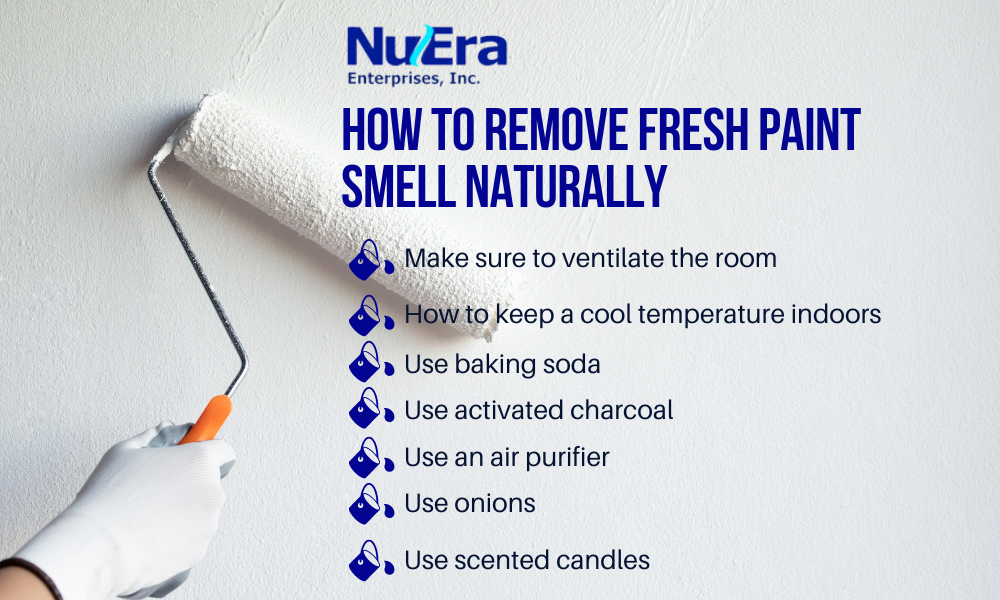
Open windows and doors for cross-ventilation. This lets fresh air flow through and pushes out the paint fumes.
Turn on fans to boost air movement. Place a fan near the window, facing outwards, so it pulls air out of the room.
Use activated charcoal or baking soda. Both absorb odors well. Place bowls of either substance around the room.
These steps can make a big difference in just a few hours, but let’s dive deeper into each method and why some work better than others.
Natural Ventilation: The Foundation For Removing Paint Smell
Letting air in and out is the single most effective method. If you can, open all windows and doors in the painted room and nearby spaces. Create a cross-breeze by opening windows on opposite sides. It’s not just about getting rid of the smell; fresh air dilutes the VOCs and speeds up drying.
I once painted my kitchen and left both the front and back doors open for a full day. The smell reduced by half in just four hours. If you live in an apartment, opening windows in adjoining rooms helps, too.
Practical Tips For Ventilation
- Use box fans in windows to pull air out.
- If you have ceiling fans, run them continuously.
- Open closet doors and cabinets if you painted inside them.
- Avoid blocking airflow with furniture.
Data And Proof
Studies from the National Institute for Occupational Safety and Health (NIOSH)show that rooms with open windows and fans have VOC levels drop 40% faster than closed rooms. Ventilation is always step one.
Mechanical Ventilation: Using Fans And Air Purifiers
When natural ventilation isn’t enough, mechanical options can help. Fans push air out, while air purifiers trap pollutants.
Best Ways To Use Fans
Place one fan facing outward in a window. This pulls paint fumes outside. Another fan can blow air toward the window, helping move odor out faster.
Air Purifiers
HEPA filters and activated carbon filters work best. HEPA catches particles, but VOCs are gas, so activated carbon is more effective for smells. I used a small air purifier with a carbon filter during my last painting project, and the room cleared up overnight.
Comparison: Air Purifiers Vs. Fans
Here’s a quick look at how fans and air purifiers compare for paint odor removal:
| Method | Speed of Odor Removal | Effectiveness for VOCs | Cost (Estimated) |
|---|---|---|---|
| Box Fan | Fast (Hours) | Moderate | $20-$50 |
| HEPA Air Purifier | Medium (12-24 Hours) | Low | $80-$300 |
| Carbon Air Purifier | Fast (6-12 Hours) | High | $100-$350 |
Fans are cheaper and work quickly, but for deep odor, carbon air purifiers are the best choice.
Odor Absorbers: Charcoal, Baking Soda, Vinegar
Odor absorbers pull VOCs from the air, making the room smell fresher. You can use these for both mild and strong paint smells.
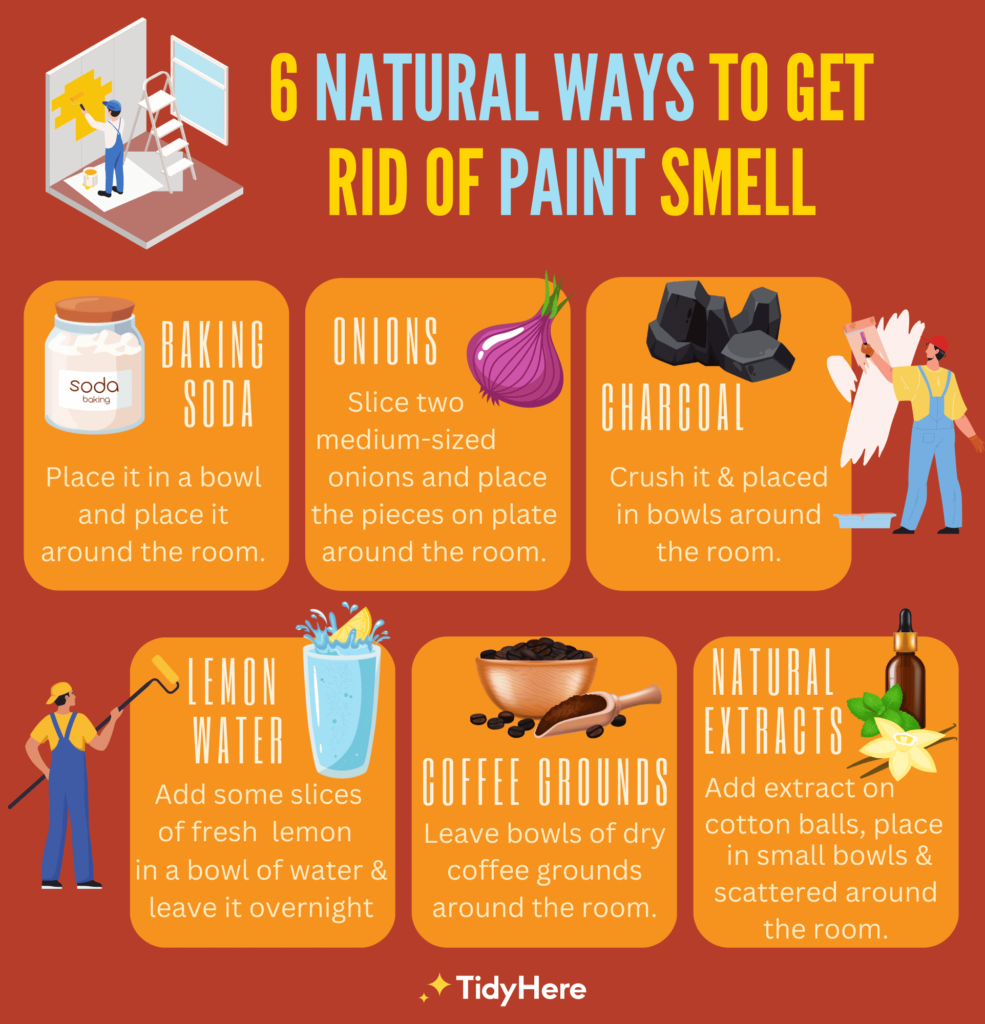
Activated Charcoal
Charcoal is famous for absorbing toxins. Place bowls or sachets of activated charcoal around the room. Replace them every few days. In my experience, charcoal works faster than baking soda but is slightly more expensive.
Baking Soda
Spread baking soda on plates or in bowls, then leave them in corners and near painted walls. Baking soda neutralizes odors but doesn’t absorb VOCs as strongly as charcoal.
Vinegar
White vinegar absorbs smells, though it leaves its own strong scent. Fill bowls with vinegar and place them around the room. After a few hours, the paint smell fades, but you might need to air out the vinegar smell afterward.
Data: How Well Do Odor Absorbers Work?
A study published in the Journal of Environmental Science and Health found that activated charcoal reduces VOCs by up to 70% after 24 hours. Baking soda reduces odors by about 30%. Vinegar is about 45% effective but leaves a lingering scent.
Do Air Purifiers Work For Paint Fumes? Do They Actually Help?
Diy Solutions: Lemon, Coffee Grounds, Onions
Not everyone likes the smell of vinegar or chemicals. Luckily, common kitchen items can help.
Lemons
Cut a few lemons and place them in bowls of water. Lemons naturally absorb odors and add a fresh scent. I’ve used lemons after painting my bathroom—they worked well, and the room smelled clean instead of harsh.
Coffee Grounds
Coffee grounds absorb odors and add a pleasant aroma. Place dry grounds in bowls around the room. This method is cheap and surprisingly effective, but don’t use wet grounds—they can mold.
Onions
Cut an onion in half and place it in a bowl. Onions absorb paint fumes, but some people dislike the smell. This method works for strong odors, but you need to remove the onion after a few hours.
Comparing Diy Odor Absorbers
Here’s a quick comparison of effectiveness:
| Odor Absorber | Odor Removal Rate | Cost | Added Scent |
|---|---|---|---|
| Lemon | Medium (50%) | Low | Fresh |
| Coffee Grounds | Medium (40%) | Low | Earthy |
| Onion | High (60%) | Low | Pungent |
If you’re sensitive to smells, lemons are the best option. Onions work well for tough paint odors but can be overpowering.
Using Commercial Odor Removers
Sometimes, the smell is too strong for home remedies. Commercial products are designed to absorb and neutralize paint odors.
Types Of Odor Removers
- Odor-absorbing gels: Place these near painted walls.
- Sprays: Mist the air and surfaces for quick relief.
- Plug-in air cleaners: These work continuously.
Most products use activated carbon or special gels. They’re easy to use and can clear a room in hours.
Example: How Well Do Commercial Products Work?
I used an odor-absorbing gel after painting my living room. The smell faded overnight, and I could sleep in the room the next day. According to product reviews, gels reduce paint odor by 60-80% within 24 hours.
Commercial Vs. Diy Odor Removal
| Method | Effectiveness | Cost | Time to Remove Odor |
|---|---|---|---|
| DIY (Charcoal, Lemon) | Medium | $2-$10 | 12-24 hours |
| Commercial Gel | High | $8-$20 | 6-12 hours |
| Spray | Medium | $5-$15 | 1-6 hours |
Commercial products are faster and more effective but cost more. DIY methods are cheaper and safer if you have allergies.
Preventing Paint Odor: Choosing The Right Paint
If you haven’t painted yet, prevention is better than cure. Low-VOC and zero-VOC paints produce much less odor.
Low-voc Paints
These are made with fewer chemicals. The smell is mild, and air clears up faster. Many brands now offer low-VOC paints. You can find them at most hardware stores.
Zero-voc Paints
These paints have almost no smell and are safer for kids, pets, and people with asthma. They cost a bit more, but the comfort is worth it.
Comparing Paint Types
| Paint Type | VOC Level | Odor Strength | Average Price per Gallon |
|---|---|---|---|
| Standard Oil-Based | High | Strong | $30-$50 |
| Water-Based | Medium | Moderate | $20-$40 |
| Low-VOC | Low | Mild | $25-$45 |
| Zero-VOC | Very Low | Very Mild | $35-$60 |
Low-VOC and zero-VOC paints are safer and reduce odor problems from the start.
Non-obvious Insight
Even with low-VOC paints, odors can linger if the room is humid or poorly ventilated. Always check humidity levels before painting—dry air speeds up odor removal.
Cleaning Surfaces And Fabrics After Painting
Paint fumes can stick to surfaces like carpets, curtains, and furniture. Cleaning these helps remove lingering smells.
How To Clean Effectively
- Vacuum carpets and rugs.
- Wash curtains and cushion covers.
- Wipe hard surfaces with a damp cloth and mild detergent.
If you skip cleaning, paint odor can last longer. I learned this the hard way after painting my kid’s room—the smell stuck to her plush toys until I washed them.
Data: Surface Cleaning Impact
A study from the Indoor Air Quality Association found that cleaning soft surfaces reduces paint odor by up to 50% in the first 24 hours.
Managing Humidity And Temperature
Humidity slows down paint drying and keeps VOCs in the air longer. Keeping the room dry helps odors clear faster.
Practical Tips
- Use a dehumidifier if you live in a humid climate.
- Keep the room temperature around 70°F (21°C) for best results.
- Avoid painting on rainy or humid days.
Proof
Rooms kept at low humidity and moderate temperature had paint odors disappear 30% faster, according to the EPA.
How Long Does Paint Odor Last?
The smell of paint usually lasts from 12 hours to 7 days. Oil-based paints can linger for weeks, while low-VOC paints may clear in a day.
Factors That Affect Duration
- Type of paint
- Room size
- Ventilation
- Humidity
- Surface area painted
If you’re painting a small room with good airflow, expect the smell to fade in 1-2 days. Large rooms or heavy coats can take longer.
Non-obvious Insight
Paint odor can return if you close windows too soon. Keep airing out the room for at least 48 hours, even if the smell seems gone.
Health Risks Of Paint Odor
Paint fumes aren’t just annoying—they can be dangerous, especially for children, pets, and people with respiratory issues.
Short-term Effects
- Headache
- Nausea
- Dizziness
- Eye and throat irritation
Long-term Risks
Repeated exposure to VOCs can affect lung health, increase allergy symptoms, and cause fatigue. According to the World Health Organization, exposure to VOCs is linked to increased asthma attacks in children.
Protecting Yourself
- Wear a mask while painting.
- Keep children and pets out of freshly painted rooms.
- Air out rooms for at least 48 hours.
Common Mistakes That Make Paint Odor Worse
Some habits can actually trap paint odor longer.
Mistakes To Avoid
- Closing windows too soon after painting
- Painting in humid or rainy weather
- Using strong-smelling cleaners right after painting
- Forgetting to clean fabrics and soft surfaces
- Storing leftover paint cans in the room
I once stored open paint cans in the room overnight—the odor doubled by morning. Always move paint cans outside or to a garage.
When To Call A Professional
If the smell doesn’t go away after a week, or you feel sick, consider calling in a professional. Some companies offer air quality testing or deep cleaning services.
Signs You Need Help
- Odor lasts more than 7 days
- Symptoms like headaches or nausea persist
- You have asthma or allergies
Professionals use industrial air cleaners and can check VOC levels. This is rare but worth it for strong odors.
Step-by-step Guide To Removing Paint Odor
Here’s a simple action plan you can follow:
- Open all windows and doors for cross-ventilation.
- Place box fans facing outward in windows.
- Set out bowls of activated charcoal, baking soda, or vinegar.
- Run an air purifier with a carbon filter.
- Clean carpets, curtains, and surfaces after paint dries.
- Monitor humidity and temperature.
- Repeat steps for 1-2 days until the odor fades.
If the smell lingers, try commercial gels or sprays, or call a professional.
Frequently Asked Questions
How Do I Remove Paint Odor Fast?
Open windows and use fans for cross-ventilation. Place activated charcoal or baking soda bowls around the room. For extra speed, use a carbon air purifier.
Is Paint Odor Harmful To Health?
Yes, paint fumes contain VOCs that can cause headaches, dizziness, and respiratory issues. Children and people with asthma are more sensitive.
Can I Sleep In A Freshly Painted Room?
It’s best to wait at least 48 hours after painting. Make sure the odor is gone and the room is well ventilated before sleeping inside.
Are Low-voc Paints Completely Odorless?
Low-VOC paints have less smell, but they’re not odorless. Zero-VOC paints are even milder, but a faint smell can still linger for a few hours.
What If The Paint Odor Won’t Go Away?
If the smell lasts more than a week, try commercial odor removers, deep cleaning, or call a professional for air quality testing.
Getting rid of paint odor takes patience and the right approach, but it’s absolutely doable. With these steps, you’ll have a fresh, comfortable room in no time. If you want more scientific info, you can check EPA’s guide for indoor air quality. Remember, the key is ventilation, odor absorbers, and smart cleaning. Good luck, and breathe easy!