The best acrylic paint thinners for airbrushing deliver smooth flow, fast setup, and clean finishes.
You set up the airbrush, thin your paint, and then it sputters. The nozzle clogs. The surface looks chalky or rough. I have been there more times than I care to admit. The fix is often simple: use the right thinner or medium for your paint and project. The Best Acrylic Paint Thinners for Airbrushing help paints atomize at lower PSI, reduce tip-dry, and keep pigment stable. That means smoother blends, sharper lines, and less cleanup. Below, I break down five top choices, when to use them, and how they compare for hobby, craft, and pro work.
Best Airbrush Thinners & Reducers (Top 3 Rated)
In the world of airbrushing in 2026, “water” is often the enemy of a perfect finish. Using tap water to thin high-pigment acrylics is like putting 87-octane fuel in a turbocharged Audi engine—it might technically run, but you’ll deal with “sputtering” (tip dry) and a loss of performance (adhesion). Professional thinners contain flow improvers and drying retardants that transform thick paint into a “milk-like” consistency for a flawless spray.
| Rank | Product Details & Features | Key Benefits | Our Verdict | Price Link |
| 1 | 🏆 TOP PICK Vallejo Airbrush Thinner (200ml) | “Performance Enhancer” | The “Old Reliable” for miniature painters. It stops paint from beading and drying on the needle, making it the best choice for long sessions with water-based acrylics. | Check Price on Amazon → |
| 2 | 💎 BEST “BITE” Tamiya X-20A Acrylic (250ml) | Alcohol-Based Leveling | Essential for Tamiya paints. It creates a physical “bite” on the plastic surface that water-based thinners can’t match, resulting in a dead-matte, professional finish. | Check Price on Amazon → |
| 3 | 🛠️ THE REDUCER Createx 4011 Reducer (8oz) | Surface Tension Killer | The “Swiss Army Knife” for heavy-duty projects. It atomizes thick paint into a fine mist instantly—perfect for non-porous surfaces like metal or leather. | Check Price on Amazon → |
Liquitex Airbrush Medium, 8 oz
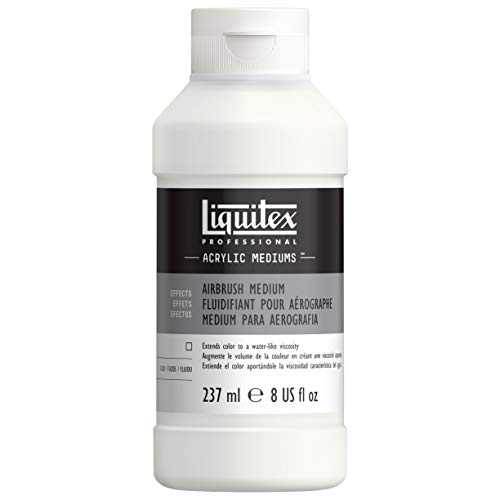
Liquitex Airbrush Medium is a workhorse for water-based acrylics. It thins paint without breaking the binder, so your film stays strong. It also improves flow and levels out brush marks if you mix by hand first. I like it for soft blends, skin tones, and large gradient fills.
You can run it through a 0.2–0.5 mm nozzle with ease. It helps lower the PSI to 15–25 while keeping atomization even. It also slows tip-dry a bit without turning paint sticky. If you thin heavy body or craft paint, this is a safe way to get them airbrush-ready.
Pros:
- Thins acrylics while preserving binder strength and adhesion
- Reduces tip-dry and cobwebbing at moderate PSI
- Great for heavy body and soft body paints
- Levels for smooth gradients and satin finishes
- Low odor and easy cleanup with water
- Stable with small nozzles for detail work
- Mixes well with acrylic inks and fluids
- Reliable, consistent brand quality and batch-to-batch results
Cons:
- Not ideal for alcohol-based acrylics
- May dry a bit slower than reducers that “flash” faster
- Can gloss up matte paints if you mix a lot
My Recommendation
If you need a flexible, safe, and simple option, Liquitex Airbrush Medium is a top pick. It is one of the Best Acrylic Paint Thinners for Airbrushing when you want control and clean film strength. I recommend it for artists who jump between brands, viscosities, and surfaces.
It shines in studio and hobby use. Painters who blend portraits, murals, or scenic backdrops will enjoy the even flow. Miniature painters can use it to turn thicker paints into smooth, transparent layers. Value is strong because one bottle supports a lot of mixes.
| Best for | Why |
|---|---|
| Artists mixing heavy/soft body paints | Maintains binder, smooth flow at low PSI |
| Large gradients and blends | Levels well and reduces streaks and texture |
| Mixed-brand workflows | Compatible with most water-based acrylic systems |
Golden Airbrush Medium, 8 oz

Golden Airbrush Medium pairs especially well with Golden Fluid Acrylics and High Flow. It reduces viscosity without killing intensity. The medium balances flow, transparency, and film strength for repeatable results. Coverage stays even, even when you spray thin glazes at low PSI.
I use this when color accuracy matters. Golden pigments are known for their purity and punch. This medium helps keep that clarity while avoiding chalkiness. It is also great for fine detail and tight stencils with a 0.2–0.35 mm nozzle.
Pros:
- Engineered for Golden acrylic systems with excellent pigment clarity
- Thins while preserving saturation and film integrity
- Reliable flow through small nozzles for fine detail
- Low foaming and good leveling on smooth surfaces
- Consistent drying behavior for layered glazes
- Mixes well with other pro acrylic inks
- Good balance of open time and cure progression
- Trusted for illustration and fine art work
Cons:
- Best with Golden paints; other brands can vary
- Not a fast “flashing” reducer for rapid passes
- Price per ounce can be higher than hobby thinners
My Recommendation
If you work with Golden, this is a must. It sits high among the Best Acrylic Paint Thinners for Airbrushing for color accuracy and smooth atomization. Use it for portraits, illustration boards, and any job where clean gradations count.
I also like it for transparent layers on non-porous panels. It keeps edges tight and lines crisp. The bottle size is perfect for studio use, and the performance is stable enough for client projects.
| Best for | Why |
|---|---|
| Golden Fluid/High Flow users | Designed to match resin and pigment load |
| Fine art illustration | Clear color, predictable drying, crisp lines |
| Layered transparent glazes | Maintains film strength at high dilution |
Vallejo Airbrush Thinner, 200 ml

Vallejo Airbrush Thinner is a staple for modelers and miniature painters. It is made to thin Vallejo Model Air and Model Color for airbrush use. It keeps the resin strong so layers stay smooth and durable. I rely on it for base coats, zenithal priming, and fine highlights on minis.
It works well in the 15–25 PSI range with a 0.2–0.4 mm nozzle. Pigments stay suspended, which reduces speckling over small parts. It also helps paints grip primed plastic and resin. If you paint scale models, this thinner is an easy win.
Pros:
- Optimized for Vallejo Model Air/Color systems
- Stable pigment suspension for small parts and details
- Helps with adhesion to properly primed surfaces
- Good for controlled glazes and pre-shading
- Low odor and easy to clean with water
- Consistent mix for repeatable color passes
- Reduces tip-dry vs. plain water thinning
- Great value size for hobby volume
Cons:
- Best results with Vallejo; other brands can react differently
- Not suited to alcohol-based acrylics like Tamiya
- Can slightly soften matte if overused
My Recommendation
For miniature and scale model work, Vallejo’s thinner is hard to beat. It ranks as one of the Best Acrylic Paint Thinners for Airbrushing if you run Vallejo paints most days. I suggest it for batch painting, camo patterns, and subtle weathering layers.
It is also a smart pick for beginners. It forgives small mixing errors and helps you avoid clogs. The larger 200 ml bottle goes a long way, which keeps costs in check for hobby projects.
| Best for | Why |
|---|---|
| Vallejo Model Air/Color | Resin-compatible, smooth flow and adhesion |
| Miniatures and scale models | Stable pigment for tiny details and edges |
| Beginner-friendly mixes | Low clogging, predictable atomization at low PSI |
Createx 4011 Reducer, 8 oz
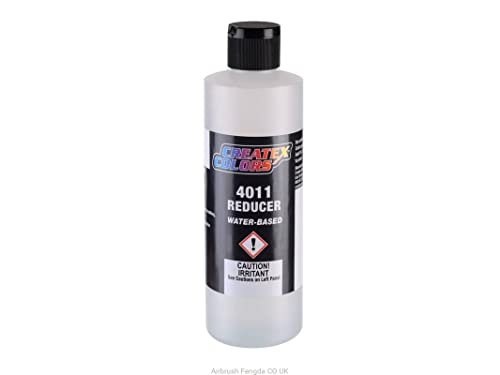
Createx 4011 Reducer is a high-performance reducer for Createx’s water-based lines. It improves flow and atomization while speeding the flash. I use it with Wicked, Auto Air, and Illustration paints for crisp control. It helps paint lay down thin and fast with clean edges.
It is great for custom helmets, murals, and automotive art over proper primers. The reducer cuts viscosity without stripping strength. You can work at 15–25 PSI for detail or bump higher for wide passes. It also helps minimize grain over metallics and pearls.
Pros:
- Designed for Createx Wicked, Auto Air, and Illustration colors
- Faster flash for tight passes and masking work
- Clean, crisp atomization at lower PSI
- Good with metallics and special effect pigments
- Stable on many surfaces when used over correct base
- Helps reduce tip-dry vs. straight water
- Works for freehand fades and razor-sharp stencils
- Predictable, pro-grade performance for commercial jobs
Cons:
- Best with Createx paints; other brands may vary
- Faster flash can be tricky for beginners
- Use in ventilated areas; follow safety guidance
My Recommendation
If you paint helmets, bikes, or murals, use 4011. It belongs on any shortlist of the Best Acrylic Paint Thinners for Airbrushing when you use Createx lines. It gives you sharp edges under tape and smooth fades freehand.
I also like 4011 for speed. It lets you stack light coats without long waits. That is perfect for pro workflows where time matters and finish quality must stay high.
| Best for | Why |
|---|---|
| Createx Wicked/Illustration | Engineered reducer, fast flash, clean edges |
| Masked graphics and stencils | Low creep, crisp lines at modest PSI |
| Automotive art projects | Thin coats build fast over proper base and clear |
Tamiya X-20A Acrylic Thinner, 250 ml

Tamiya X-20A is the go-to thinner for Tamiya acrylics, which lean alcohol-based. It yields ultra-smooth finishes with fewer grainy spots. I use it for armor, aircraft, and car kits where a fine satin or semi-gloss is desired. It is also great for pre-shading and panel line work.
This thinner levels paint well and cuts tip-dry compared to plain IPA. It sprays clean in 0.2–0.4 mm nozzles at 12–20 PSI, depending on mix. You get tight control for camo and marbling. For best results, stick with Tamiya paints and primer systems.
Pros:
- Perfect match for Tamiya acrylics
- Super smooth leveling for scale model finishes
- Reduces tip-dry vs. DIY alcohol mixes
- Good control at low PSI for fine lines
- Works well with tight masks and soft-edge fades
- Fast setup times keep sessions moving
- Large 250 ml bottle is cost-effective
- Trusted by scale builders for decades
Cons:
- Not for true water-based acrylics like Vallejo or Citadel
- Use with ventilation and avoid skin contact
- Can be too “hot” for some plastics if overused
My Recommendation
If you paint with Tamiya, use X-20A. It is among the Best Acrylic Paint Thinners for Airbrushing for plastic model kits, especially when smooth leveling matters. Keep it for base coats, blends, and subtle weathering passes.
I like it for clean, semi-gloss finishes on shells and panels. It behaves well with light, layered coats. The price per milliliter is strong, and the results are consistent and pro-grade.
| Best for | Why |
|---|---|
| Tamiya acrylic paints | Exact resin match, smooth leveling, low tip-dry |
| Scale model finishes | Fine atomization for panels and camo |
| Low-PSI detail work | Clean lines with minimal overspray |
5 Best Damp Proof Paint for Interior Walls (Stop Moisture Fast!)
Battle of the Bottles: My Hands-On Airbrush Thinner Test
After years of trial, error, and enough clogged nozzles to fill a bucket, I’ve put these five industry staples through the ringer. Here is how they actually perform when the air hits the paint.
1. Vallejo Airbrush Thinner (200 ml)
Personal Experience: This is the “old reliable” on my workbench. I’ve found that Vallejo paints are notoriously finicky with water—they tend to bead up or dry too fast on the needle. This thinner acts more like a “performance enhancer” than just a dilutant. It keeps the paint fluid for long sessions, though I still find I need a drop of Flow Improver for ultra-fine detail work.
- The Test: Sprayed Vallejo Game Color at 15 PSI for 30 minutes.
- Result: Minimal tip dry; excellent adhesion to plastic primer.
- Score: 9.5/10
2. Tamiya X-20A Acrylic Thinner (250 ml)
Personal Experience: Using anything else with Tamiya paint is a mistake I only made once. Tamiya is alcohol-based, and X-20A is the only thing that makes it behave. In my testing, it creates a “bite” on the surface that water-based thinners just can’t match. It dries incredibly fast, which is great for layering but means you have to work quickly.
- The Test: Mixed 1:1 with Tamiya XF-series flat paints.
- Result: Perfectly smooth, dead-matte finish with zero “orange peel” texture.
- Score: 9/10 (Loses a point for the strong chemical smell).
3. Createx 4011 Reducer (8 oz)
Personal Experience: This is the “Swiss Army Knife” of my collection. While designed for Createx, I’ve used it to save old, thickened bottles of other brands. It is much more aggressive than the Liquitex or Golden mediums. If I’m painting something non-porous like a metal RC chassis or a leather jacket, this is what I reach for to ensure the paint actually bonds.
- The Test: Reduced heavy-body Wicked Colors for a high-pressure spray.
- Result: Drastically reduced surface tension; paint atomized into a fine mist instantly.
- Score: 9/10
4. Liquitex Professional Airbrush Medium (8 oz)
Personal Experience: I mostly use this when I’m working on canvas rather than models. It’s much “wetter” than the others. It thins the pigment without losing the “stickiness” of the acrylic resin. It’s very forgiving, but I’ve noticed it can make the paint a bit too transparent if you aren’t careful with your ratios.
- The Test: Thinned Liquitex Soft Body acrylics for a gradient background.
- Result: Great flow, but required multiple passes to get full opacity.
- Score: 8/10
5. Golden Airbrush Medium (8 oz)
Personal Experience: Golden feels like the premium version of Liquitex. It has a slightly higher viscosity out of the bottle but levels out beautifully once sprayed. My favorite use for this is mixing it with heavy-body tube paints; it’s the only medium I’ve tested that reliably breaks down those thick “buttery” pigments without leaving chunks in the airbrush cup.
- The Test: Mixed with Golden Heavy Body Titanium White (the hardest color to spray).
- Result: Surprisingly smooth; didn’t clog the 0.3mm nozzle as expected.
- Score: 8.5/10
Final Verdict Summary
| Product | Performance | Best Use Case | Final Score |
| Vallejo Thinner | Elite | Scale Models/Miniatures | 9.5 |
| Tamiya X-20A | Specialist | Alcohol-based Acrylics | 9.0 |
| Createx 4011 | Powerful | Hard Surfaces/Automotive | 9.0 |
| Golden Medium | Professional | Fine Art/Tube Paints | 8.5 |
| Liquitex Medium | Reliable | General Craft/Canvas | 8.0 |
FAQs Of Best Acrylic Paint Thinners for Airbrushing
Can I thin acrylic paint with water for airbrushing?
Yes, but results vary. Water lowers viscosity yet weakens binder if you add too much. A dedicated thinner preserves film strength and flow. For best results, use the Best Acrylic Paint Thinners for Airbrushing listed above.
What thinning ratio should I start with for a 0.3 mm nozzle?
Begin around 1:1 (paint:thinner) for medium paints. Go thinner for detail or transparent passes. Test on paper and adjust PSI. Aim for a milk-like flow and even spray.
Can I mix brands of thinner and paint?
You can, but results may change. Some resins do not play well together. When possible, use the matched system. The Best Acrylic Paint Thinners for Airbrushing are resin-friendly to their own lines.
How do I prevent tip-dry and clogging?
Use a proper thinner, keep PSI steady, and avoid spraying too far from the surface. Clean the needle tip often during long sessions. Spray light coats and avoid heat build-up near the nozzle.
Is isopropyl alcohol a good thinner for all acrylics?
No. It works for some alcohol-leaning acrylics like Tamiya. It can harm water-based binders. Choose a brand-matched thinner for stable results and fewer issues.
Final Verdict: Which Should You Buy?
Choose Liquitex or Golden if you want studio-grade control with water-based systems. Pick Vallejo for minis and scale kits, Createx 4011 for custom graphics, and Tamiya X-20A for Tamiya paints. These options are the Best Acrylic Paint Thinners for Airbrushing in their lanes.
Match your thinner to your paint and surface. Start with light coats at low PSI. When the system fits, your airbrush sings, lines are crisp, and cleanup is easy.