
The best medium for thinning acrylic paint is a dedicated acrylic flow or pouring medium.
You want smooth, streak-free color that glides and levels without cracking. But thin too far with plain water and your paint can lose grip, color strength, and finish. I’ve tested a lot of mediums and thinners to solve this. The right choice lets you extend open time, reduce brush marks, boost flow, and keep your layers stable. Below, I break down the best medium for thinning acrylic paint for brush work, pouring, and even airbrushing so you can skip the guesswork and get to painting.
Art Mediums & Thinners Comparison
| Product Name | Purpose | Best Used For | Key Advantage | Price Link |
| Nicpro Pouring Medium | Consistency | Fluid Art & “Cells” | High gloss; prevents cracking/crazing | Check Price |
| Falling in Art Medium | Consistency | Bulk Pouring Projects | Large 33.8 oz size; excellent value | Check Price |
| Nicpro Acrylic Thinner | Viscosity | Brush/Sponge Work | Maintains paint structure while thinning | Check Price |
| Nicpro Airbrush Thinner | Flow | Precision Airbrushing | Prevents “tip dry” and nozzle clogs | Check Price |
| Nicpro Flow Improver | Surface Tension | Detail & Blending | Increases “open time” (drying time) | Check Price |
Nicpro Pouring Medium, 8.45 oz
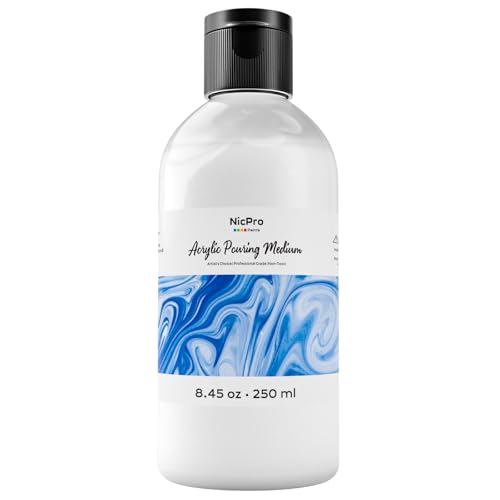
This compact bottle is a strong start if you want to test pouring without committing to a full liter. I mixed it 1:1 with craft acrylics and got clean drips, soft edges, and fewer craters. It levels well, which is key for puddle pours and dirty pours. Colors stayed bright after drying, with low shift in gloss.
I noticed less crazing compared to plain water or DIY mixes. The film stayed flexible once cured, which helps on stretched canvas. It also thins heavy body paint fast, so you need fewer drops than with water. For small batches and tests, this size is just right.
Pros:
- Reliable flow and leveling for small pours
- Less crazing than water-thinned mixes
- Keeps color strength and adhesion
- Great for testing recipes without waste
- Works with student and craft acrylics
- Fast blend-in with thick paints
Cons:
- Small bottle runs out fast for big canvases
- Not formulated to extend open time much
- May need silicone or torch for strong cells
My Recommendation
If you want the best medium for thinning acrylic paint for entry-level pouring and swipe tests, start here. It helps you dial in ratios without overbuying. I like it for tile coasters, mini canvases, and color experiments where control matters. It has a clean finish, which makes it easy to seal after curing.
| Best for | Why |
|---|---|
| Small-batch pouring tests | Handy size and predictable flow |
| Beginners | Simple mix, fewer flaws than water |
| Craft acrylic users | Boosts poor flow without killing color |
Nicpro Acrylic Paint Thinner, 33.8 oz

This large bottle is built for brush work and everyday studio use. It thins acrylics for smoother strokes and fewer brush marks, without breaking the paint film. I used it at 10–30% with heavy body and got silkier flow on canvas and wood. It also helped with glazing by easing out streaks.
The finish stayed even across layers, which reduces “patchy” spots that happen with water. It plays well with gel mediums and matte agents too. I like that it adds flow but not shine by default, so I control the final sheen. For painters who move between fine detail and mid-scale work, this is a staple.
Pros:
- Great daily thinner for brush and glaze work
- Preserves adhesion and color strength
- Works across brands and paint grades
- Large size is cost-effective
- Less streaking than water-only mixes
- Mild scent and easy cleanup
Cons:
- Not ideal for strong cell effects in pours
- Does not extend open time much on its own
- Bottle is bulky for travel
My Recommendation
If you want the best medium for thinning acrylic paint for brush control, glaze layers, and smoother coverage, this is a smart buy. It helps you lay paint thin without sacrificing the bond. I recommend it for detail painters, mural touch-ups, and anyone who wants cleaner edges with less drag.
| Best for | Why |
|---|---|
| Brush painters | Reduces drag and brush marks |
| Glazing | Thins color while keeping film strength |
| Mixed-media layers | Compatible with gels and matte mediums |
Nicpro Professional Airbrush Thinner, 33.8 oz

Airbrushing acrylics can be tough without the right thinner. This one is tuned for fine atomization and smooth flow through 0.2–0.5 mm nozzles. I shot it 1:1 with fluid acrylics at 18–25 PSI and had zero tip-dry for long passes. Coverage was even on primed plastic, wood, and canvas.
It dries to a durable film that bonds well, which matters when you mask or layer. Colors stay crisp and do not chalk out, unlike water-heavy mixes. The pump top controls pours, so you waste less. If you need the best medium for thinning acrylic paint for airbrush work, this bottle earns its keep.
Pros:
- Designed for fine spray and low tip-dry
- Excellent flow at moderate PSI
- Strong bond on multiple surfaces
- Pump top is studio-friendly
- Holds color intensity after drying
- Good with fluid and high-flow acrylics
Cons:
- Over-thinning can reduce coverage on first pass
- Not meant for cell-heavy pours
- Needs proper ventilation for long sessions
My Recommendation
For model makers, muralists, and T-shirt artists, this is the best medium for thinning acrylic paint into a spray-ready mix that behaves. It balances flow, bond, and color, which saves time and frustration. If you work with fine lines or soft fades, you will notice the difference in control.
| Best for | Why |
|---|---|
| Airbrush detailing | Smooth atomization and fewer clogs |
| Primed plastics and metals | Better adhesion vs. water-thinned paint |
| Layered effects | Dry film is durable under masking |
Falling in Art Pouring Medium, 33.8 oz

This pouring medium gives you high-flow consistency with minimal fuss. I mixed 2 parts medium to 1 part paint for puddle pours and ring pours. It leveled fast and dried smooth with fewer pinholes. On larger panels, the surface stayed even, which reduced sanding or re-pouring.
Cell formation was decent with a light silicone oil touch, and lacing showed up in swipe techniques. It kept colors from dulling, a common issue in budget pours. The finish leaned toward satin, which looks clean before varnish. If you pour big and often, this size is the sweet spot.
Pros:
- High-flow formula for clean pours
- Smooth leveling across large panels
- Colors stay bright after cure
- Plays well with silicone for cells
- Good value per ounce
- Less need for torching to pop bubbles
Cons:
- Not ideal for brush glazing
- Satin finish may need topcoat if you want gloss
- Cold rooms can slow cure time
My Recommendation
If your focus is acrylic pouring, this is the best medium for thinning acrylic paint into a silky, high-flow mix that stays bright. I like it for coastal palettes and metallics because it keeps a clean, even sheen. It makes repeatable recipes simple, which helps you scale up without surprises.
| Best for | Why |
|---|---|
| Large canvases | Reliable leveling and coverage |
| Swipe and ring pours | Flow holds lines and edges |
| Bright color palettes | Low color shift on drying |
Nicpro Acrylic Flow Improver, 33.8 oz
Flow improver is different from a standard thinner or pouring medium. It reduces surface tension so paint spreads and levels better, ideal for fine lines and tiny details. I used a few drops per ounce of paint and saw smoother edges on lettering and line work. It cut down on streaks without bloating the paint.
It also improves wet blending on canvas, making color transitions softer. Because you use small amounts, a liter lasts a long time. For miniatures, pin-striping, and line art, it unlocks control. Pair it with water or a standard medium for dialed-in handling.
Pros:
- Excellent for line work and detail
- Reduces brush marks and drag
- Economical—small dose per mix
- Plays well with other mediums
- Helps wet blending and glazing
- Improves edge control on lettering
Cons:
- Not a standalone pour medium
- Overuse can make paint too runny
- Requires testing with each paint brand
My Recommendation
If detail is your goal, this is the best medium for thinning acrylic paint when you need flow without losing body. It is a secret weapon for crisp edges, script text, and tiny highlights. I reach for it when a standard thinner still leaves drag on the brush.
| Best for | Why |
|---|---|
| Lettering and line art | Sharper edges and fewer skips |
| Miniatures | Control with tiny brushes |
| Soft blends | Reduces surface tension for smooth fades |
FAQs Of best medium for thinning acrylic paint
Can I thin acrylic paint with just water?
Yes, in small amounts. Keep it under about 30% for brush work. More than that can weaken the paint film and reduce adhesion.
What is the best medium for thinning acrylic paint for pouring?
A dedicated pouring medium. It adds flow, reduces crazing, and keeps color bright. It also levels better than water.
What should I use to thin acrylics for airbrushing?
Use an acrylic airbrush thinner. It improves atomization and reduces tip-dry. It also protects adhesion on plastics and metals.
Do thinners change the finish (gloss or matte)?
Some do. Many thinners are neutral, while pouring mediums lean satin. Add a gloss or matte varnish after if needed.
How much thinner should I add to my acrylic paint?
Start small. For brush work, 5–20% works well. For pouring, try 1:1 to 2:1 medium to paint, then adjust.
Final Verdict: Which Should You Buy?
If you want the best medium for thinning acrylic paint for brush control and daily use, choose Nicpro Acrylic Paint Thinner (33.8 oz). For airbrush work, the Nicpro Professional Airbrush Thinner delivers clean spray and strong bond.
Pour artists should pick Falling in Art Pouring Medium for smooth, bright results. For fine lines and blends, Nicpro Acrylic Flow Improver is a smart add-on.
Related posts:
 What Are the 5 Types of Paint Finishes? A Simple Guide to Choosing the Right One
 A Guide To Roller Nap Lengths– Smooth, Medium, or Thick? Explained
 Can You Spray Emulsion Paint?-Spraying Tips, Thinning Ratios & Mistakes
 Best Paint Sprayer Without Thinning: Tested 5 Sprayers That Handle Thick Coatings With Ease