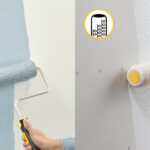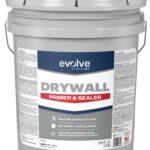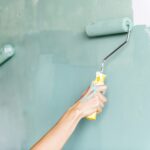
Yes, it’s recommended to prime over spackle before painting. Spackle can absorb paint differently than the surrounding wall, which may cause uneven sheen or color if left unprimed. Applying a primer seals the spackle, ensures uniform paint adhesion, and helps the final coat blend seamlessly with the rest of the wall. Once the primer dries, you can paint over it just like the rest of the surface.
Pro Tip: How to Prevent “Flashing” in 60 Seconds
To avoid those annoying dull spots, you don’t need to prime the entire wall—just the patches. I always keep a can of Zinsser Bulls Eye 1-2-3 Spray Primer in my toolkit.
Why it’s the best for spackle: It’s an aerosol spray, so you can “spot prime” several patches in seconds without washing a brush. It dries in 30 minutes, meaning you can get back to painting almost immediately.
If you have ever seen shiny patches or dull spots on a fresh wall, you have met the trouble that raw spackle can cause. As a pro who has patched more walls than I can count, I’ll show you when priming is a must, when you can skip it, and how to get a smooth, even finish that lasts. If you are asking, Do I have to prime over spackle?, this guide gives you clear steps, real tips, and pro checks you can trust.

What is spackle, and why does it need primer?
Spackle is a fast-drying filler used to fix nail holes, dents, and small cracks. It is porous and can drink paint at a different rate than the rest of the wall. That uneven absorption causes flashing, where the patched area stands out in sheen or color.
Spackle also has a different texture than painted drywall. Without primer, paint can soak in and leave a dull spot or rough look. If you are thinking, Do I have to prime over spackle?, remember that primer evens out both absorption and texture before you roll on color.
Does humidity affect primer?– Common Problems & How to Avoid Them

Why priming over spackle matters
Primer locks down the patch so topcoat bonds well. It also seals porous areas so the wall looks even in every light. Skipping primer can show every repair the moment the room gets bright sun.
Key benefits of priming over spackle:
- Stops flashing so sheen looks even from corner to corner.
- Improves adhesion and reduces peeling or lifting around patches.
- Hides texture shifts so the repair blends with the field of the wall.
- Blocks stains from markers, smoke, or water marks when you pick the right primer.
From years on job sites, the walls that look pro always have spot-primed patches first. If you still wonder, Do I have to prime over spackle?, these benefits are why most paint makers and pros say yes.
When can you skip primer?
There are a few rare cases. If the patch is tiny, like a pinhole, and you use a high-quality self-priming paint, you might get away with it. The same goes for ultra-flat ceilings with invisible repairs.
But be honest about your wall and light. Strong side light will expose every shortcut. If you are asking, Do I have to prime over spackle?, and the patch is larger than a dime, or the room has bright light, use primer. For deep colors, satin or semi-gloss sheens, or exterior work, always prime. It saves time and money in the end.

How to prime over spackle: step-by-step
Follow these simple steps for a flawless blend:
- Let the spackle dry. Check the label and wait as directed. If it feels cool or soft, it is not ready.
- Sand smooth. Use 120–220 grit. Feather 6–12 inches around the patch so edges blend with the wall.
- Dust off. Wipe with a damp microfiber cloth or vacuum with a brush. Dust ruins adhesion.
- Inspect with raking light. Shine a light across the wall. Circle any low spots and touch up.
- Prime the patch. Use a quality acrylic or PVA primer made for drywall repairs. Brush or roll slightly beyond the repair. Two thin coats beat one heavy coat.
- Let it dry fully. Follow the can. Do a light sand if needed to smooth nibs.
- Paint the wall. Cut and roll the full wall for a perfect match, not just the patch.
If friends ask me, Do I have to prime over spackle?, my step-by-step answer is always this process. It works every time.
What Happens If Primer Gets Rained On– Risks & How to Fix It
Choosing the right primer for spackle
Pick a primer that matches your repair and topcoat.
- Fresh drywall or many patches: Use a PVA drywall primer for even absorption.
- General interior walls: Use a high-quality waterborne acrylic primer for strong adhesion and low odor.
- Stains or markers: Use a stain-blocking primer. Shellac or strong oil-based blocks the toughest bleed.
- Glossy old paint around patch: Use a bonding primer to grab slick surfaces.
- Bathrooms and kitchens: Use a mildew-resistant acrylic primer with a washable topcoat.
For big color changes, tint the primer toward your topcoat. If you wonder, Do I have to prime over spackle?, the right primer choice decides how invisible your repair will look.

Common mistakes to avoid (learned the hard way)
I have seen the same errors on many projects. They are easy to fix if you spot them early.
- Painting too soon: Spackle feels dry on top but is wet inside. Wait per label to avoid shrink lines.
- Skipping sanding: Even tiny ridges show after paint. Feather edges wide.
- Using leftover ceiling paint as primer: Paint is not primer. It does not seal patches the same.
- Spot painting the patch only: You will see a halo. Prime the patch, then paint the whole wall or at least to a clean break.
- Wrong sheen test: Always check with the same sheen you plan to use. Satin shows defects more than flat.
Every time a client asked me, Do I have to prime over spackle?, it was after they saw a shiny spot. Avoid that call by priming first.
Troubleshooting after you paint
Already painted and see issues? You can still fix them.
- Flashing or sheen mismatch: Lightly sand the area. Spot-prime the patch and 6–12 inches around it. Repaint the full wall.
- Rough patch feel: Sand smooth. Prime again to lock down fuzz. Apply two thin topcoats.
- Peeling edges: Scrape loose paint. Feather sand. Use a bonding primer over the area. Then repaint.
If you think, Do I have to prime over spackle?, and you skipped it, these steps will help you recover fast.

Quick related questions and fast answers
Can I use paint-and-primer-in-one over spackle?
Yes, but it is safer to spot-prime first. Self-priming paints still flash over raw patches.
What grit should I use before priming spackle?
Use 120–220 grit. Start at 120 for shaping and finish at 220 for a smooth edge that blends.
Do I have to prime over spackle if I use flat paint?
Flat hides a bit, but flashing can still show. It is best to prime to avoid dull or shiny halos.
Frequently Asked Questions of Do I have to prime over spackle?
Do I have to prime over spackle on every wall?
Yes for most walls, especially with bright light or higher sheens. Primer evens out absorption and stops flashing.
Can I spot-prime only the repaired areas?
Yes, spot-prime the patch and feather a few inches past it. Then paint the entire wall for a perfect match.
What primer works best over spackle?
A quality waterborne acrylic primer works for most cases. Use stain-blocking or bonding primers for special needs.
How long should I wait after spackling before I prime?
Most spackle dries in 30–60 minutes, but deeper fills take longer. Always follow the product label.
Do I have to prime over spackle if the patch is tiny?
For pinholes, you might get by with self-priming paint. For anything larger than a dime, prime to be safe.
Will primer fix texture differences?
Primer evens absorption but not heavy texture. Sand first, prime, then skim if you still see a ridge.
Is PVA primer enough over spackle?
PVA is great for new drywall and many patches. For stains or glossy areas, use stain-blocking or bonding primer instead.
Conclusion
Prime over spackle to get an even, pro-looking wall that lasts. It stops flashing, boosts adhesion, and hides repairs so your fresh color can shine. When in doubt and you ask, Do I have to prime over spackle?, the safe, smart move is yes.
Put these steps to work on your next room. Grab the right primer, prep with care, and enjoy a flawless finish. Want more simple, pro-backed tips? Subscribe for new guides or drop your questions in the comments.