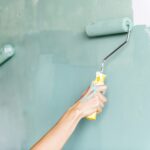
Yes, humidity can significantly affect primer application and drying. High humidity slows the drying and curing process, which can lead to blistering, bubbling, or poor adhesion, while very low humidity can cause the primer to dry too quickly, resulting in cracks or uneven coverage. For best results, apply primer in moderate conditions recommended by the manufacturer, ensure surfaces are clean and dry, and allow adequate drying time before painting.
How to Monitor and Control Painting Humidity
Before you open a can of primer, you need to know exactly what the air is doing. Professionals don’t guess—they measure.
- Govee Digital Hygrometer: This is the best tool for checking if humidity affects your primer. It gives you a real-time readout of the room’s moisture levels so you know exactly when it’s safe to start painting.
- Midea 1,500 Sq. Ft. Dehumidifier: If you must paint in a humid basement or during a rainy week, this is a lifesaver. It pulls the excess moisture out of the air, allowing your primer to cure properly and preventing future mold growth under your paint.
Yes—high humidity slows primer drying, weakens adhesion, and can cause defects.
Does humidity affect primer? It does, and the difference can make or break your finish. I’ve primed walls, cabinets, and cars in every season, and humidity always shows up in the results. In this guide, I’ll break down how moisture in the air changes primer chemistry, what ranges are safe, and how to work around bad weather. If you want a smooth, durable base coat, this is the playbook you need.
How humidity changes primer performance
Does humidity affect primer? Yes, because primer cures by evaporation and chemical reaction. When the air holds more water, both steps slow down or go sideways.
Here is what actually happens:
- Evaporation slows. Water-based primers dry much slower at high RH because water cannot escape.
- Film formation stalls. If coalescence pauses, you get a soft, gummy film that never hardens right.
- Moisture gets trapped. On cool surfaces near the dew point, micro-condensation forms under the film. That leads to blisters and poor adhesion.
- Chemistry can misfire. With 2K epoxy or urethane primers, moisture can react with hardeners. That can cause cloudiness, pinholes, or weak crosslinks.
Does humidity affect primer by changing drying times? Yes. At 80% RH, many water-based primers take 2–3 times longer to dry than at 50% RH. Solvent primers can also blush or haze as moisture condenses in the film.
From my own jobs, the fastest way to ruin a smooth base is to prime when the surface is within 5°F of the dew point. Even if the air feels “okay,” the surface can sweat. Always check both room RH and surface temperature before you start.
Best Budget Moisture Meter (2026) – Accurate & Affordable for Home, Wood, and Construction
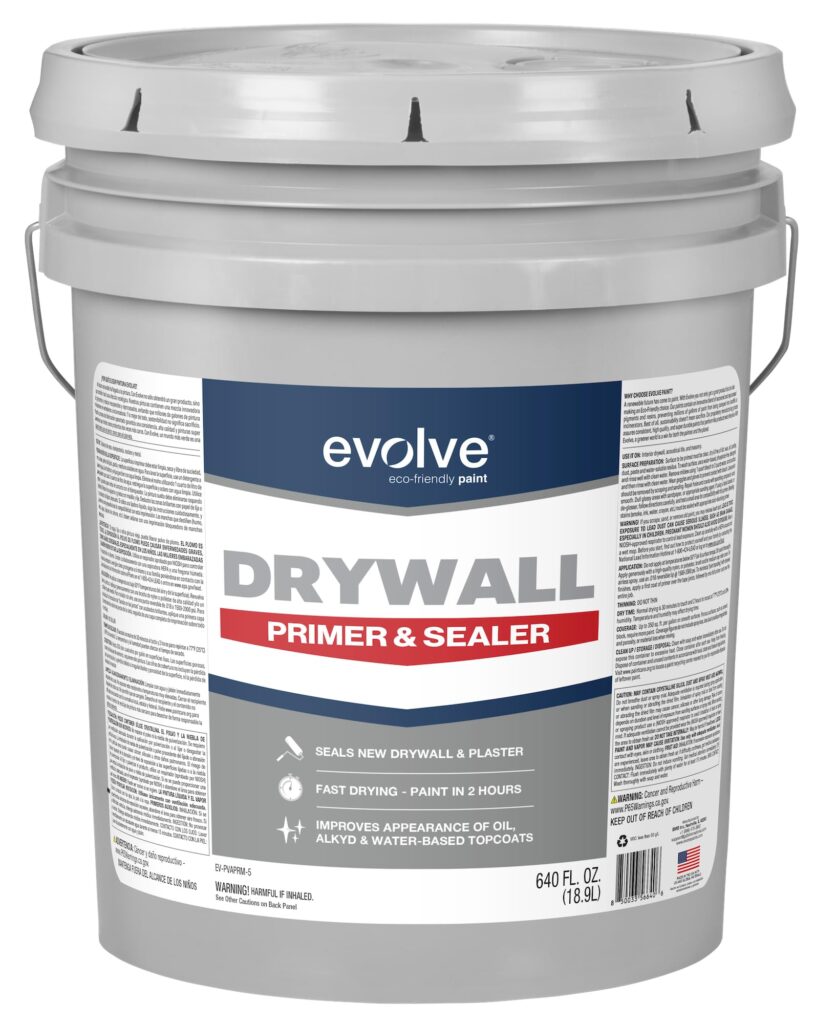
Ideal humidity ranges by primer type
Does humidity affect primer across types? It does, but the safe range varies. Use these targets as a practical rule of thumb. Always confirm with the product’s data sheet.
- Water-based latex or acrylic primers
- Target: 40–60% RH, 65–80°F
- At 70–80% RH, expect slow drying and risk of sagging.
- Keep the surface at least 5°F above the dew point.
- Alkyd or oil-based primers
- Target: 30–60% RH, 60–80°F
- High humidity can cause slow solvent release, runs, and a soft film.
- Some products allow Japan drier for faster cure. Follow label limits.
- Shellac-based primers
- Target: 30–60% RH, 60–80°F
- Alcohol flashes fast, but wood can swell in high humidity. Sand fibers between coats.
- 2K epoxy and urethane (automotive or industrial)
- Target: Below 60–65% RH, 68–78°F
- Moisture can cause amine blush (epoxy) or CO2 bubbling (urethane).
- Observe induction time and recoat windows closely.
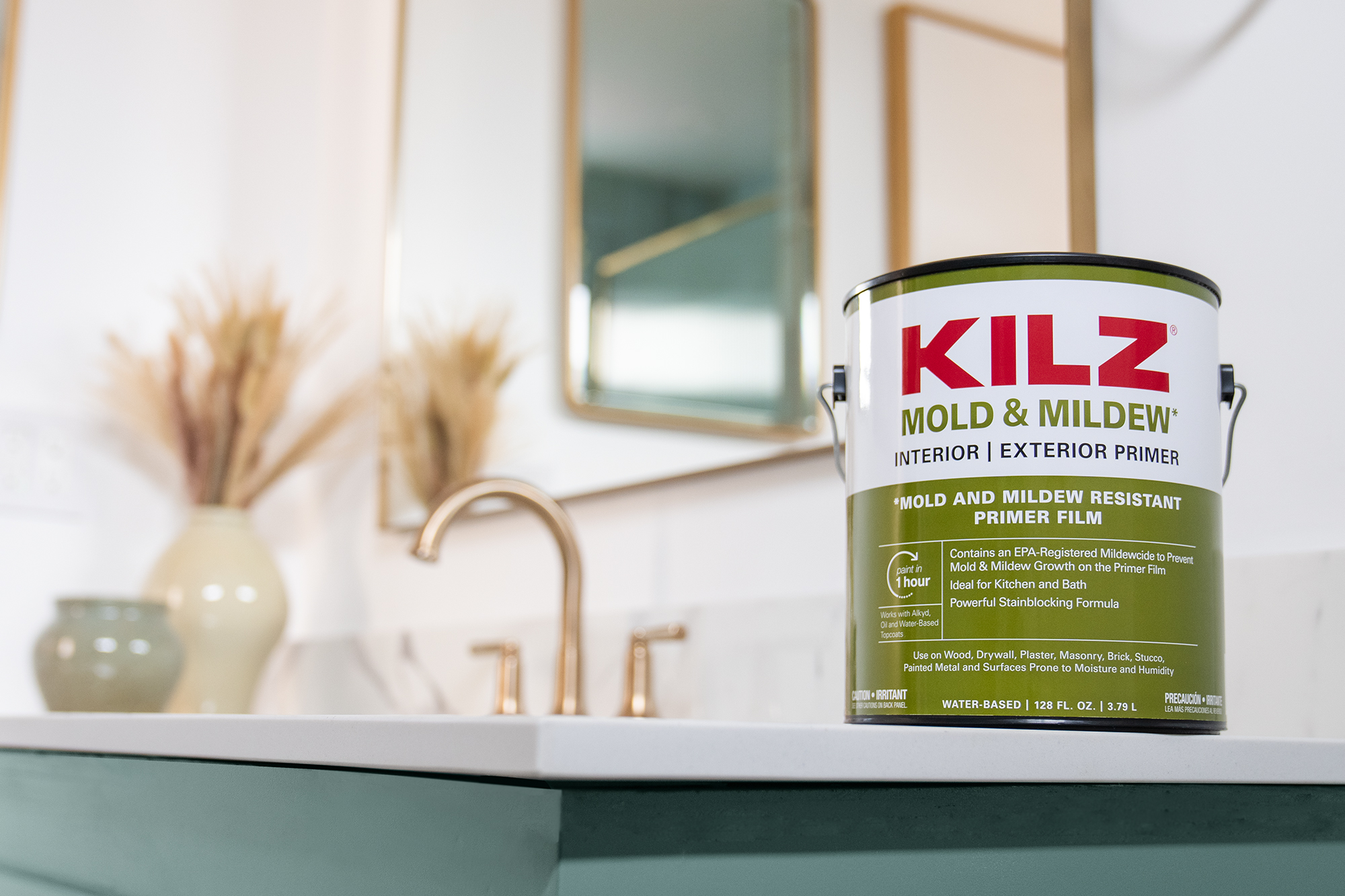
If you are asking, Does humidity affect primer more in basements and bathrooms? Yes. These rooms often sit at 65–80% RH. Run a dehumidifier a few hours before you prime and keep it on through the cure.
Ideal Painting Conditions Table
| Humidity Level | Effect on Primer | Action Needed |
| 0% – 30% | Dries too fast; may crack. | Work in smaller sections. |
| 40% – 55% | Perfect. Smooth, even curing. | Proceed as planned. |
| 70%+ | Tacky finish; high risk of peeling. | Use a dehumidifier or wait. |
Troubleshooting: signs humidity is hurting your primer and how to fix it
Does humidity affect primer in ways you can spot early? Watch for these flags:
- Tacky after the stated dry time. The film still feels gummy, even after hours.
- Fix: Increase airflow and warmth. Add gentle heat, not hot. Extend recoat time.
- Sags or curtains. Coats look heavy and drip.
- Fix: Apply thinner coats. Increase flash time. Lower RH if you can.
- Blushing or haze. Milky cast that shows under light.
- Fix: Improve ventilation. Warm the room. With solvent systems, allow full flash, then lightly scuff and recoat.
- Poor adhesion or easy scratching. The film lifts with tape or light sanding.
- Fix: Stop. Let it cure longer. Then sand, clean, and re-prime under better RH.
- Pinholes, bubbles, or craters. Often from moisture or outgassing.
- Fix: Verify you are above the dew point. Sand smooth and recoat with controlled RH.
Pro tip from the field: If a water-based primer is still tacky after 24 hours at 70% RH, do not trap it with topcoat. Give it air, not more paint.
A humidity-proof priming workflow
Does humidity affect primer enough to change your whole process? Yes, but the fix is simple and repeatable.
Follow these steps:
- Measure first. Use a hygrometer for RH, an IR thermometer for surface temp, and a dew point calculator. Keep surface temp at least 5°F above dew point.
- Acclimate. Store primer and surface materials in the job room for 24 hours.
- Prepare right. Clean, sand, and dust. High humidity plus dust makes a weak bond.
- Thin only per the tech sheet. Extra water or solvent makes humidity issues worse.
- Spray or roll light coats. Aim for even coverage without laying it on wet.
- Extend flash time. In high RH, wait longer between coats. Respect recoat windows.
- Vent smart. Use fans to move air across the surface, not directly at it. Keep air clean.
- Control the room. Run AC or a dehumidifier to reach the target RH range.
- Confirm dryness. Do a light fingernail or tape test on a hidden spot before topcoat.
- Document. Note RH, temp, and dry times. It helps on future jobs.
Personal note: On a summer cabinet job, RH hit 75%. I paused, ran a 50-pint dehumidifier for three hours, and kept the room at 55% RH. The primer leveled clean, and the enamel cured rock hard. Skipping that step would have cost me a full sand-back.
Best Wood Brightener– Restore Wood to Its Original Color Quickly
Tools, additives, and pro tips
Does humidity affect primer enough to justify extra gear? If you care about a flawless base, yes.
Must-have tools:
- Hygrometer and IR thermometer. Cheap and accurate enough for daily use.
- Dehumidifier or AC. Lower RH and stabilize temps.
- Clean airflow. A box fan with a filter helps move air and trap dust.
Helpful additives and settings:
- Retarder for some solvent systems. Slows flash to reduce blushing. Use as directed.
- Japan drier for alkyds. Speeds oxidative cure. Do not overuse.
- Avoid extra water in latex. It raises the film’s minimum formation threshold under humidity.
Technique tips:
- Prime earlier in the day when RH is lower.
- Warm the substrate, not just the air. A slightly warm surface resists condensation.
- Keep coats thin and even. Humidity punishes heavy passes.
Does humidity affect primer to the point you should switch products? Sometimes. In sticky months, I pick faster-drying primers or shellac spot coats for stain blocking, then return to latex for build.
Season and climate strategies
Does humidity affect primer more in some climates? Absolutely. Plan by season.
- Coastal or monsoon climates
- Work in climate-controlled rooms.
- Schedule priming for mid-morning when surfaces have warmed but RH is not peaking.
- Hot, humid summers
- Lower RH to 50–60%. Keep temps in the 70s°F.
- Watch dew point swings after storms.
- Cold, dry winters
- Low RH can make water-based primers dry too fast. You may see lap marks or poor leveling.
- Add a little humidity (40–50% RH) and extend your wet edge.
- Garages and shops
- Insulate and control the air. Concrete floors often sit below air temp, raising dew risk.
- Lay down foam boards or run gentle heat to warm the work surface.
Bottom line: match your plan to the weather, not the clock. When in doubt, ask, Does humidity affect primer today where I am? Let the readings decide.
Frequently Asked Questions of Does humidity affect primer?
Does humidity affect primer?
Yes. High humidity slows drying, weakens adhesion, and can cause defects like blushing or bubbles. Work within the product’s recommended RH and temperature.
What humidity is too high to apply primer?
Above 70–80% RH is risky for most primers. Aim for 40–60% RH, and keep the surface at least 5°F above the dew point.
How can I speed up primer drying in humid weather?
Use AC or a dehumidifier and add gentle airflow. Keep coats thin and allow longer flash times between passes.
Will a dehumidifier really help primer cure?
Yes. Lowering RH improves evaporation and film formation. I use a 50–70 pint unit for medium rooms and see faster, harder cures.
Does humidity affect primer on wood more than drywall?
Often yes, because wood swells and holds moisture. Check wood with a moisture meter and sand raised fibers after the first coat.
Can I use a heater to fix humidity issues?
Use heat carefully. Warm the room and surface, not the wet film. Avoid blasting hot air directly at fresh primer.
Why does humidity affect primer on cabinets versus walls?
Cabinets have dense, slick surfaces and tight corners that trap moisture. Light coats and good airflow help reduce runs and tack.
What is amine blush on epoxy primer?
It is a waxy, cloudy film caused by moisture reacting with epoxy hardener. Wash with water and a Scotch-Brite pad, then scuff and recoat under lower RH.
Conclusion
Humidity can be the quiet saboteur of a great finish. You now know how and why it changes drying, film strength, and adhesion—and how to control it. Measure RH, watch the dew point, run light coats, and let conditions guide your timing.
Put this plan into action on your next project. Your primer will lay flatter, dry faster, and hold stronger. Have a question or a tricky climate? Drop a comment and subscribe for more pro-tested paint tips.