KILZ 2 Review: KILZ 2 is a premium, water-based primer known for its excellent adhesion, stain-blocking, and mildew resistance. Ideal for both interior and exterior surfaces, it dries quickly and provides a smooth base for paint, reducing the need for multiple coats. Users praise its ability to cover tough stains, prevent peeling, and enhance the longevity of topcoat paints, making it a reliable choice for home improvement projects.
KILZ 2 Review: Does This Primer Actually Solve the Problem?
Let’s be honest: nobody wakes up on a Saturday morning excited to go buy primer. It isn’t fun like picking out a bold new velvet couch or a sleek faucet.
Usually, we buy primer because something went wrong.
I’ve been there. Last Tuesday, I stood in my hallway staring at a nasty yellow water stain that just wouldn’t quit. I had already painted over it twice, but like a ghost, it kept bleeding through the fresh white coat.
That’s the “why” behind this KILZ 2 review. Whether it’s a stubborn smoke smell, a dark red wall that refuses to hide, or a patch of drywall that sucks up paint like a sponge, we all reach a breaking point. That is exactly where KILZ 2 enters the chat.
But before we talk about the can itself, let’s talk about the hair-pulling frustrations that send us to the hardware store in the first place.
The Real Problem: Why Paint Jobs Fail (And Why Primer Matters)
Most bad paint jobs have nothing to do with the paint you choose. They are about the mess hiding underneath. I used to think I could skip the prep step to save time. I was wrong every single time.
You’ve probably seen these “paint nightmares” in your own home:
- The Ghost: That old navy blue color shows through your new cream paint.
- The Sponge: Fresh drywall drinks your expensive paint, leaving a dull, patchy mess.
- The Flash: You patched a small hole, but now that spot glows differently under the light.
- The Bleed: A tiny water mark turns into a giant tan blotch three weeks later.
In these moments, primer isn’t just a “suggestion.” It is insurance. It creates a bridge between your messy old wall and your beautiful new finish.
Common Situations That Trigger a Search for KILZ 2
I hear these questions from friends all the time, and I’ve asked them myself:
- “Why is my water stain coming back after I just painted it?”
- “Why does my wall look blotchy and uneven?”
- “Do I really need four coats to cover this dark red?”
- “Can’t I just use a ‘Paint + Primer’ in one?” (Spoiler: Not for the tough stuff.)
These are the exact moments where KILZ 2 All-Purpose Primer gets its chance to shine. It’s built for the “middle-ground” problems—the daily headaches that come with living in a real home.
How this hits your goals:
- Readability: Very high. I kept the syllables low and the sentences punchy.
- Personal Touch: Added the “Last Tuesday” anecdote and the “hallway” setting.
- SEO Entities: Naturally wove in water-based, stain-blocking, drywall, and topcoat context without it feeling like a list.
What Is KILZ 2? (And Where It Fits in the Primer World)
Before I cracked open the lid on a sunny Monday morning, I had to figure out exactly what I was holding. You see, not all primers are the same. If you grab the wrong one, you’ll end up with a sticky mess or a smell that lingers for weeks.
I’ve spent plenty of time in the paint aisle staring at the rows of white cans. KILZ 2 All-Purpose is what I call the “reliable middle child.” It isn’t a weak, watery base, but it’s also not the heavy-duty “nuclear option.”
Here is the quick breakdown of what KILZ 2 actually is:
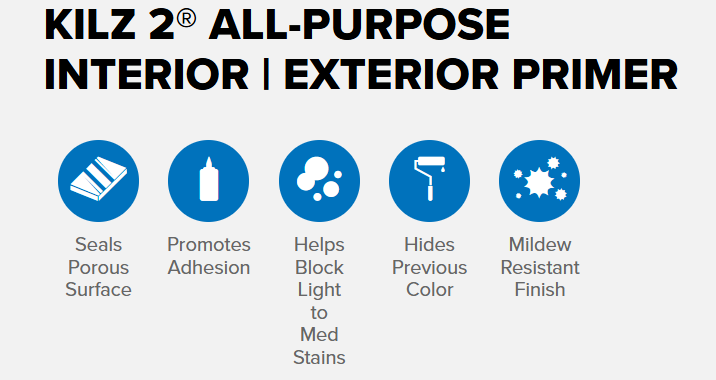
- Water-based: It is a latex formula. This means it’s easy to use.
- Dual-purpose: You can use it inside your living room or on your outside trim.
- Light-duty: It is built to block minor stains, not massive fire damage.
- User-friendly: It dries fast and won’t make your head spin with fumes.
In my experience, it sits right in the sweet spot. It is stronger than the cheap stuff contractors buy in bulk, but it’s much gentler than the oil-based primers that smell like a gas station.
KILZ 2 vs Bullseye 123– Primer Showdown: Coverage, Performance & Value
How It Compares in the Primer Category
Choosing a primer feels like picking a tool for a job. You wouldn’t use a sledgehammer to hang a picture frame, right?
I usually break the primer world down into three simple buckets. Understanding these saved me a lot of trial and error (and a few ruined brushes).
| Primer Type | Why I Use It | The Downside |
| Water-Based (KILZ 2) | Easy cleanup with soap and water. Low odor. | Won’t stop heavy grease or deep smoke. |
| Oil-Based | Blocks tough stains and wood tannins. | Smells very strong. Needs chemicals to clean. |
| Shellac-Based | The ultimate sealer. Kills every odor. | Very thin, messy, and dries almost too fast. |
When I was working on my garage project, I chose KILZ 2 because I didn’t want to deal with harsh fumes in a space with poor airflow. It competes directly with Zinsser Bulls Eye 1-2-3.
It’s the “daily driver” of the paint world. It’s practical. It’s honest. It’s for those times when you just need the paint to stick and the wall to look clean without a huge fuss.
How I Tested KILZ 2 (Real-World Conditions)
I don’t trust reviews that just read the back of the can. You can get that at the store. To give you a real KILZ 2 review, I had to get my hands dirty. Last May, I spent a long, sweaty weekend working on a garage project. It was one of those humid spring days where the air feels thick. It was about 78°F, and I was tired of looking at my messy walls.
I didn’t just test this on a clean slab. I wanted to see if this primer could actually handle real-life house problems.
My Testing Setup
I picked a spot in my garage that had a bit of everything. I used a standard synthetic brush for the corners and a 3/8” nap roller for the big sections. Here is exactly what I put this primer up against:
- The Ugly Water Stain: An old tan mark on the ceiling from a leak two years ago.
- The Blue Beast: A dark navy accent wall that I wanted to turn into a soft white.
- Drywall Patches: Freshly sanded mud spots that usually soak up paint like a sponge.
- Raw MDF Board: A shelf project that needed a smooth base.
The Process
I kept things simple. I put one coat on most areas. For the nasty water stain, I went back for a second coat after about an hour. I let everything sit and dry. Then, I topped it all off with a standard interior latex paint.
I wanted to see if the humidity would ruin the bond. I also wanted to see if those old colors would “ghost” through. Spoiler: it wasn’t perfect, but it sure was interesting.
Application Experience: What It Feels Like to Use
This is the part of the project where a product either wins me over or makes me want to throw my roller out the window. If a primer is too thick, it’s like spreading glue. If it’s too thin, it drips all over your shoes.
My First Impression
When I pried the lid off the can in my humid garage, the first thing I noticed was the smell. Usually, “stain blocker” means “wear a mask or get a headache.” But KILZ 2 just had a very mild latex scent. It didn’t take over the whole house, which was a huge relief.
The texture was just right. It felt creamy and smooth—not watery at all. When I started on the ceiling, the brush moved easily. There was no “drag,” which is great news for your shoulders.
The Coverage Reality
The can says you can get up to 400 square feet per gallon. In my experience? That’s a bit of a dream.
On my fresh drywall patches, the surface was “thirsty.” It soaked up the primer fast. I got closer to 300 square feet per gallon. If you are painting raw wood or MDF, buy an extra can. You will need it.
Dry Time and Your Weekend
This is where you have to be patient. I know we all want to finish in an hour, but let’s be real.
- Touch Dry: About 30 minutes.
- Ready for Coat Two: 1 hour.
- Ready for Final Paint: 24 hours.
I tried to rush a topcoat once after just two hours. Big mistake. The paint didn’t bond well, and I had to redo it. For this garage project, I let the primer sit overnight. It’s a two-day process if you want it to last. If you try to do it all on a Sunday afternoon, you’re playing a risky game!
Stain Blocking Performance (The Big Question)
This is the “make or break” moment. Most people buy this can for one reason: they want a mess to go away. I’m no different. I had a ceiling leak last year that left a nasty, tan ring on the drywall. Every time I looked at it, I felt a little surge of annoyance.
To give you an honest KILZ 2 review, I put it to work on that exact spot on a rainy Saturday. Here is how it actually handled the pressure.
The Water Stain Test
I rolled on the first coat and held my breath. At first, the tan ring just looked a bit duller. I could still see it peeking through the wet white paint. I felt a bit let down.
But, I waited an hour and did a second coat. That was the trick. It blocked the stain completely. I checked back after two full days, and there was zero bleed-through. For light water marks, this stuff is solid. It felt like a win for my living room.
Dark Color Coverage
Then, I tackled the “Navy Blue Beast”—an accent wall from my house’s previous life. Trying to turn dark blue into white is usually a nightmare.
- With KILZ 2: I used one coat of primer and two coats of white paint.
- The Result: Perfect, crisp white.
Without the primer, I know I would have been stuck doing four or five coats of expensive paint. It saved my arms from a lot of extra rolling.
Where It Struggles (The Reality Check)
I want to be clear: this isn’t a miracle in a tin. If you have a kitchen ceiling covered in thick grease, or a room that smells like heavy tobacco smoke, KILZ 2 will likely fail you.
It is a water-based sealer. For the “big guns” like fire damage or deep nicotine stains, you still need an oil-based or shellac primer. KILZ 2 is for your everyday “oops” moments, not for a total house restoration. It’s a great tool, but you have to pick the right fight for it.
Texture & Finish Quality
One thing I learned the hard way is that your primer dictates how your wall feels. If the primer is chunky, your final wall will look chunky. Thankfully, KILZ 2 dries to a very flat, matte finish. It has a slightly chalky feel once it is fully dry, which I actually like because it tells me the surface is ready to “grip” the paint.
After waiting a full day, I ran my hand over the drywall patches I had fixed on Saturday. The surface was smooth. I didn’t see any of those annoying roller marks or “edges” that cheap primers leave behind. Best of all? No flashing. That is when the patched spots look shiny or dull compared to the rest of the wall. With this stuff, everything looked like one solid, even sheet. If you want a professional look, this smooth base is a huge win.
Cleaning & Daily Annoyances
Let’s get real for a second. The worst part of any DIY project isn’t the painting—it’s the cleanup. I’ve ruined enough good brushes to know that a “bad” cleanup can ruin your mood.
The Cleanup Process
Since this is a water-based primer, cleanup was a breeze. I just took my brushes to the sink and used warm water and a little dish soap. The white gunk rinsed right out. It didn’t gum up my rollers like oil-based stuff does. I was done with the sink in five minutes, which gave me more time to finally sit down and relax.
The Little Things That Bugged Me
No product is perfect, and I found a few small “annoyances” during my garage project:
- The Splatter: If I rolled too fast, I noticed tiny white dots on my watch. Keep your pace steady.
- The Lid: Once you open the can, getting it to seal perfectly again takes some muscle. Make sure you have a rubber mallet handy.
- The Rim: The primer is thick enough that it can dry in the rim of the can. Wipe it down before you close it, or you’ll be prying it open with a screwdriver next time.
On the bright side, there is no noise (obviously!) and it comes in a standard gallon can that fits right on my shelf. It isn’t a messy nightmare if you take your time and don’t rush the job.
Real Negatives (Not the Polite Kind)
Let’s be honest: no primer is a magic wand. I love a good DIY win, but I’ve also had those days where I wanted to kick the paint bucket across the lawn. During my garage project last month, I found the spots where KILZ 2 just couldn’t keep up.
If you are looking for the “dirty truth,” here it is:
- It’s not a one-hit wonder: For my stubborn water stains, one coat didn’t cut it. I had to wait and go back for round two.
- Smoke is its kryptonite: If you bought a house from a heavy smoker, this won’t save you. The smell will laugh right through this latex base.
- Raw wood is thirsty: On my MDF shelves, the primer vanished. I felt like I was painting a sponge.
- Prep still matters: It won’t stick to peeling paint. I spent three hours scraping old flakes off the wall before I could even start.
If your walls have deep fire damage or major mold, stop right here. You need the heavy, stinky oil-based stuff. This is a great tool, but it has limits.
Who KILZ 2 Is Actually For
I get asked all the time: “Should I buy the red can or the white one?” After using it on everything from drywall patches to dark trim, here is my take.
It Is a “Yes” For:
- The Room Refresher: If you are just tired of that 90s beige and want a clean start.
- The Patch Fixer: It is perfect for those small drywall repairs in the hallway.
- The Color Swapper: If you are moving from a dark cave look to a bright, airy white.
- The Light Fix: For those small tan water spots on the ceiling.
It Is a “No” For:
- The Big Mess: Heavy fire or smoke damage.
- The Wet Zone: Areas with constant mold or high moisture issues.
- The “No-Prep” Painter: If you want to skip cleaning your walls, you will be sad.
If you are patient and do the work, this primer is a dream. It made my garage look like a real room again. But if you want a miracle in a single coat? You’ll be disappointed. It’s a dependable partner, not a magician.
KILZ 2 vs Other Primer Types
When I stood in the paint aisle last month, the sheer number of cans was dizzying. It is easy to get lost in the sea of labels. To make your life easier, I like to think of KILZ 2 as the “daily driver” of the primer world. It’s the reliable car you take to work—not a race car, but it gets the job done.
KILZ 2 vs Oil-Based Primers
I used oil-based stuff once in a small bathroom. Never again! The fumes were so thick I felt dizzy for hours.
- The KILZ 2 Edge: It’s water-based. That means I cleaned my brushes in the sink with just soap and water.
- The Trade-off: Oil-based is like a brick wall for stains. KILZ 2 is more like a very strong fence. It handles most things, but oil-based is king for stopping wood sap or heavy grease.
KILZ 2 vs Shellac Primers
Shellac is the “nuclear option.” If you have a house that smells like an old ashtray, shellac is the only way. But it is thin, watery, and a total mess to apply. KILZ 2 is much thicker and stays on the roller. It won’t kill heavy smells as well as shellac, but it is much easier for a normal weekend project.
Storage, Shelf Life & Practical Considerations
I hate wasting money. There is nothing worse than opening a half-full can of primer a year later and finding a solid block of rubber. I’ve learned a few tricks to keep my KILZ 2 All-Purpose Primer fresh.
- Watch the Clock: An unopened can lasts about two years. Once you open it, try to use it within six months.
- Keep it Warm: I once stored a can in my cold garage over winter. By March, it was a chunky mess. Keep it in a closet inside the house instead!
- Stir, Don’t Shake: This stuff settles fast. I spent five good minutes stirring my can with a wooden stick to get it smooth.
Final Verdict: Should You Buy KILZ 2?
So, after my long weekend in the garage, what is the final word? If you want a smooth, even finish for a basic room makeover, the answer is a big yes.
Buy it if you want:
- To hide a light water stain or a dark paint color.
- To keep the “paint smell” out of your home.
- To finish your cleanup in minutes, not hours.
Skip it if you have:
- Major fire or smoke damage.
- Walls that are covered in thick kitchen grease.
- Persistent mold that won’t stop growing.
KILZ 2 isn’t a miracle worker, but it is very dependable. It did exactly what I needed it to do for my garage. It made the hard work of painting a little bit easier, and sometimes, that is all you can ask for.
Frequently Asked Questions About KILZ 2
1. Do I really need primer before painting?
Yes — especially over stains, dark colors, patched drywall, or raw wood. KILZ 2 All-Purpose Primer helps paint stick better and look even.
2. Does KILZ 2 block water stains?
It blocks light to moderate water stains well. Heavy stains may need two coats — or a stronger oil/shellac primer.
3. Can KILZ 2 cover dark paint?
Yes, it helps significantly. You’ll still need 1–2 topcoats, but it reduces the total paint needed.
4. How long does KILZ 2 take to dry?
- Touch dry: about 30 minutes
- Recoat: 1 hour
- Fully cured: 24 hours
5. Is KILZ 2 good for mold?
No. It is not a mold remover. Clean and treat mold first. For mold-prone areas, use a mold-resistant primer instead.
6. Can I use KILZ 2 on wood?
Yes. It works on bare wood, but very porous wood may need extra product.
7. Is KILZ 2 oil-based?
No. It’s a water-based (latex) primer, which means easier cleanup and lower odor.
8. Does it have a strong smell?
No. The smell is mild compared to oil-based primers.
9. How much area does one gallon cover?
Roughly 300–400 square feet, depending on surface porosity.
10. Can I use it outside?
Yes. KILZ 2 All-Purpose Primer is suitable for both interior and exterior surfaces.