
Professional painters typically use rollers that are 9 inches wide for most walls and ceilings, as this size provides a good balance between coverage and control. Nap thickness varies depending on the surface: ¼–⅜ inch for smooth walls, ½ inch for semi-smooth surfaces, and ¾–1 inch for textured or rough surfaces. Using the right roller size and nap ensures even paint coverage, reduces streaks, and speeds up the painting process.
The Professional Setup: What Size Roller Do Professional Painters Use?
If you want a factory-smooth finish without spending double the time, you need to mimic the pros. While most DIY kits come with a standard 9-inch frame, professional painters vary their sizes based on the surface area and desired speed.
Quick Guide: Pro Roller Sizes & Applications
Roller Size Best For… Why Pros Use It 14″ to 18″ Rollers Large walls, ceilings, and floors. Speed & Uniformity. Covers 50% more area per stroke and reduces “lap marks.” 9″ Rollers Standard rooms and bedrooms. Versatility. The industry standard for maneuverability in tight residential spaces. 4″ to 6″ Mini Rollers Cabinets, trim, and behind toilets. Control. Known as “whizz” rollers, these provide a spray-like finish on smooth surfaces.
The Pro’s Choice: Purdy White Dove 14-Inch Roller Cover
If you ask a pro, “What size roller do professional painters use for big jobs?”, they’ll point to the 14-inch or 18-inch setup. It’s the secret to finishing a living room in half the time.
Best Paint Roller – Expert-Tested Rollers for Walls & Ceilingss
Pros reach for 9-inch rollers most, with 3/8–1/2-inch nap for walls.
If you have ever asked What size roller do professional painters use?, you are in the right place. I have led paint crews on tight timelines and high standards. In this guide, I will show you how pros choose roller width and nap for fast, clean, and even results. You will see when to go 9-inch, when 18-inch wins, and how nap changes the finish. Read on before you buy your next cover.
How pros choose roller size
What size roller do professional painters use? The real answer is: it depends on the surface, the paint, and the pace of the job. Pros weigh three things in seconds: coverage speed, finish quality, and reach.
Here is the quick flow I use on site:
- Flat interior walls need a 9-inch roller with 3/8-inch nap for eggshell or satin.
- Big rooms or halls call for a 14–18-inch roller to save time and keep a wet edge.
- Rough surfaces need a thicker nap to fill pits and texture.
- Tight spaces, trim, and cabinets use 4–6-inch mini rollers for control.
This simple map keeps work smooth and avoids roller marks. That is how I teach new crew members to pick the right tool fast. What size roller do professional painters use? The one that hits the sweet spot of speed and finish on that surface.
Best Nap for Painting Walls– Choosing the Right Roller for Every Wall Type
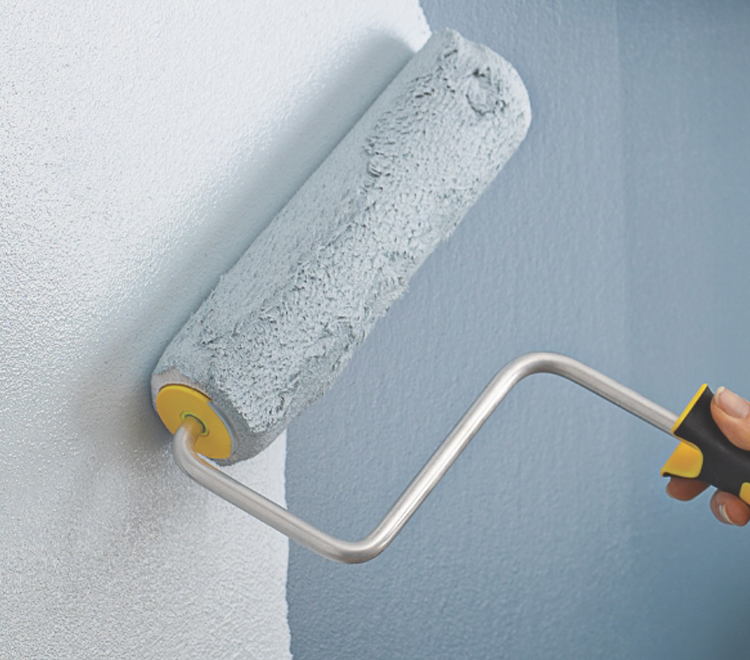
Standard roller widths pros reach for
What size roller do professional painters use? Most days, the 9-inch roller is the workhorse. But pros keep a few widths ready.
- 9-inch roller: Best all-around size for walls and ceilings. Easy control. Works in most rooms.
- 12–14-inch roller: Good jump in coverage without a steep learning curve. Nice on open areas.
- 18-inch roller: Fastest for big ceilings and long runs. Needs a sturdy frame and better technique.
- 4–6-inch mini roller: For doors, cabinets, tight edges, and cut-in blends.
On large commercial jobs, I move to 14 or 18 inches to hold a wet edge across wide spans. In small homes with lots of corners, I stay with 9 inches. What size roller do professional painters use? The size that keeps paint wet and even from start to finish.
3/8 or 1/2 Nap Roller – Expert Tips for Paint Coverage & Finish
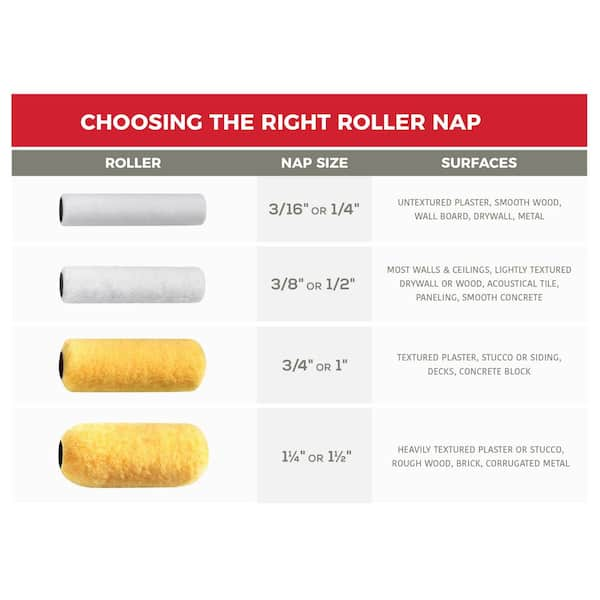
Nap thickness: match roller to surface and paint
What size roller do professional painters use? Width is only half the battle. Nap (the fiber length) sets the texture and load.
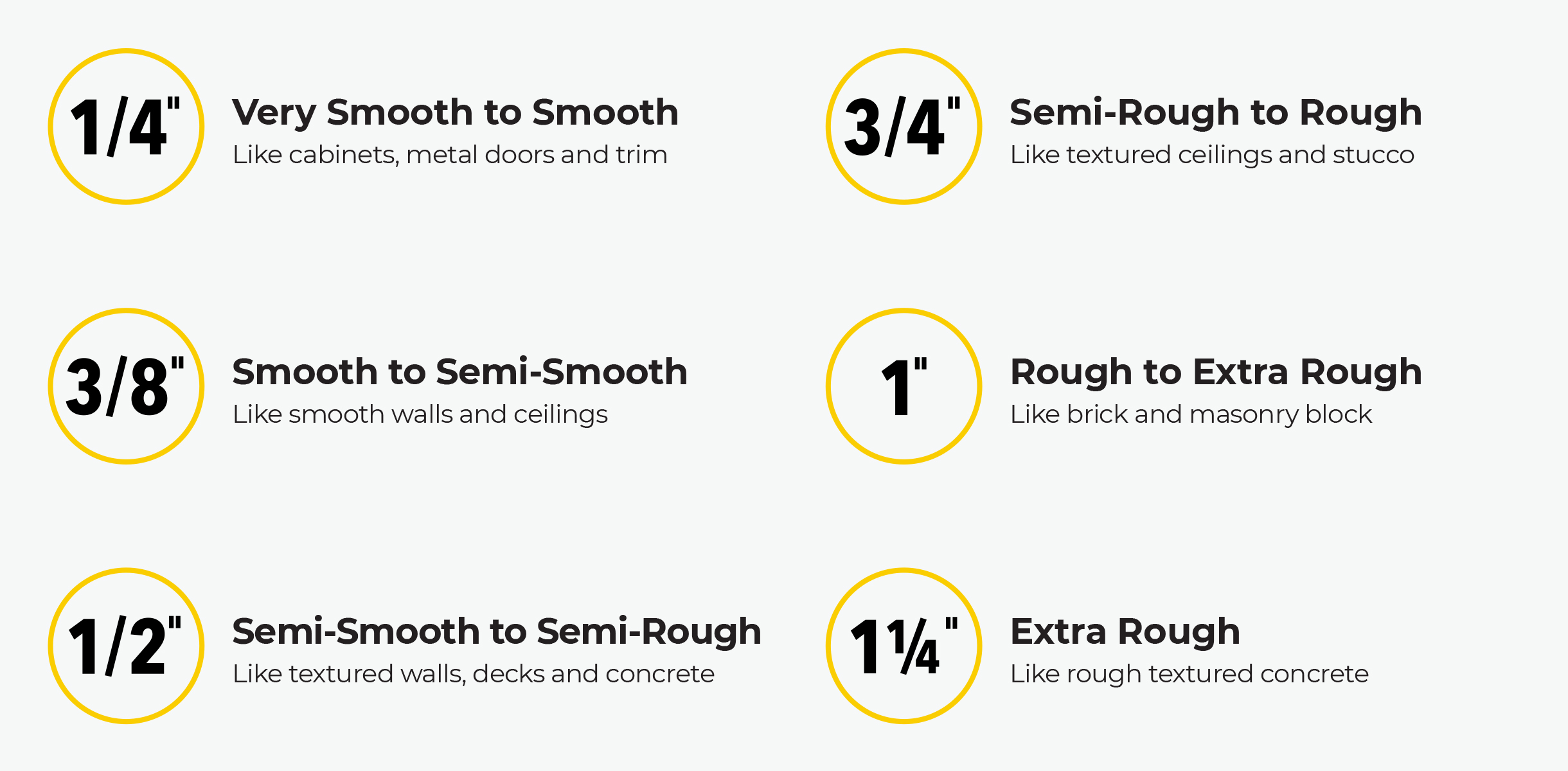
Use this simple guide:
- 1/4 inch nap: Very smooth doors, cabinets, metal. High-gloss or oil. Ultra-fine finish.
- 3/8 inch nap: Smooth to lightly textured drywall. Go-to for latex eggshell or satin. Most common inside.
- 1/2 inch nap: Light to medium texture walls and ceilings. Flat or matte paints. Good balance of load and layoff.
- 3/4 inch nap: Heavier textures, popcorn ceilings, or rough plaster. Big paint load.
- 1 inch to 1-1/4 inch nap: Brick, stucco, cinder block, fences. Exterior work with deep pits.
Too short a nap leaves skips. Too long a nap leaves orange peel or fuzz. When I test a new surface, I roll a 2×2-foot area. I check for holidays and texture. Then I swap nap if needed. What size roller do professional painters use? The nap that fills the low spots without leaving heavy stipple.
Walls, ceilings, exteriors, and trim: what I use
What size roller do professional painters use? Here is my real-world setup by task.
Interior walls
- 9-inch roller, 3/8-inch nap for eggshell and satin.
- 9-inch roller, 1/2-inch nap for flat paint or light texture.
- Tip: Load the cover well. Keep a wet edge. Roll top to bottom.
Ceilings
- 9-inch or 14-inch roller, 1/2-inch nap for most flats.
- 18-inch roller on big, open ceilings to save time.
- Tip: Use an extension pole. Work in sections about 4×4 feet.
Exteriors
- 14–18-inch roller with 3/4–1-inch nap for siding and stucco.
- 9-inch with 1-inch nap for tight areas and cut-ins.
- Tip: Back-roll after spraying for deeper embed on rough surfaces.
Doors, cabinets, and trim
- 4–6-inch mini roller. Foam or mohair for smooth finishes.
- 1/4-inch nap mohair with oil or alkyd for a glassy layoff.
- Tip: Light pressure and thin coats to avoid tracks.
When crew members ask me, What size roller do professional painters use? I say: pick by surface first, paint second, speed last. That order keeps quality high.
Materials and quality that matter
What size roller do professional painters use? Pros also care about the fabric. The material changes the layoff, lint, and load.
Common cover types
- Woven polyester or nylon: Low lint. Clean finish. Best for eggshell and semi-gloss.
- Knit polyester: High paint load. Faster, but can shed more on cheap covers.
- Microfiber: Great leveling. Good for smooth walls and low-sheen paints.
- Mohair blend: Fine finish for doors and trim with oil or waterborne enamel.
- Lambswool: Huge capacity. Nice on rough exteriors. Can shed if low quality.
Core matters too. Half-inch phenolic cores resist water and stay round. Cheap cardboard cores swell and drag. I buy contractor-grade covers and wash them out on day one to remove loose fibers. What size roller do professional painters use? The one with a fabric that suits the sheen and surface.
Frames, poles, and setup that speed the job
What size roller do professional painters use? The right frame and pole make that size work well.
What I keep in the kit
- Heavy-duty 9-inch cage frame with a smooth spin.
- 14–18-inch adjustable frame for ceilings and long runs.
- Threaded extension poles: 2–4 ft for walls, 4–8 ft for ceilings.
- Bucket and grid for 9-inch and larger rollers to load clean and fast.
Use a bucket and grid, not only trays, for steady loading and less mess. Spin the cover on the grid to even the nap. This gives a smoother finish and cuts drips. What size roller do professional painters use? The size that their frame and pole can handle with control.
Real-world lessons, tips, and mistakes to avoid
What size roller do professional painters use? After many jobs, here are lessons that stuck.
Tips that work
- Pre-dampen the cover with water (latex) or mineral spirits (oil), then spin out. This helps even loading.
- Roll in an N or W pattern, then lay off in one direction. This stops lap marks.
- Switch to a thicker nap when paint feels like it drags or skips.
- Switch to a wider roller if you cannot keep a wet edge.
Mistakes to avoid
- Using 3/4-inch nap on smooth walls. It leaves heavy texture.
- Using 1/4-inch nap on rough surfaces. You will chase holidays all day.
- Cheap linty covers. One strand in semi-gloss can ruin a door face.
On a hotel job, we saved two days by moving from 9-inch, 1/2-inch nap to 14-inch, 1/2-inch nap for corridors. Same paint. Less time. Cleaner seams. What size roller do professional painters use? The one that keeps the schedule without hurting the finish.
Quick buying guide and coverage math
What size roller do professional painters use? Let numbers guide you.
Simple picks
- Smooth walls: 9-inch, 3/8-inch nap.
- Light texture: 9-inch, 1/2-inch nap.
- Big ceilings: 14–18-inch, 1/2-inch nap.
- Rough exterior: 14–18-inch, 3/4–1-inch nap.
- Doors and trim: 4–6-inch mini, foam or mohair.
Coverage and speed
- One gallon often covers 350–400 sq ft on smooth walls with a 3/8-inch nap.
- Wider rollers do not change per-gallon coverage much. They change speed and edge control.
- Thicker naps load more paint. They may raise real-world coverage loss due to texture fill.
When time is tight, do a test wall. Track start and end times. Check laps and texture. Then swap width or nap if needed. What size roller do professional painters use? The size that hits your time and quality goals on your test panel.
Frequently Asked Questions of What size roller do professional painters use?
Do pros mostly use 9-inch rollers?
Yes. A 9-inch roller with a 3/8–1/2-inch nap is the daily pick for most walls. It balances speed, control, and a clean finish.
When should I use an 18-inch roller?
Use 18-inch rollers on big ceilings, long halls, and open rooms. They keep a wet edge and cut total roll time.
What nap is best for smooth drywall?
Go with 3/8-inch nap for eggshell or satin. Step up to 1/2-inch if the wall has light texture or you use flat paint.
What roller should I use on stucco?
Use 3/4–1-inch nap on a 14–18-inch frame to reach into pits. Back-roll after spraying for best embed.
Are microfiber rollers better than woven?
Microfiber levels well and can reduce orange peel. Woven covers shed less and give a crisp finish on higher sheens.
What size roller for doors and cabinets?
Use a 4–6-inch mini roller. Foam or mohair gives a smooth, near-spray finish with light pressure.
Will a thicker nap leave more texture?
Yes. Thicker nap carries more paint and can leave stipple on smooth walls. Use the shortest nap that still covers.
Conclusion
You asked What size roller do professional painters use?, and now you can answer it on any job. Match width to room size and nap to surface texture, then fine-tune for paint sheen. Start with a 9-inch, 3/8-inch nap for most walls. Scale up to 14–18 inches for big spans, and go mini for doors and trim.
Pick smart, test small, then roll with confidence. Try one upgrade on your next project, even if it is only a better cover. Share your results, subscribe for more pro tips, or drop your questions below.
Related posts:
 What Is a Roller Nap? – Choosing the Perfect Roller for Walls and Ceilingswhat is a roller nap?
 Best Neutral White Interior Paint– Pro Painter Recommendations
 Can You Paint Woodwork With Emulsion?– Achieve a Lasting, Professional Look
 Masking Tape vs Painters Tape (2026) – Adhesion, Clean Lines & Removal Compared