Choose 123 for everyday adhesion; pick BIN for severe stains and odors. Zinsser 123 Primer Vs BIN Zinsser 123 is a water-based acrylic primer, easy to apply, low odor, and cleans up with soap and water, Zinsser BIN is shellac-based, which blocks the toughest stains and odors, and adheres exceptionally well to difficult surfaces. Choose 123 Primer for general priming and easier application, and go with BIN Primer when you need maximum stain blocking or are dealing with very challenging surfaces before repainting.
If you need a quick, clear guide on zinsser 123 primer vs bin, you’re in the right place. I’ve used both on cabinets, trim, drywall, and smoke-damaged rooms. This article breaks down what matters in real jobs: adhesion, stain and odor blocking, dry time, sandability, cost, and safety. By the end, you’ll know exactly when to reach for each product and why.
What these primers are and how they differ
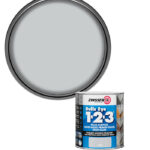
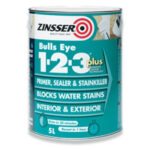
Zinsser Bulls Eye 1-2-3 is a water-based acrylic primer. It is low odor, sticks well to many surfaces, and cleans up with soap and water. It is made for both interiors and exteriors and is friendly for homeowners and pros.
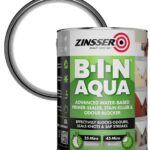
Zinsser BIN is a shellac-based primer. It blocks tough stains and odors that most primers cannot touch. It dries very fast, sands super smooth, and needs denatured alcohol or ammonia for cleanup.
How to Stop Wood Stain Coming Through Paint?
When people ask about zinsser 123 primer vs bin, I start here. One is the daily driver. The other is the specialist for ugly problems.
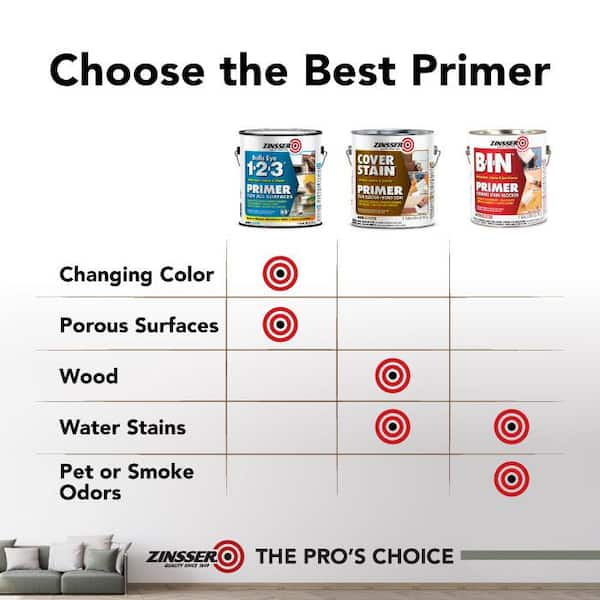
Zinsser 123 Primer Vs BIN : performance you can feel on the job
Here is how zinsser 123 primer vs bin stacks up in real use.
- Adhesion: 1-2-3 grips glossy surfaces like tile, PVC, and old oil paint. BIN also bonds well but shines more for stain control than for raw adhesion.
- Stain blocking: BIN wins for water stains, tannin bleed, knots, ink, marker, nicotine, and smoke. 1-2-3 handles light stains but may let heavy bleed come through.
- Odor blocking: BIN seals smoke and pet urine odors better. 1-2-3 is not made for strong odor sealing.
- Dry time: BIN dries very fast and can be sanded smooth. 1-2-3 dries fast too, but not as quick or as sandable.
- Sandability: BIN powders when sanded and gives a fine base for trim or cabinet paint. 1-2-3 sands, but it is not as silky.
- Finish: BIN gives a tight, smooth base for enamel topcoats. 1-2-3 gives a solid, even base for walls and general surfaces.
- VOC and smell: 1-2-3 is low odor and lower VOC. BIN has strong alcohol fumes and needs good airflow.
- Cleanup: 1-2-3 uses soap and water. BIN needs denatured alcohol or ammonia.
- Coverage: Expect around 350–450 sq ft per gallon for 1-2-3. BIN is often closer to 300–400 sq ft due to heavy pigments.
- Where to use: 1-2-3 works inside and outside. BIN is mainly for interior work or spot-priming exteriors like knots.
If your project is complex, the zinsser 123 primer vs bin choice starts with the worst issue on the surface. If stains or smells are the worst issue, go BIN. If bonding to tricky surfaces is the main task, go 1-2-3.
Finding The Right Moisture Meter Without Overspending Maybe you’ve noticed damp spots on your walls or wood.
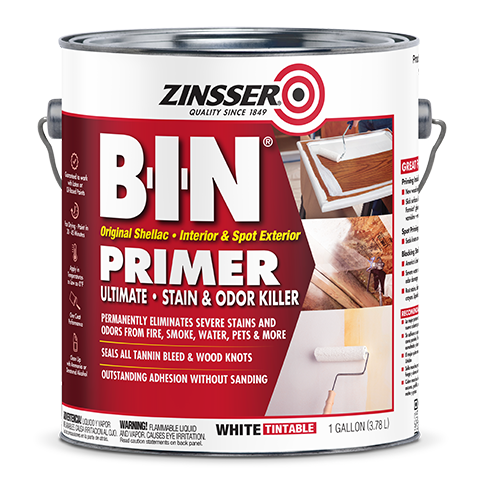
When to choose Zinsser 1-2-3
Choose 1-2-3 when you need strong adhesion, low odor, and easy cleanup.
- New drywall before wall paint: It levels well and seals the paper.
- Glossy trim or doors before repainting: It grips without heavy sanding.
- PVC, vinyl, tile, and laminate: It bonds to slick, hard surfaces.
- Bare metal and galvanized surfaces: It can handle many metals with proper prep.
- Exterior siding and masonry: It is flexible and made for outdoor changes.
I pick 1-2-3 when the job happens in a lived-in home and smell is a concern. For most everyday projects, 1-2-3 is the practical answer in zinsser 123 primer vs bin.
Check Customer Review On Amazon
When to choose Zinsser BIN
Pick BIN when stain and odor must be stopped right now.
- Smoke, nicotine, and pet urine: BIN locks in odors that bleed through latex primers.
- Water stains and rust marks: It blocks brown rings and tricky discoloration.
- Knots, sap, and tannin bleed in wood: Shellac seals wood resins better than most.
- Cabinets and fine trim: It sands smooth and helps topcoats level out nice.
If the problem looks scary or smells bad, the zinsser 123 primer vs bin decision almost always points to BIN.
Check Customer Review On Amazon
Real-world examples and lessons learned
During a cabinet refinish in a rental, we tried 1-2-3 first. It stuck, but old cooking grease stains shadowed through. We switched to BIN and they stopped after one coat. The finish sanded like glass and saved a full day.
In a nursery makeover, low odor mattered more. The surfaces were glossy but clean. One coat of 1-2-3 and a quick scuff gave all the adhesion we needed. No lingering smell, no cranky newborn.
The core lesson in zinsser 123 primer vs bin is this: match the primer to the worst risk. Either adhesion risk or stain or odor risk.
Prep and application: pro tips that save time
Surface prep matters more than the label. Even with great primers, give yourself a clean start.
- Clean first: Degrease glossy trim and cabinets. Primer will not stick to oil or wax.
- Scuff sand as needed: Light sanding boosts grip, even with 1-2-3.
- Spot prime stains: With BIN, spot-prime stains first, then full-coat for uniformity.
- Thin coats win: Two thin coats beat one heavy coat for both primers.
- Work fast with BIN: It dries fast. Load light and keep a wet edge.
- Ventilation and PPE: With BIN, use fans and a respirator. Keep away from sparks or flames.
For the best zinsser 123 primer vs bin results, test a small area first. A quick test avoids surprises.
Cost, value, and project planning
BIN costs more per gallon than 1-2-3. It often covers fewer square feet too. But BIN can save you time if it stops stains in one pass.
1-2-3 is budget friendly for big walls and low-odor jobs. It is a safer bet when you want one product inside and outside.
Check Customer Price On Amazon
Think total cost. In the zinsser 123 primer vs bin choice, factor labor, safety gear, and the chance of rework. One right coat beats two wrong coats.
Common mistakes and how to avoid them
- Skipping cleaning: Primer over grease leads to peeling, even with good products.
- Over-brushing BIN: It tacks fast, so move quick with small loads.
- Expecting 1-2-3 to block heavy stains: It is not built for smoke or sap bleed.
- Forgetting odor control with BIN: Always ventilate and wear protection.
- Painting too soon: Give both primers proper dry and recoat times.
These habits make zinsser 123 primer vs bin perform the way the label promises.
Special cases and smart alternatives
If you are dealing with cedar or redwood, tannin bleed can be stubborn. BIN is usually the best fix. For exterior spot work like knots, prime with BIN and top with an exterior-grade paint.
If you want oil-based stain blocking but cannot use shellac, consider an oil-based stain-blocking primer for specific spots. Still, in most zinsser 123 primer vs bin situations, the correct choice between these two is enough.
For slick masonry or chalky old paint, a bonding primer plus a masonry sealer can help. Pair products when the surface is both porous and glossy at once.
Safety, smell, and indoor air
1-2-3 has low odor and is good for occupied homes. It is the safer call for nurseries and tight spaces. BIN has a strong alcohol smell and higher VOCs. Use fans, open windows, and a respirator with organic vapor cartridges.
Store rags and rollers safely. BIN is flammable. Follow local rules for disposal. In any zinsser 123 primer vs bin plan, make safety your first step.
How to decide in 30 seconds
- Light stains, no odors, tricky surfaces, or exterior work: Choose 1-2-3.
- Heavy stains, smoke, knots, or pet smells: Choose BIN.
- Cabinets or high-end trim finish: Lean BIN for the smooth base.
- Occupied space with smell concerns: Lean 1-2-3.
That is the zinsser 123 primer vs bin decision tree I use on every job.
Frequently Asked Questions of zinsser 123 primer vs bin
Is Zinsser 1-2-3 good for cabinets?
It can work if the cabinets are well-cleaned and lightly sanded. For the smoothest finish and stain control, many pros still choose BIN.
Can I use BIN on drywall?
Yes, but it is not always needed. BIN is best when the drywall has smoke or water stains or odor issues.
Does 1-2-3 block nicotine stains?
It can reduce light staining, but heavy nicotine needs BIN. BIN seals both the color and the smell better.
Can I use BIN outside?
Use BIN for spot-priming exterior knots or stains only. For full exterior priming, choose products rated for full exterior use like 1-2-3.
Can I tint these primers?
Both can be tinted toward your topcoat color. Keep the tint light so the primer still blocks and covers well.
How many coats do I need?
Often one coat is enough with BIN, especially for stains. With 1-2-3, two thin coats give better coverage on new surfaces.
What is the best roller or brush for each?
Use a high-quality synthetic brush or microfiber roller for 1-2-3. For BIN, a natural-bristle or high-quality synthetic brush and a solvent-resistant roller work well.
Does either primer raise wood grain?
1-2-3 can raise grain slightly since it is water-based. BIN usually raises grain less and sands very smooth.
Can I put water-based paint over BIN?
Yes. Once BIN is dry, you can apply water-based or oil-based topcoats. Light sanding helps the finish feel perfect.
What about temperature and humidity?
Both need dry, clean surfaces. BIN flashes fast in cool, dry air, while 1-2-3 is more forgiving in typical indoor conditions.
Conclusion
Choosing between Zinsser 1-2-3 and BIN is about risk control. If adhesion and low odor are key, 1-2-3 is your steady option. If stains and smells are the threat, BIN shuts them down fast and sands smooth for premium results.
Use the zinsser 123 primer vs bin guide above to match the primer to your surface, your air quality needs, and your timeline. Test a small area, plan your coats, and work safe. Ready to take on your next project? Share your situation in the comments, subscribe for more pro how-tos, and get the finish you’ll be proud of.