
Peel Stop is best for existing paint problems (peeling, flaking, chalking) and works on a wider range of surfaces including wood and concrete, whereas Gardz is ideal for porous, chalky, or damaged plaster/drywall that needs deep sealing and stabilisation
Gardz seals chalky drywall; Peel Stop binds peeling paint. Pick based on failure.
Zinsser Mold Killing Primer is a water-based, EPA-registered fungicidal primer designed to kill and prevent mold
If you have walls that shed dust or paint that keeps flaking, you are asking the right question. I have fixed hundreds of problem surfaces, and the zinsser gardz vs peel stop debate comes up on every tricky job. Below, I break down when to use each, what to avoid, and how to get paint to stick for the long haul. Read on with confidence.
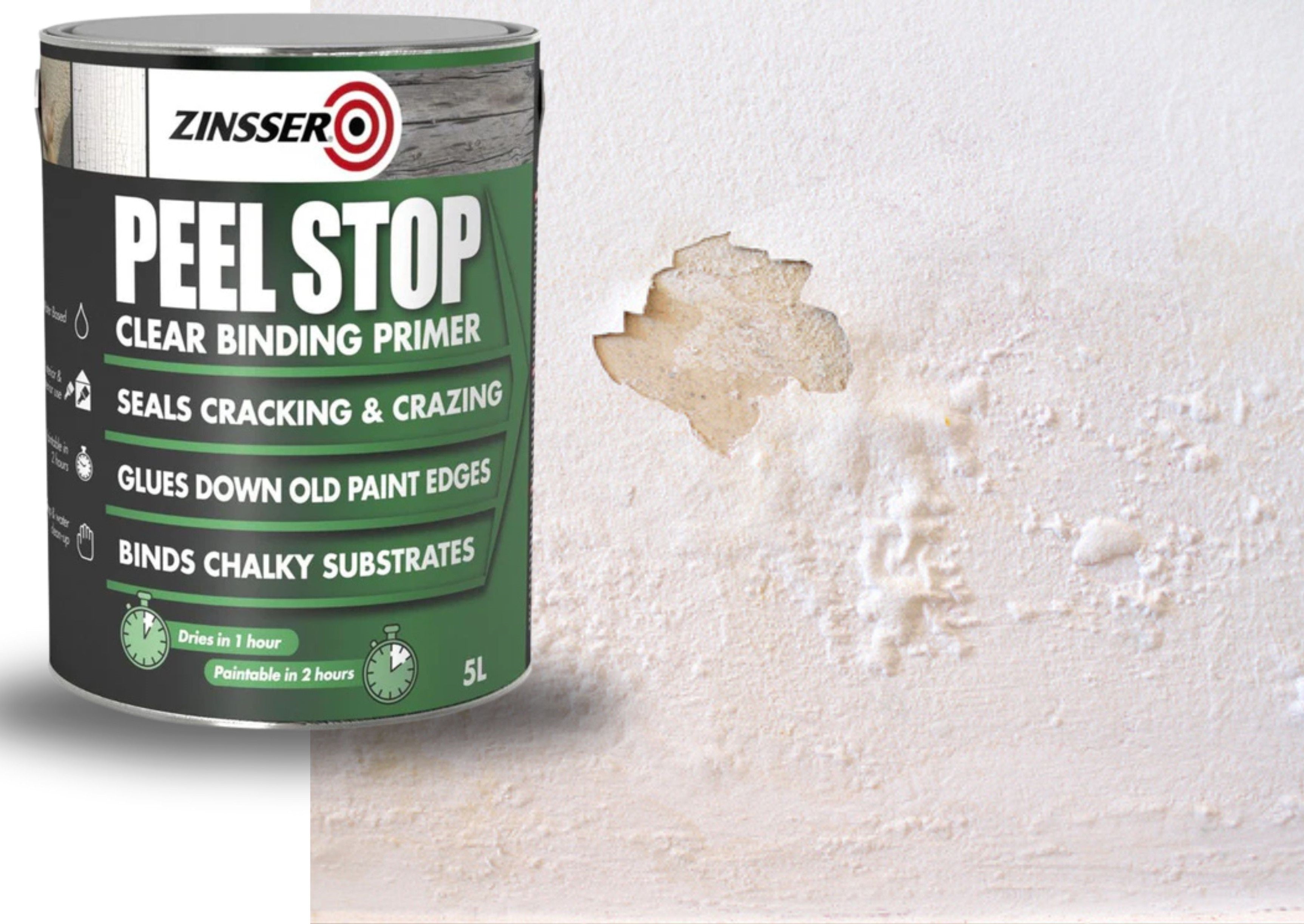
What these products are and how they work
Zinsser Gardz is a clear, water-based problem surface sealer. It soaks into chalky drywall, torn paper, calcimine, and porous patches. It hardens the surface and locks down dust. Think of it as a deep-penetrating hardener.
Zinsser Peel Stop is a clear binding primer for marginally prepared paint. It glues down sound but flaky edges and gives the new coat something to grip. It flexes with old paint and helps resist future peeling.
In simple terms for zinsser gardz vs peel stop: Gardz is for weak drywall and chalk. Peel Stop is for peeling paint that you cannot remove fully.
From job sites, I see this pattern hold. When walls shed dust, Gardz wins. When paint edges lift, Peel Stop wins.

When to choose each: real-world use cases
Use Gardz when the surface is weak or dusty:
- Torn drywall paper after removing wallpaper.
- Water-damaged drywall that sands into fuzz.
- Chalky plaster or calcimine paint.
- Fresh joint compound or skim coat that needs sealing.
- High-porosity repairs that soak up paint.
Use Peel Stop when paint is peeling but not failing everywhere:
- Old trim with edges you scraped but cannot strip clean.
- Clapboard with some flake after washing and scraping.
- Stucco or masonry paint with light to moderate peeling.
- Hairline alligatoring that will not sand smooth.
For zinsser gardz vs peel stop outdoors, Peel Stop is rated interior and exterior. Gardz is for interior use. Many pros still try Gardz on exterior chalk, but the label says interior. Follow the label.
Do not use either over mold, active leaks, or failing substrates like rotten wood. Fix the cause first.
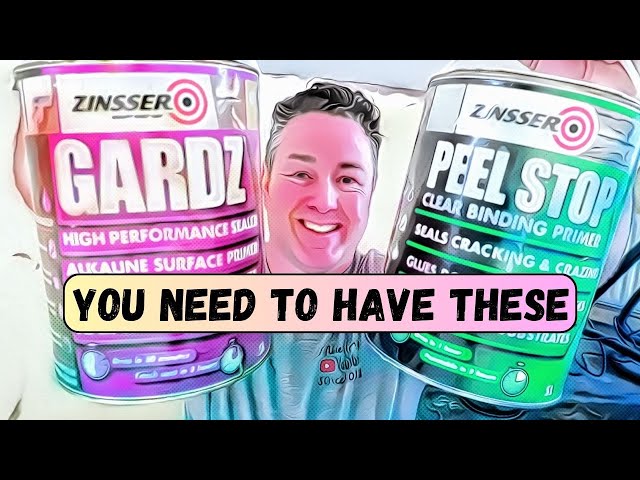
Performance comparison that matters on the wall
Here is how zinsser gardz vs peel stop compares where it counts.
Adhesion
- Peel Stop shines on marginal paint. It forms a flexible binder so new paint sticks.
- Gardz boosts adhesion on porous drywall and chalk. It creates a hard, sealed base.
Sealing power
- Gardz excels at sealing chalk, torn paper, and patches. It reduces porosity fast.
- Peel Stop is not a chalk sealer. If the wall still dusts on your hand, use Gardz first.
Flexibility vs hardness
- Peel Stop stays flexible to hold paint edges and resist future movement.
- Gardz cures harder to lock down weak fibers and paper.
Stain blocking
- Neither is a heavy stain blocker. For smoke, tannin, or water marks, follow with a dedicated primer like a shellac or oil-based stain blocker.
Breathability
- Both are breathable waterborne coatings. They are not vapor barriers. This helps walls dry out.
Durability
- On drywall repairs, Gardz under a good primer and paint holds up for years.
- On old trim and siding, Peel Stop helps stop repeat peeling when prep is honest.

Surface prep and application steps
Prep still matters in zinsser gardz vs peel stop work. These products help, but they do not replace prep.
Core steps
- Wash the surface. Remove dirt, grease, and chalk. Rinse well and let dry.
- Scrape all loose paint to a firm edge. Use a carbide scraper and light sanding.
- Feather rough edges with 120–180 grit. Vacuum dust.
- Patch holes and sand smooth. Dust off.
Applying Gardz
- It is thin like water. Load the wall and let it soak in.
- Apply until the surface stops absorbing and looks evenly sealed.
- Avoid runs. Back-roll to even it out.
Applying Peel Stop
- Brush and roll into edges and cracks.
- Work it under lifted edges where possible.
- Aim for a uniform film. Avoid puddles.
Dry time and recoat
- Typical range: touch dry in 30–60 minutes.
- Recoat in 2–3 hours, based on temp and humidity.
- Always check the label for your conditions.
Coverage
- Gardz: about 200–400 sq ft per gallon, depending on porosity.
- Peel Stop: about 300–400 sq ft per gallon.
Cleanup
- Water cleanup for tools. Ventilate well.

Cost, coverage, and value
Price varies by store and region, but here is a fair range in the US.
- Gardz: often $25–40 per gallon. Cost per square foot can be 7–20 cents, based on how thirsty the wall is.
- Peel Stop: often $25–35 per gallon. Cost per square foot can be 7–12 cents at typical spread rates.
In the zinsser gardz vs peel stop choice, the bigger “cost” is failure. If the substrate is chalky, Gardz saves you from peeling later. If edges are flaking, Peel Stop prevents repeat failure. Match the product to the problem and you save time and money.

Decision guide and field-tested scenarios
Quick guide for zinsser gardz vs peel stop:
- If your hand wipes off dust or chalk, pick Gardz.
- If paint edges lift after scraping, pick Peel Stop.
- If both happen, seal with Gardz first, then use a bonding primer, or spot-use Peel Stop on edges.
- For exterior, prefer Peel Stop. Gardz is interior.
Common scenarios
- Water-damaged drywall with fuzz: Gardz, then a high-build primer, then paint.
- Old wood trim with stubborn flake: Scrape, sand, Peel Stop, prime, and paint.
- Chalky plaster with hairline cracks: Gardz, skim as needed, prime, and paint.
- Alligatoring on porch ceiling: Scrape, Peel Stop, prime, and paint.
- Calcimine ceilings: Wash gently, Gardz, prime, and paint.
Real-world tip: I use a simple tape test after primer. Score a small crosshatch, press painter’s tape, and pull. If the coating stays put, you are set. If it lifts, reassess prep and primer.

Compatibility with topcoats and what not to do
Topcoats
- Both work under quality latex and oil paints.
- Gardz is excellent under joint compound and skim coats. It prevents bubbles and fuzz.
- Peel Stop is best under acrylic house paints on old paint systems.
What not to do
- Do not skip scraping. Neither product glues back rotten or loose paint wholesale.
- Do not use these as your final primer for stain-heavy jobs. Add a stain-blocking step.
- Do not trap moisture. Fix leaks and dry the wall first.
- Do not rely on Peel Stop to fix chalk. Address chalk with cleaning and Gardz.
For the zinsser gardz vs peel stop debate, think sequence. Stabilize the substrate first, then build your paint film.
Common mistakes and troubleshooting
Mistakes to avoid
- Over-applying and causing drips. Thin, even coats work best.
- Priming chalk with Peel Stop. It will not bite into powder like Gardz does.
- Painting too soon. Let the primer cure per label.
- Skipping a bonding or stain-blocking primer when needed.
If problems persist
- Do a tape test. If it fails, step up your prep.
- Consider a shellac or oil primer over sealed walls for tough stains.
- If edges keep lifting, more scraping or partial stripping may be needed.
In stubborn cases, re-check the match of zinsser gardz vs peel stop to the surface. The right product, in the right order, solves most failures.

Safety, VOC, and cleanup basics
Both products are water-based and low odor, but still use care.
- Ventilate the area and use a respirator if needed.
- Wear gloves and eye protection. Protect floors from drips.
- Keep away from heat and open flame.
- Follow all label directions, especially for temperature and dry times.
- If working on pre-1978 paint, follow lead-safe practices.
As with any primer, proper prep and safety will decide your success more than any label claim in the zinsser gardz vs peel stop matchup.
Frequently Asked Questions of zinsser gardz vs peel stop
Can I use Gardz over peeling paint?
Gardz does not glue down loose edges. It seals chalky and weak drywall. For peeling edges, scrape well, then use Peel Stop.
Can I use Peel Stop on torn drywall paper?
Peel Stop is not ideal on torn paper or fuzz. Gardz is made to harden and seal damaged drywall for smooth repair.
Do I still need a primer after Gardz or Peel Stop?
Often yes. These are sealers and binders. For color holdout or stains, add a quality primer before paint.
Which one is better for exterior work?
Peel Stop is rated for interior and exterior. Gardz is for interior use. For outside chalk, clean well and use Peel Stop or a bonding primer per label.
Can I skim coat after using Gardz?
Yes. Gardz is great under joint compound and skim coats. It reduces bubbles and gives a strong base.
How many coats should I apply?
Usually one liberal coat is enough. Ultra chalky or very porous areas may need a second coat after the first stops soaking in.
Will either block smoke or water stains?
Not well. Use a stain-blocking primer, like a shellac or oil primer, after sealing with Gardz or binding with Peel Stop.
Conclusion
You now know the core difference. Gardz hardens chalky, weak drywall. Peel Stop binds marginal paint edges. In the zinsser gardz vs peel stop choice, match the product to the failure, and you will get lasting results.
Take action today. Test your wall, choose the right primer, and follow the steps above. If you found this helpful, share it with a DIY friend, subscribe for more how-tos, or leave your project questions in the comments.
Related posts:
 What Is Zinsser Gardz Used For? (2026) – Sealing Drywall, Repairs & Problem Surfaces
 Can You Paint Over Zinsser Gardz? (2026) – Yes, Here’s How to Do It,Mistakes to Avoid
 Is Zinsser Gardz a Primer? – Sealer, Primer, or Special Treatment, Pro Advice?
 Zinsser vs Kilz: Which Primer Actually Works (And When to Use Each)