
For most people dealing with standard weathered wood or drywall, Zinsser Peel Stop Triple Thick is the pick because it creates a smooth finish while sealing cracked edges in one step. The best primer for peeling paint depends on matching the sealer to your specific surface damage rather than picking the strongest glue.
Many buyers confuse binding primers that lock down edges with bonding primers meant for slick surfaces, leading to failed projects and wasted effort. This guide explains those critical differences before recommending any product, so you understand exactly what each formula does and doesn’t do. We’ll show you how to read a label for the right type of adhesion rather than just trusting a brand name.
| # | Product | Best for | Price |
|---|---|---|---|
| 1 | Zinsser Peel Stop Triple Thick | Best Overall | Check price on Amazon |
| 2 | Zinsser Peel Stop Clear | Best Clear Sealer | Check price on Amazon |
| 3 | INSL-X Peel Bonding Primer | Best High Build | Check price on Amazon |
| 4 | INSL-X Stix Bonding Primer | Best Adhesion | Check price on Amazon |
| 5 | Zinsser Gardz Sealer | Best Problem Surface Sealer | Check price on Amazon |
| 6 | XIM Peel Bonding Primer | Best Alternative Brand | Check price on Amazon |
| 7 | Polar Clear Binding Primer | Best Non-Zinsser Clear | Check price on Amazon |
What Actually Matters
Binding vs Bonding Adhesion
Binding primers soak into chalky residue and glue down loose edges, while bonding primers stick to hard, glossy surfaces like tile or glass. Paint jobs fail on different substrates when these two types are confused. Check your surface first:
if it’s flaking or powdery, you need a binder; if it’s smooth and non-porous, you need a bonder. The product label must explicitly state “binding” for peeling paint or “bonding” for slick surfaces, as general-purpose primers often lack the specialized resin chemistry required for either extreme condition.
Film Build and Flexibility
Peeling paint moves with temperature changes, so the primer must flex without cracking or it’ll just peel again. High-build formulas fill small cracks and gaps to create a uniform base, but they can trap moisture if applied too thickly over damp wood.
Low-build sealers penetrate deeper but won’t hide surface texture defects. Measure your crack depth before choosing; deep alligatoring needs a high-build product rated for 20 mils wet, while hairline checking only requires a thin penetrating sealer that maintains vapor permeability.
Drying Time and Recoat Windows
Fast-drying primers let you topcoat quickly, but rushing the cure can trap solvents that cause bubbling later. Water-based binders typically dry to touch in thirty minutes yet need longer before heavy topcoats, especially in humid conditions.
Oil-based options take hours but offer superior penetration on severely weathered wood. Always check the manufacturer’s stated recoat time for your specific temperature and humidity, as applying paint before full cure defeats the primer’s purpose regardless of how dry the surface feels to your hand.
Surface Compatibility Limits
No single primer works on every substrate, despite marketing claims suggesting universal application. Some binders fail on masonry or metal, while others can’t handle residual wallpaper adhesive or torn drywall paper. Verify your exact surface material against the product’s compatibility list before purchasing, not after opening the can.
If you’re working with multiple problem areas—like both peeling trim and damaged drywall—you might need two specialized products rather than one compromise formula that performs adequately on neither surface.
1. Zinsser Peel Stop Triple Thick Binding Primer
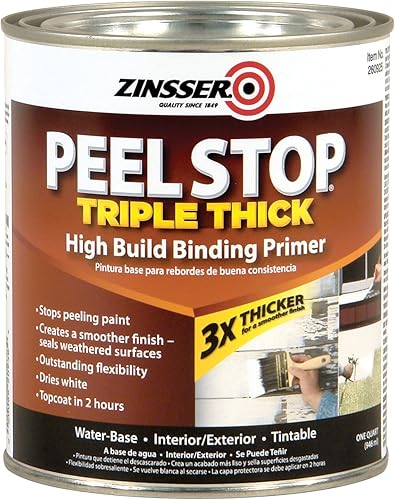
Best for: Smoothing heavily textured peeling surfaces
This binding primer stops peeling paint and creates a smooth finish. Its outstanding flexibility allows it to move with the substrate without cracking, which matters when old wood expands and contracts seasonally.
The triple-thick formula seals weathered surfaces effectively. It’s designed specifically for binding loose edges and chalky residue, not for adhering to glossy or non-porous materials like tile or metal.
Pros:
- Fills cracks and smooths rough textures
- Outstanding flexibility prevents future cracking
- Seals weathered and chalky surfaces effectively
- Stops active peeling in one application
Cons:
- White color obscures underlying surfaces
2. Zinsser 60001 Peel Stop Clear Binding Sealer & Primer
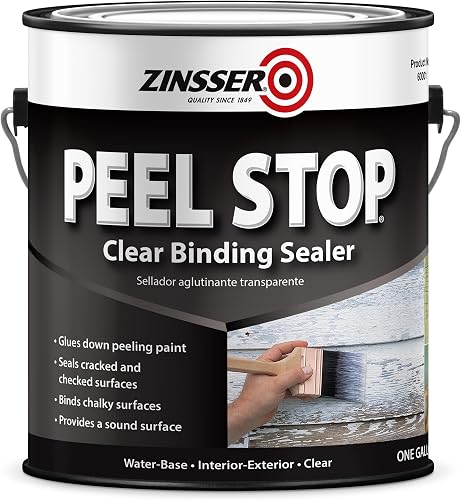
Best for: Preserving appearance while binding edges
This water-based formula glues down peeling edges and binds cracks while remaining transparent, letting you see the original surface through the primer. It dries to the touch in thirty minutes and covers between 300-400 square feet per gallon, making it efficient for large interior or exterior projects.
It creates a uniform flat-finish surface ideal for top coating with any alkyd or latex paint, but the listing doesn’t mention stain or tannin blocking. Use this when you need to prime chalky or peeling interior and exterior surfaces.
Pros:
- Transparent formula preserves underlying appearance
- Dries to touch in thirty minutes
- Compatible with alkyd and latex topcoats
- Binds cracks and seals chalky residue
Cons:
- Doesn’t fill surface texture defects
- Won’t block tannin or stain bleed
3. INSL-X High Build Peel Bonding Primer BP110009A-01
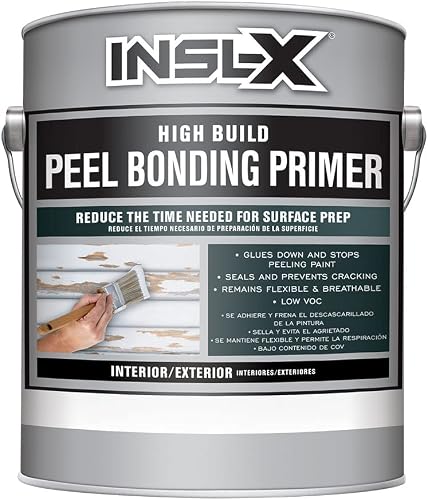
Best for: Flexible coverage in variable temperatures
Topcoating is possible in two hours. Easy soap-and-water cleanup simplifies the job, though the high viscosity demands careful brushing to avoid lap marks on large surfaces. This isn’t a bonding primer for slick surfaces like glass or PVC—it’s engineered specifically for peeling, weathered substrates that need both adhesion and fill.
Pros:
- Remains flexible through seasonal temperature shifts
- Blocks rust stains and tannin bleed
- Applies up to 20 mils wet thickness
- Soap and water cleanup
Cons:
- Narrow 35-90°F application temperature range
4. INSL-X SXA11009A-04 Stix Acrylic Waterborne Bonding Primer

Best for: Adhering to glossy and hard-to-coat surfaces
This acrylic-urethane bonding primer delivers unparalleled adhesion to challenging surfaces including glossy tile, PVC, vinyl, plastic, glass, and galvanized metals. It fully cures at temperatures as low as 35°F, extending your painting season when other products fail. The trade-off is coverage: only 75-100 square feet per quart means larger projects require multiple containers, and it’s formulated for adhesion rather than filling cracks or binding loose edges.
Excellent enamel holdout provides a great base for even topcoat finishes on slick substrates, but it won’t solve peeling paint problems on chalky or weathered wood. Before painting, review the label for proper preparation tips, as surface cleaning is critical for achieving the promised bond. This isn’t a binding sealer for flaking paint—it’s a specialty adhesive for smooth, non-porous materials that repel conventional primers.
Pros:
- Bonds to glossy tile, PVC, glass, metal
- Cures at temperatures down to 35°F
- Excellent enamel holdout for smooth finishes
- Low VOC with soap and water cleanup
Cons:
- Only 75-100 sq ft per quart coverage
- Doesn’t bind peeling or chalky paint
- Review label for proper preparation and application tips
5. Zinsser Gardz Water-Based Problem Surface Sealer

Best for: Repairing damaged drywall and adhesive residue
This problem surface sealer repairs torn paper on damaged drywall and eliminates bubbles that form when moisture reactivates old glue. It seals skim coats, spackling, and old wallpaper adhesive, protecting new drywall from joint compound absorption issues. The high spread rate and fast drying make it efficient for prep work, the listing doesn’t mention exterior use or binding peeling paint.
Gardz penetrates porous surfaces to create a stable base, yet it lacks the film build needed to bridge cracks or fill texture defects. It’s the right tool when your substrate is compromised drywall or residual adhesive, not when you’re dealing with weathered exterior siding. Using it on peeling paint wastes its specialized chemistry, as it won’t glue down loose edges the way a dedicated binding primer does.
Pros:
- Repairs torn drywall paper effectively
- Seals old wallpaper adhesive residue
- High spread rate with fast drying
- Eliminates bubbles under skim coats
Cons:
- Not for exterior or peeling paint applications
6. 152164 XIM Qt Peel Bonding Primer Clear

Best for: Multi-surface bonding beyond standard substrates
This clear bonding primer bonds to plywood, T1-11, PVC, aluminum, and more, covering substrates that some binding primers exclude. Manufactured in the United States, it serves as an alternative when Zinsser products aren’t available or when your project involves mixed materials. The listing provides minimal technical detail compared to competitors, so you’re relying on brand reputation rather than published specs for coverage, drying time, or film build.
Its versatility across wood, metal, and plastic makes it useful for complex projects, but the absence of stated performance metrics means you can’t verify suitability for severe peeling conditions. Unlike products that publish their maximum build thickness and how quickly they dry, this one leaves guesswork in planning your workflow. It’s a reasonable backup option, but primary selection should favor products with documented capabilities matching your specific failure mode.
Pros:
- Bonds to plywood, PVC, aluminum, T1-11
- Clear formula preserves substrate appearance
- Made in United States
- Versatile across mixed material types
Cons:
- Minimal published technical specifications
- No stated coverage or drying times
- Limited performance documentation available
7. Polar Specialist Coatings Clear Binding Primer 1 Quart
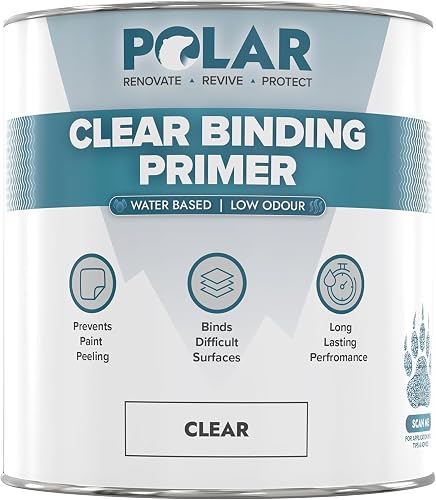
This low-VOC, water-based formula is breathable, allowing moisture to escape while maintaining a strong flexible bond on interior and exterior surfaces. It covers up to 118 square feet per 33 fluid ounces with a low-viscosity formula that ensures smooth application. The breathability matters for older structures where trapped moisture causes recurrent peeling. Lower viscosity means less crack-filling capability than high-build alternatives.
Strong adhesion creates a flexible acrylic film enhancing longevity, suitable for drywall, plaster, cement, stucco, and wood. However, the smaller container size and moderate coverage mean larger projects consume multiple units quickly. It seals and stabilizes damaged surfaces by forming a durable membrane that prevents peeling and flaking. This ensures a smooth foundation for new paint or wall coverings without adding bulk.
It’s engineered for stabilization rather than hiding, so expect underlying texture to remain visible through subsequent coatings. Choose this when vapor transmission is critical, not when you need to mask surface defects. The tight bond to old paint enhances the appearance of subsequent coatings. Apply it where flexibility prevents future failure on problem areas.
Pros:
- Breathable formula prevents moisture trapping
- Low VOC for indoor air quality
- Flexible acrylic film accommodates movement
- Smooth low-viscosity application
Cons:
- Lower viscosity limits crack filling
- Doesn’t hide underlying surface texture
5 Best Kit For Cabinet Chip Repair(Tested On Dents, Dings, and Gouges)
Who Should Buy Which
Zinsser Peel Stop Triple Thick suits homeowners tackling heavily textured, weathered exterior wood who want fewer coats and accept a white base.
Zinsser Peel Stop Clear fits preservationists stabilizing historic interiors or stained wood where transparency matters more than fill. It dries to the touch fast enough to keep a multi-coat project moving without long waits between layers.
INSL-X Peel Bonding Primer serves contractors needing rust blocking and high build on variable substrates. Apply up to twenty mils wet when temperatures stay between thirty-five and ninety degrees.
INSL-X Stix is essential for painting glossy tile, PVC, glass, or galvanized metal where adhesion fails. It cures fully at temperatures as low as thirty-five degrees.
Zinsser Gardz belongs in drywall repair kits for torn paper or old adhesive, not general peeling paint projects.
XIM Peel Bonding Primer bonds to plywood, T1-11, and aluminum as a versatile backup when primary choices are unavailable.
Polar Clear Binding Primer targets moisture-prone structures needing vapor-permeable stabilization. Its breathable acrylic film allows moisture escape while maintaining a flexible bond on stucco or cement.
Mistakes That Catch Buyers Out
Choosing a bonding primer for slick surfaces when you actually have chalky, peeling paint that needs a binding sealer instead.
INSL-X Stix grips glossy tile, PVC, glass, and galvanized metal where standard primers slide off. That adhesion does nothing for crumbling edges.
A water-based formula like Zinsser Peel Stop Clear glues down peeling edges and seals chalky surfaces directly. It covers 300 to 400 square feet per gallon and sets quickly so you can move on to the next step without delay.
Assuming all “peel stop” products fill cracks equally, ignoring film build specifications that determine whether texture gets smoothed or preserved.
INSL-X Peel Bonding Primer lays down a heavy film to bridge gaps. The clear Zinsser version binds cracks but leaves the original texture visible.
Skipping surface preparation because the label says “bonds to anything,” when contamination still defeats even premium adhesives. Review the INSL-X Stix label for proper preparation tips before painting.
Trusting fast dry-to-touch times as full cure indicators, then topcoating before solvent release completes and causing bubbles.
Zinsser Peel Stop Clear sets rapidly under normal conditions. You can topcoat it with any alkyd or latex paint once that flat finish sets.
For most peeling paint situations, Zinsser Peel Stop Triple Thick handles both binding and smoothing in one product. Measure your crack depth and verify substrate compatibility before ordering.
If your surface is glossy or non-porous, you need a bonding primer instead, regardless of how badly the existing coating is failing.
Frequently Asked Questions
Can I paint directly over peeling paint without primer?
No, painting over loose paint guarantees failure because the new coat adheres only to unstable material that continues detaching. Even high-quality paint can’t bind edges or consolidate chalky residue—that’s what binding primers are formulated to do. Remove all loose material first, then apply a primer specifically labeled for peeling surfaces before topcoating. Skipping this step wastes paint and labor when the underlying problem persists beneath your fresh finish.
How do I know if I need binding or bonding primer?
Binding primer consolidates chalky, flaking, or powdery surfaces where the existing coating is deteriorating. Bonding primer adheres to smooth, glossy, or non-porous surfaces like tile, glass, or metal. If residue transfers when you touch the surface, use a binder; if it feels hard and slick, use a bonder.
Does primer color matter when covering peeling paint?
White primers provide better hide for color transitions and help you see coverage uniformity during application, but they obscure underlying wood grain or historic finishes. Clear primers preserve substrate appearance and let you monitor penetration, yet they offer zero hiding power for stain blocking or color changes. Choose based on whether you’re preserving or transforming the surface, not on assumed performance equivalence—the chemistry differs significantly between opaque and transparent formulations.
Can I use exterior binding primer indoors safely?
Many exterior binding primers are water-based and low-VOC enough for interior use, but always verify the label explicitly permits indoor application. Exterior formulas may contain mildewcides or additives unnecessary indoors, and off-gassing requirements differ between environments. Never assume outdoor-rated means universally safe; some products specify exterior-only due to ventilation needs. When in doubt, choose a product labeled for both interior and exterior use rather than adapting an exterior-only formula.
Why did my primer bubble after drying completely?
Bubbling usually indicates trapped moisture or solvent escaping through the primer film after topcoating, often from applying too thickly or recoating before full cure. High-build primers applied beyond recommended wet thickness trap volatiles that eventually force their way out as blisters. Humid conditions extend cure times beyond dry-to-touch estimates, making premature topcoating the culprit. Follow manufacturer thickness guidelines precisely and allow extended drying in cool or damp environments before proceeding.
Conclusion
You’ll get lasting results when you match the sealer to your surface damage instead of guessing. Don’t skip label reading next time you’re at the store, and test a small area first. That simple habit saves money and keeps your walls looking fresh for years.
Related posts:
 How to Stop Eggshell Paint from Flaking on Baseboards?– Quick Fixes for Long-Lasting Finish
 What Happens If You Paint Without a Primer? – Peeling, Streaks & Mistakes That Cost You Later
 Best Primer for Concrete Floor (2026) – Top Products to Prevent Peeling & Moisture Damage
 Stop Peeling! The 5 Best Paint For Bathroom Cabinets Revealed