For most people tackling standard interior water marks, the Zinsser Cover-Stain Quart is the pick because its oil-based formula seals water, smoke, and nicotine stains while sticking to both interior and exterior surfaces.
The best stain block paint for water stains isn’t just about picking the whitest can on the shelf. Many buyers get confused because some products are primers that need a topcoat, while others are standalone ceiling paints with built-in blockers.
This GUIDE explains what separates a true sealer from a simple cover-up before we recommend anything specific. We’ll show you which formulas actually lock in moisture damage versus those that just hide it temporarily. .
| # | Product | Best for | Price |
|---|---|---|---|
| 1 | Zinsser Cover-Stain Quart | Best Overall | Check price on Amazon |
| 2 | KILZ Stainblocking Ceiling Paint | Best Ceiling Paint | Check price on Amazon |
| 3 | Insl-X Max Block Primer | Most Advanced Formula | Check price on Amazon |
| 4 | Flex Seal Stain Blocking Primer | Best Spray Primer | Check price on Amazon |
| 5 | Zinsser B-I-N Shellac Primer | Strongest Shellac Seal | Check price on Amazon |
| 6 | Glidden Stain Block Primer | Best Interior Exterior | Check price on Amazon |
| 7 | Rustins Quick Dry Stain Blocker | Best Quick Dry | Check price on Amazon |
What Actually Matters For Stain
Solvent Base Versus Water Base
The liquid carrier determines what the paint can actually seal. Oil and shellac bases create a non-porous barrier that water can’t penetrate, making them essential for active or severe water stains. Water-based acrylics are easier to clean but can sometimes re-wet old damage during application.
Check the product’s technical data sheet for the solvent type before buying. If the listing says “water-based” or “acrylic,” assume it’s better for tannins or light discoloration rather than heavy water damage. The solvent choice is the single biggest factor in whether the stain returns after drying.
Dry Time and Recoat Windows
Fast drying sounds good until you realize it affects adhesion. Shellac primers dry to the touch in minutes but may require specific recoat windows to bond properly with your topcoat. Oil-based options take longer to cure but often provide a more flexible film on shifting surfaces.
Always check the listed recoat time, not just the dry-to-touch time. Applying a topcoat too soon traps solvents underneath, causing peeling later. A product that dries in fifteen minutes isn’t automatically superior to one needing four hours if the faster option compromises the seal.
Surface Compatibility and Adhesion
Water stains appear on many materials, and not every blocker bonds to all of them. Some formulas adhere to glossy surfaces without sanding, while others require mechanical preparation first. Exterior surfaces need flexibility to handle temperature expansion that interior walls don’t face.
Read the listing’s surface list carefully before ordering. If your stained area includes masonry, plaster, or previously varnished wood, confirm the product explicitly names that material. Assuming universal adhesion is how projects fail when the primer peels off in sheets.
Coverage Claims Versus Real Sealing Power
Manufacturers list square footage per gallon, but coverage doesn’t equal blocking power. A product might cover 400 square feet yet still require multiple coats for complete stain hide.
The listing’s note about “multiple coats may be required” matters more than the maximum coverage number. True sealing depends on film thickness and chemical composition, not spread rate.
Before ordering, check whether the product specifies “stainblocking” as a primary function or merely mentions coverage. High coverage numbers on thin films often mean the stain bleeds through despite looking opaque when wet.
1. Zinsser Cover-Stain Stain-Blocking Primer
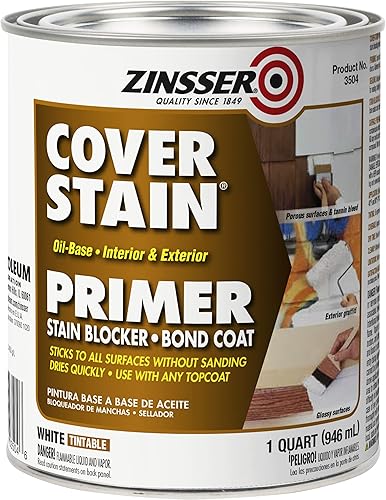
Best for: Severe interior and exterior water stains
This oil-based primer-sealer uses a high-hiding formula specifically designed to block water, smoke, and nicotine stains rather than just covering them. Because it’s oil-based, it won’t re-wet existing water damage during application like some water-based alternatives can. It sticks to both interior and exterior surfaces and sands easily, giving you a smooth base for topcoats.
It delivers enamel undercoating performance on interior surfaces while providing full penetration and flexibility on exterior ones. That dual capability means you don’t need separate products for different parts of the same project. The quart size suits small-to-medium jobs where a gallon would waste material.
2. KILZ Stainblocking Ceiling Paint

Best for: Interior ceilings with minor to moderate staining
This product combines stainblocking technology with a pink color indicator that dries white in under an hour, so you can see exactly where you’ve painted. It rolls on easily with a spatter-resistant formula and low odor, making it practical for occupied rooms. The listing states it covers approximately 250 square feet per gallon on porous surfaces and up to 400 on smooth ones. The trade-off is that severe stains may still require a dedicated primer like KILZ Original underneath. This paint isn’t for disaster restoration or heavy water damage; it’s designed for maintenance-level staining where convenience matters as much as performance.
You can recoat in two hours, though maximum stainblocking requires waiting four hours between coats. That window matters: rushing the second coat reduces blocking effectiveness even if the surface feels dry. The product works on all interior ceilings but isn’t listed for walls or exterior use. If your water stain is on a vertical wall or outside surface, this ceiling-specific formula won’t serve you. It’s the best paint to cover water stains on ceiling for homeowners refreshing a stained surface without wanting to prime and paint separately.
Pros:
- Pink-to-white color change shows coverage
- Low odor and spatter-resistant formula
- Soap and water cleanup
- Dries to touch in one hour
- Combines primer and ceiling paint
Cons:
- For severe stains, the listing recommends a dedicated KILZ primer
- Maximum blocking requires four-hour recoat
3. Insl-X Max Block Advanced Water-Based Stain Blocking Primer
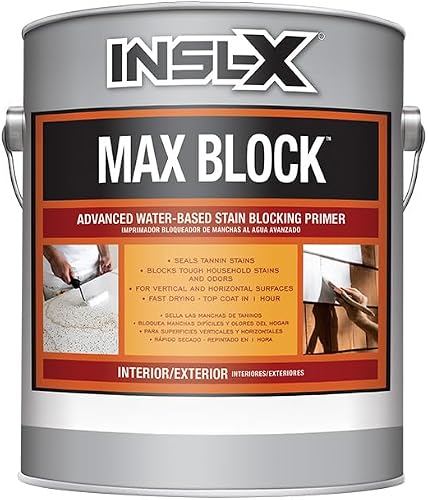
Best for: Tough household stains and tannin sealing
This advanced water-based formula blocks tough household stains and odors while specifically sealing tannin stains.
A basic primer often lets those brown spots bleed right through your topcoat. That forces you to strip the fresh paint and start over. Max Block is built to prevent that exact failure.
The listing highlights excellent adhesion to both vertical and horizontal surfaces. This matters when treating walls and ceilings in the same job. You avoid switching products halfway through a room.
The trade-off is that the listing doesn’t specify dry or recoat times.
You must check the can or manufacturer guidance before planning your schedule. Don’t guess at timing based on other water-based primers you have used. Each formula dries differently.
Because it’s positioned as an advanced formula, it targets problems that basic primers miss. However, the listing doesn’t mention exterior use. Assume it’s interior-only unless stated otherwise on the package.
Applying an interior-rated primer outside will fail quickly. Moisture and UV exposure break down films not formulated for weather. Always verify the surface rating before opening the gallon.
This primer isn’t for someone who needs confirmed fast turnaround times printed in the product description. The absence of listed dry times means relying on external sources or physical packaging.
If your project demands guaranteed same-day topcoating based solely on listing information, another product may reduce uncertainty. Look for one with explicit timing details printed in its specs.
It excels where tannins are the primary concern and solvent-based products aren’t preferred.
Pros:
- Seals tannin stains specifically
- Blocks tough household stains and odors
- Excellent adhesion to vertical and horizontal surfaces
- Water-based for easy cleanup
- Advanced formula for problem stains
Cons:
- Listing omits dry and recoat times
4. Flex Seal Stain Blocking Primer Spray
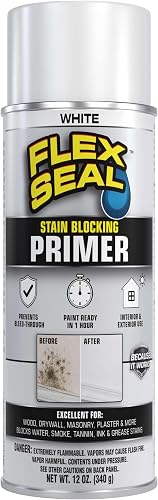
Best for: Small spot repairs and multi-surface sealing
This aerosol spray primer blocks water, smoke, tannin, ink, and grease stains on interior and exterior surfaces. It dries to the touch in 15–30 minutes and is topcoat-ready in one hour, letting you complete small fixes quickly. The bright white flat finish accepts both latex and oil-based topcoats, adding versatility. It bonds to wood, drywall, masonry, plaster, and more, covering ground that some specialized primers don’t.
Spray application reaches textured surfaces and tight corners that rollers miss. However, overspray control requires masking and ventilation even outdoors. The listing doesn’t state coverage per can beyond general use, so estimating needs for anything beyond spots is guesswork.
If you’re treating a single water mark above a window or a small ceiling leak scar, this format saves time and leftover product. For entire ceilings or walls left by chronic leaks, a liquid primer applied with a roller delivers consistent film thickness that spray cans struggle to match evenly.
Pros:
- Dries to touch in 15–30 minutes
- Topcoat-ready in one hour
- Blocks water, smoke, tannin, ink, grease
- Bonds to wood, drywall, masonry, plaster
- Accepts latex and oil-based topcoats
Cons:
- 12 oz can suits only spot repairs
- Coverage per can not specified
5. Zinsser B-I-N Shellac Primer

Best for: Disaster restoration and deep stain sealing
Shellac-based primers seal deep stains and odors that other chemistries can’t, making this formula ideal for disaster restoration jobs. It dries to the touch in 15 minutes and can be painted after 30 minutes, enabling rapid project turnover. The listing notes it covers 20–24 square feet per can and sands easily to a powder when dry. As an ultimate stain blocker, it handles water stains, knots, sap, and more.
The Turbo Spray version features a 10-inch tall fan spread designed for professional spray equipment results and 4X faster completion. If you’re using standard aerosol technique, expect different coverage and finish than the professional claim suggests.
The product works as a wood sealer beyond just stain blocking, adding value for restoration work involving bare timber. Confirm your application environment matches shellac’s strengths before choosing it over oil or acrylic alternatives.
Pros:
- Seals deep stains and odors completely
- Dries to touch in 15 minutes
- Paintable after 30 minutes
- Sands easily to powder when dry
- Blocks water stains, knots, and sap
Cons:
- Requires denatured alcohol for cleanup
- Strong odor demands ventilation
- Coverage limited to 20–24 sq ft/can
6. Glidden Glidden Interior/Exterior Stain Block Primer Flat

Best for: Interior and exterior multi-stain blocking
This acrylic primer adheres to glossy surfaces without sanding. That saves prep time on previously painted trim or cabinets. It blocks water, smoke, ink, markers, and tannins across interior and exterior applications. Cleanup uses soap and water. You can apply your finish coat shortly after the primer dries. The gallon size covers larger projects economically compared to quarts or aerosols.
The trade-off is that acrylic chemistry may not seal severe water damage as reliably as oil or shellac. This isn’t for active leaks or heavy nicotine contamination. Reserve it for moderate staining where easy application and cleanup outweigh maximum sealing power.
Its interior/exterior rating adds flexibility that ceiling-only or interior-only products lack. You can address water stains on siding, fascia, or interior walls with one product. However, the listing doesn’t specify coverage per gallon. Estimating needs requires checking the physical label or manufacturer specs. If precise coverage planning matters for your budget or timeline, that gap introduces uncertainty.
For gloss adhesion and multi-surface convenience on moderate stains, it streamlines the process. Just verify your stain severity aligns with acrylic capabilities before committing to a water-based approach. Tannin bleed from woods like cedar or redwood often overwhelms standard acrylics. If you’re priming raw exterior wood, test a small patch first. Watch for brown spots pushing through after the primer dries.
A one-hour topcoat window keeps a full room project moving in a single afternoon. Oil-based alternatives typically force you to wait overnight before applying your finish coat. That speed matters most when humidity or dropping temperatures threaten an exterior paint job. Don’t confuse fast drying with instant curing. The film still needs to fully bond before facing heavy weather exposure.
Pros:
- Adheres to glossy surfaces without sanding
- Interior and exterior use
- Soap and water cleanup
- Topcoat-ready in one hour
- Blocks water, smoke, ink, markers, tannins
Cons:
- Acrylic may not seal severe water damage
- Coverage per gallon not listed
- Less effective on heavy nicotine stains
7. Rustins Quick Dry Stain Blocker & Multi-Surface Primer 250ml

Best for: Fast-drying small-scale sealing projects
This 250ml sealer paint and stain blocker targets quick turnaround needs in compact quantities. The small size prevents waste on minor touch-ups or sample testing before committing to larger volumes. It functions as both sealer and paint, potentially eliminating a separate topcoat step on very small areas.
The trade-off is that 250ml covers minimal area, making it impractical for anything beyond spot repair. This isn’t for whole rooms or even full ceilings. It’s for isolated marks where opening a quart feels excessive. If your project exceeds a few square feet, calculate whether multiple small containers make sense versus one larger unit.
Rustins markets this container as a multi-surface primer alongside its stain-blocking role. That dual identity means you can prime bare material and seal a stain with the same 250ml tin. You avoid buying two separate products for a single small repair.
Keep that limitation in mind when planning your work. A multi-surface primer still runs out fast at 250ml. Use the combined function only where the total area stays tiny.
The “quick dry” name suggests speed, but the listing doesn’t provide specific dry or recoat times. Without those numbers, planning around this product requires checking the physical container. That ambiguity matters when coordinating with other trades or tight schedules.
For emergency touch-ups where immediate visual improvement beats perfect scheduling, the format delivers. But if your workflow depends on confirmed timing from the product page alone, another option with explicit hours reduces risk. Use it where convenience of size outweighs the need for detailed technical specifications upfront.
Pros:
- Compact 250ml size reduces waste
- Functions as sealer and paint
- Targets quick-dry applications
- Suitable for spot repairs and testing
- Minimizes leftover product storage
- Acts as a multi-surface primer
Cons:
- Covers only very small areas
- Dry/recoat times not listed
- Impractical for large surfaces
7 Best Paint to Cover Water Stains on Ceiling (Tested & Reviewed)
Who Should Buy Which Stain Block Paint
The person restoring fire or flood damage should choose Zinsser B-I-N Shellac Primer for its sealing of deep stains and odors. This shellac-based formula is designed specifically for disaster restoration jobs where other primers fail.
First-time buyers tackling a standard ceiling leak will find KILZ Stainblocking Ceiling Paint simplest. It combines primer and finish with a helpful color-change indicator that rolls on pink but dries white in under an hour. Note this product handles only minor to moderate staining effectively.
Those wanting the fewest complications on mixed surfaces should pick Glidden Stain Block Primer for its gloss adhesion and interior/exterior versatility without solvent hassles. Anyone replacing a failed water-based primer on persistent stains needs Zinsser Cover-Stain’s oil-based reliability.
For tiny spot fixes, Flex Seal Stain Blocking Primer offers speed and precision without wasting material. It dries to the touch quickly and accepts both latex and oil-based topcoats. Match your stain severity and surface type to the chemistry, not just the brand name.
Mistakes That Catch Buyers Out
Choosing water-based primer for active water stains and watching the damage reactivate during application.
Prioritizing fast dry time over proper recoat windows and trapping solvents that cause later peeling.
Assuming “stain blocking” on the label means a single application suffices for severe damage without checking recoat instructions.
Trusting maximum coverage claims while ignoring notes that multiple coats are required for complete hide.
A ceiling paint that covers up to 400 square feet per gallon on smooth surfaces will cover far less on porous ones. The same product warns that multiple coats may be required for complete hide.
For severe stains, a dedicated primer is necessary. Products like KILZ Original or KILZ 3 Premium Primer exist specifically because standard ceiling paints can’t handle heavy damage alone.
For most people dealing with typical interior water stains, Zinsser Cover-Stain Quart remains the strongest choice due to its proven oil-based sealing across surfaces.
Before ordering, measure your stained area and confirm the product’s solvent type matches your stain severity and ventilation capacity.
Getting these two details right prevents rework more than any feature comparison ever could.
Frequently Asked Questions
Can I use water-based primer on old water stains?
Water-based primers can work on old, fully dried water stains but risk reactivating moisture if the damage isn’t completely resolved. Oil or shellac bases create impermeable barriers that prevent bleed-through regardless of residual dampness. Check whether the stain is still active before choosing chemistry. If there’s any doubt about dryness, solvent-based products offer safer insurance. Always test a small area first when uncertain about stain stability.
Do I need to topcoat stain blocking primer?
Most stain-blocking primers require a topcoat for durability and washability unless explicitly labeled as paint-and-primer-in-one. Primers seal but aren’t formulated for abrasion resistance or color retention. Check the product listing for “topcoat-ready” language and recommended recoat times. Skipping the topcoat leaves a porous surface that attracts dirt and degrades faster. Even ceiling paints with integrated blockers benefit from verification that they’re standalone finishes.
How many coats does severe water damage need?
Severe water damage often requires two or more coats regardless of product claims. The listing’s note about “multiple coats may be required” applies directly here. Allow full recoat time between layers to build adequate film thickness. One thick coat performs worse than two properly timed thin ones. Inspect under bright light after each coat dries to catch missed spots before proceeding. Patience during application prevents rework later.
Will stain blocker stop mold from returning?
Stain blockers seal discoloration but don’t kill mold or prevent regrowth if moisture persists. Address the water source and remediate mold before applying any primer. EPA mold remediation guidance outlines proper cleanup steps that painting can’t replace. Once the area is dry and cleaned, stain blocker prevents residual marks from showing through. Painting over active mold traps spores and guarantees return. Treat the cause first, then seal the symptom.
Can I use ceiling stain blocker on walls?
Ceiling-specific stain blockers like KILZ Stainblocking Ceiling Paint are formulated for horizontal overhead application and may not perform optimally on vertical walls. Check the listing’s surface specifications before repurposing. Wall-rated primers include additives for sag resistance and adhesion on vertical planes. Using ceiling paint on walls risks drips, poor adhesion, or reduced blocking power. Match the product to the surface orientation for reliable results.
Conclusion
Once you’ve sealed those stubborn marks, don’t forget to apply a quality topcoat for lasting protection. You’ll want to check the dried surface under bright light before painting over it. This simple step ensures the stain won’t bleed through again and keeps your walls looking fresh.