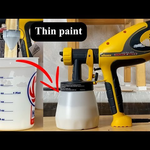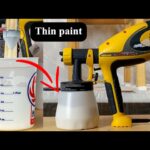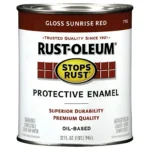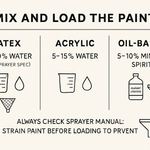
To thin Rust-Oleum paint for spray gun use, add 10% to 20% solvent by volume to the oil-based enamel for proper atomization. Mineral spirits provide a slower drying time for better leveling, while acetone speeds up flash times. Use an HVLP gun with a 1.4 mm to 1.8 mm nozzle at 25 to 29 PSI for a smooth finish.
What You Need Before Thinning
Gathering the correct tools before opening the paint can prevents contamination and ensures the mixture flows evenly through your gun. Standard Rust-Oleum Stops Rust protective enamel is very thick right out of the can because the factory blends it for brush and roller application.
- Rust-Oleum Stops Rust enamel (oil-based formulation)
- Solvent (paint thinner, mineral spirits, xylene, or acetone)
- Clean metal or solvent-resistant plastic mixing cups with printed fluid ounce or milliliter marks
- Wooden stir sticks or mechanical mixing paddles
- Fine-mesh nylon cone paint strainers (190-micron mesh)
- Viscosity measuring cup (Zahn #2 or Ford #4 cup)
- A siphon-feed, gravity-feed HVLP, or conventional spray gun
- Solvent-rated respirator (NIOSH approved for organic vapors), nitrile gloves, and safety goggles
How to Thin Rust-Oleum for a Spray Gun
Follow these steps in order to mix, strain, and check your thinned enamel. Skipping the straining step or guessing your ratios without measuring can clog your gun nozzle or leave you with runny, sagging paint on your project.
- Stir the paint thoroughly. Open the can and use a flat stir stick to lift the settled pigments off the bottom of the container, mixing in a steady circular motion for two full minutes until the color and sheen look completely uniform.
- Pour measured paint into a clean mixing cup. Measure eight parts of neat enamel into your graduated container, using the printed measurement marks on the side of the cup to ensure exact proportions.
- Add your chosen solvent gradually. Pour one part solvent into the container to begin with a baseline ratio of roughly 10% to 12% thinner by volume, avoiding the temptation to dump high volumes of solvent in immediately.
- Stir the blend until completely blended. Mix the solvent and enamel steadily for at least 60 seconds, scraping down the inner walls and bottom edges of the mixing cup so no unthinned, syrupy paint remains isolated.
- Check fluid viscosity with a timer. Dip your viscosity cup into the mixed paint, pull it out smoothly, and start a stopwatch to count how many seconds the paint takes to run out until the continuous stream breaks for the first time.
- Add small solvent splashes if flow is slow. If the stream takes longer than 25 seconds to break, stir in additional solvent one tablespoon at a time until your drain time sits between 18 and 24 seconds.
- Strain the paint into the gun cup. Position a 190-micron cone filter directly over your spray gun reservoir and pour the thinned enamel through the mesh to trap dried skins, dust, and clumps before they reach the needle.
- Test your spray pattern on cardboard. Hang a scrap piece of cardboard, set your air regulator to roughly 28 PSI with the trigger pulled, and spray a quick burst from eight inches away to check for a uniform, oval fan pattern with fine droplets.
Tip: Always strain your thinned paint directly into the spray gun cup; never skip filtering, because a single speck of dried paint skin can jam the fluid nozzle and ruin your spray pattern mid-pass.
Choosing the Right Thinner for Your Project
The solvent you mix into your enamel changes how fast the liquid leaves the gun, how quickly it levels, and how long you must wait before spraying a second coat. Rust-Oleum responds well to several standard reducers, but each solvent carries specific performance trade-offs.
Acetone flashes off very quickly into the surrounding air. If you spray in cooler temperatures between 50°F and 65°F, acetone helps the enamel stay on vertical surfaces without running down the panel. The trade-off is surface leveling: because the solvent evaporates so quickly, the paint droplets have less time to melt together, which can leave a slight orange peel texture if you work too slowly.
Mineral spirits evaporate much slower than acetone. This slow flash time allows the enamel droplets to settle and blend together on the surface, yielding a glossier, factory-smooth finish. However, mineral spirits lengthen your wet time considerably; dust floating in your shop has a longer window to settle on the wet paint, and spraying heavy coats on vertical panels can lead to runs and sags.
Xylene sits between acetone and mineral spirits in terms of speed. It dissolves oil-based resins aggressively, lowers paint viscosity quickly with less total fluid added, and dries to the touch in moderate shop conditions within an hour. If you want a durable commercial finish on heavy equipment, xylene remains a favorite choice among metal fabricators.
| :— | :— | :— | :— | :— |
| Acetone | Fast (5–10 min flash) | 50°F to 68°F | 15% to 20% | Good; dries fast, risks dry spray |
| Xylene | Medium (15–25 min flash) | 65°F to 80°F | 10% to 15% | High gloss, excellent durability |
| Mineral Spirits | Slow (30–45 min flash) | 70°F to 90°F | 10% to 15% | Mirror smooth, longer sag risk |
| Paint Thinner | Slow to medium | 65°F to 85°F | 10% to 18% | Standard gloss, levels out well |
Viscosity and Thinning Ratios by Spray Gun Type
Different styles of spray guns generate varying amounts of fluid suction and atomization energy. A pressure-fed pot can move relatively heavy paint through its hose, whereas an HVLP gravity gun relies on a mix of fluid weight and gentle air flow, demanding thinner paint.
HVLP gravity guns with small nozzles (1.4 mm or 1.5 mm) need thinner fluid mixtures to avoid clogging the orifice. If you use a larger 1.8 mm to 2.0 mm nozzle, you can spray thicker enamel, which lets you lay down a heavier wet film with less solvent trapped under the drying surface.
Total Paint Volume (oz) × Desired % Thinner = Solvent Volume to Add (oz)
Example: 16 oz Paint × 0.15 (15%) = 2.4 oz Solvent
If your nozzle is small (under 1.4 mm), thin by 20% to avoid orange peel; if your nozzle is large (1.8 mm or larger), stay near 10% to prevent excessive dripping and sags. This decision rule keeps your liquid flow balanced against your atomizing air pressure at all times.
| Spray Gun Type | Recommended Tip Size | Ideal Thinning Ratio | Ford Cup #4 Drain Time | Operating Air Pressure |
|---|---|---|---|---|
| HVLP Gravity Feed | 1.4 mm – 1.5 mm | 15% to 20% | 18–22 seconds | 25–29 PSI (at gun inlet) |
| HVLP Gravity Feed | 1.7 mm – 1.8 mm | 10% to 15% | 20–25 seconds | 22–26 PSI (at gun inlet) |
| Siphon / Suction Feed | 1.8 mm – 2.0 mm | 15% to 20% | 18–22 seconds | 35–45 PSI (at gun inlet) |
| Airless Sprayer | 0.013″ – 0.015″ tip | 5% to 10% | 30–40 seconds | 1,800–2,200 PSI fluid |
9 Best Wagner Sprayer Tested for Any Project (Buying Guide)
How Much Thinner Is Safe for the Paint?
You can safely add up to 20% solvent by volume to oil-based Rust-Oleum without ruining the resin structure of the paint. Adding more than 25% solvent breaks the enamel’s chemical binder, which leads to weak adhesion, dull gloss, and transparent coverage that requires four or more coats to hide the primer.
Rust-Oleum’s official guidance states that protective enamels shouldn’t be thinned excessively because heavy solvent reduction compromises the film build that stops corrosion. The United States Consumer Product Safety Commission provides safety standards and regulatory limits on volatile compounds, and keeping your solvent reduction inside safe margins also reduces the concentration of organic vapors filling your workspace.
Thinning also influences dry-film thickness. Standard oil enamel dries down to roughly half its wet thickness as the mineral spirits escape. If you dilute the liquid paint with 30% solvent, your dried coat will be so thin that rust will break through the steel surface within months of outdoor exposure.
Tip: Don’t thin water-based acrylic paint with mineral spirits or xylene; always check the can label first to verify whether your paint is an oil-based alkyd or an acrylic latex blend before adding organic solvents.
Why Does My Sprayed Finish Look Bad?
Spraying modified alkyd enamels takes practice. If your finished surface displays physical defects, the problem can almost always be traced back to incorrect viscosity, poor gun air settings, or improper flash intervals.
Why is the paint orange-peeled and rough?
Your paint is too thick, your air pressure is too low, or you’re holding the spray gun too far away from the workpiece. When paint viscosity is too high, the air stream tearing through the air cap can’t break the thick enamel into tiny mist droplets; instead, it blows large, sticky droplets across the surface. These heavy globules hit the surface partially tacky and dry before they can level together. To eliminate orange peel, stir in an extra 5% solvent to lower viscosity, bump your line pressure up by 3 to 5 PSI, and hold your gun exactly six to eight inches from the panel.
Why does the fresh coat run and sag?
You added too much solvent, applied too heavy a pass, or sprayed your passes too close together on a vertical surface. When paint is over-thinned, the wet resin loses its holding body and slides down under its own weight before the solvent can evaporate. If runs begin to appear, widen your fan pattern, quicken your hand travel speed across the panel, and extend your flash time between coats to at least 20 minutes to give the solvent time to release from the wet film.
Why is the surface wrinkling while drying?
You sprayed a second coat during the sensitive mid-dry phase or used a reducer that dissolved the base layer underneath. Oil-based enamels dry through two distinct stages: solvent evaporation and atmospheric oxidation. After the surface skins over, applying a fresh, solvent-laden coat causes the skin underneath to swell, lift, and wrinkle like elephant skin. You must apply additional coats within one hour of the initial pass or wait a minimum of 48 hours for the lower layer to cure completely throughout its entire depth.
Why is the paint spitting out drops instead of misting?
Dried paint particles are lodged behind the fluid tip, the fluid nozzle is loose, or air is leaking into the paint path around the needle packing nut. When air slips into the fluid passages, it aerates the liquid inside the gun, causing erratic burps and big splatters that ruin your spray pass. Unscrew your fluid tip, inspect the threads, clean the needle with a solvent-soaked brass brush, and verify that the air vent hole on your gravity cup lid is totally free of dried paint blockages.
Frequently Asked Questions
Can I thin Rust-Oleum enamel with plain water?
No, you can’t thin classic oil-based Rust-Oleum enamel with water because the oil resins and water will separate into an unusable curdled sludge. Only water-based lines like Rust-Oleum Universal Acrylic or latex formulations should ever be thinned with clean water. Check the cleaning instructions printed on your can first.
What size tip works best for spraying Rust-Oleum?
A 1.8 mm fluid tip works best for spraying oil-based enamel through an HVLP gravity spray gun. This larger nozzle size allows you to atomize the heavy alkyd resins cleanly using only 10% to 15% solvent reduction. A 1.4 mm tip also works, but requires up to 20% thinning.
How long does thinned Rust-Oleum take to dry?
Thinned Rust-Oleum takes two to four hours to become dry to the touch when sprayed at room temperature. The paint will be ready for light handling after 24 hours, but complete curing throughout the film thickness takes between seven and ten days, depending on ambient humidity and ventilation.
Can I use lacquer thinner to reduce Rust-Oleum enamel?
No, you should avoid lacquer thinner because its aggressive blend of ketones and esters can curdle the alkyd resins in oil enamel. Lacquer thinner can make the wet paint flash before reaching the target surface, producing a sandy, flat texture that lacks durability and fails to bond with metal.
Is paint thinner the same as mineral spirits for spraying?
Yes, standard paint thinner and mineral spirits function similarly in oil-based enamel, but mineral spirits are more refined and produce fewer unpleasant fumes while spraying. Mineral spirits produce a slightly cleaner, clearer mixture that helps gloss enamels level out smoothly on flat metal panels.
Do I need to wear a respirator when spraying thinned enamel?
You must wear a NIOSH-approved respirator with organic vapor cartridges and particulate pre-filters when spraying. Thinning enamel releases airborne solvents like xylene or acetone alongside paint mist, which pose serious inhalation hazards in enclosed spaces. Always ensure your shop has active cross-ventilation to mitigate these risks.
Final Thoughts
Once you’ve finished your test spray on a piece of scrap cardboard, you’ll be ready to tackle your actual project. Don’t rush the process, as patience is key to avoiding drips. You’ll find that a steady, rhythmic motion creates the professional, glass-like surface you’re aiming for on your next masterpiece.