For most home projects in the United States, a stain brush is best for wood stains, deck stains, and sealers, while a paint brush is best for thicker coatings that need to hide the surface. The key difference is not only the brush name. It is the bristle type, brush shape, coating thickness, and surface.
A stain brush often holds and spreads thin liquid well. A paint brush is built to carry thicker paint and leave a more even film. Still, some brushes can do both jobs when the coating label allows it.
Stain Brush vs. Paint Brush: The Main Difference
A stain brush is made for thin wood stains and sealers. A paint brush is made for thicker paint. This affects how each brush picks up, spreads, and releases the coating.
| Feature | Stain brush | Paint brush |
|---|---|---|
| Main use | Wood stain, deck stain, sealer | Wall paint, trim paint, cabinet paint |
| Coating thickness | Thin to medium | Medium to thick |
| Common shape | Wide, flat, or block style | Angled, flat, or sash style |
| Bristle goal | Move stain into wood grain | Lay paint on the surface |
| Best surface | Decks, fences, siding, furniture | Walls, doors, trim, cabinets |
| Typical size | 4 to 6 inches for large wood areas | 1 to 4 inches for most paint work |
| Finish goal | Even color and wood coverage | Smooth, solid, opaque coverage |
The terms are not strict industry categories. A “stain brush” may simply be a wide brush with soft, flexible bristles. A “paint brush” may work well with stain if its bristles and size fit the job.
Why the coating changes the brush choice
Wood stain is often thinner than paint. It can run, drip, or soak into the wood quickly. A brush that holds too much liquid may create puddles or dark spots.
Paint needs more control. It must spread into a smooth film and cover the color below it. A paint brush usually has a tighter bristle bundle that helps carry and release thicker material.
The best choice depends on the product label. A water-based deck stain, oil-based stain, acrylic paint, and exterior solid stain can all behave in different ways.

What Is a Stain Brush?
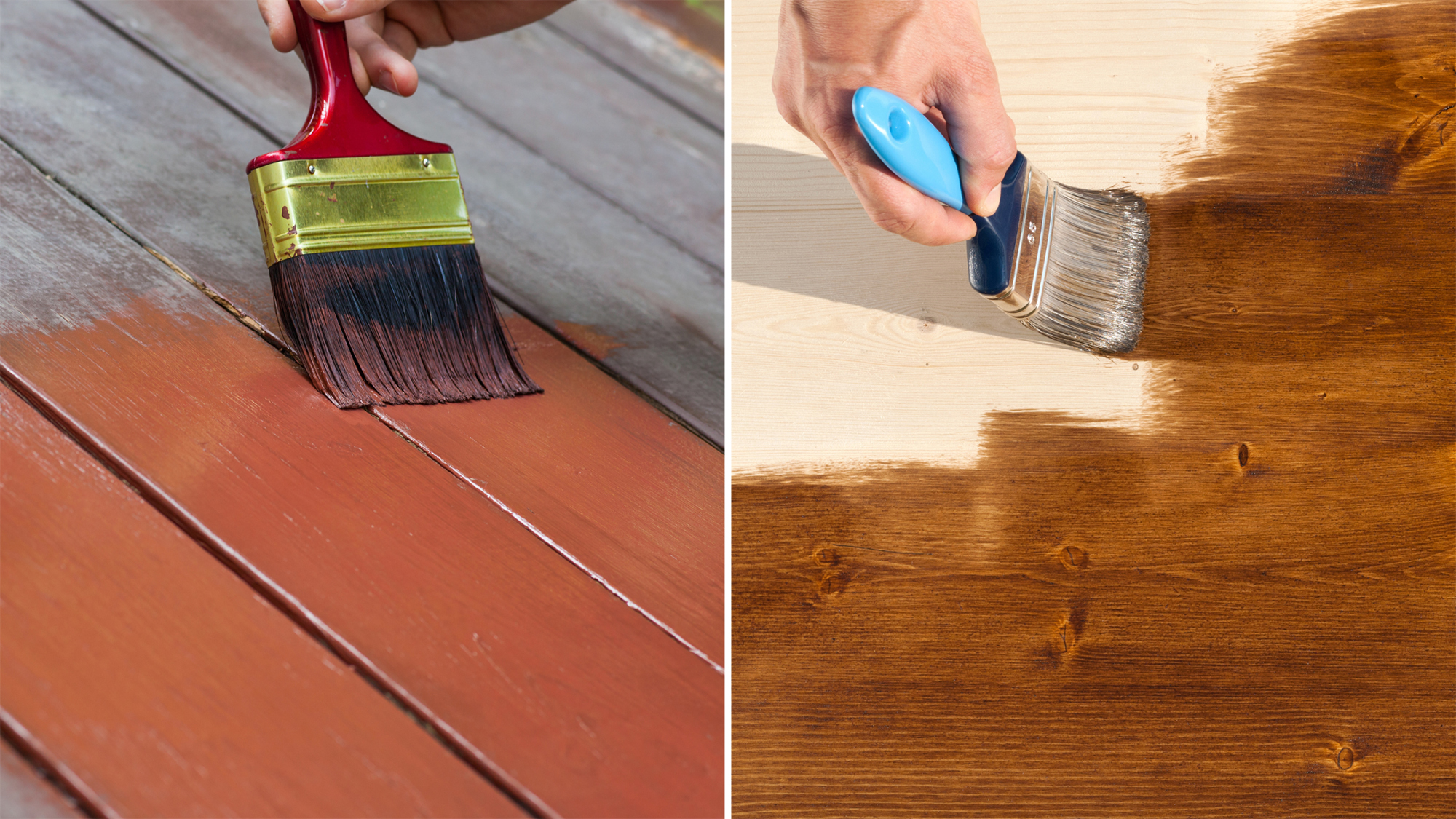
A stain brush is a brush designed to apply wood stain, sealer, or other thin coatings. Many stain brushes have a wide face that helps cover boards and panels with fewer passes.
A typical stain brush may have:
- Natural bristles
- Synthetic bristles
- A mix of natural and synthetic bristles
- A wide block shape
- A long handle for decks or fences
- A short handle for furniture and small projects
A wide brush is useful on a deck because it covers several inches of board at once. It can also help work stain into grooves, cracks, and wood grain.
When a stain brush works best
Use a stain brush when you need to apply:
- Transparent wood stain
- Semi-transparent wood stain
- Deck stain
- Fence stain
- Wood sealer
- Some penetrating oil finishes
- Thin exterior coatings approved for brush use
A brush gives more control than a sprayer. It also helps push stain into the wood grain. This can matter on rough lumber, pressure-treated boards, and older decks.
Limits of a stain brush
A stain brush is not always the best choice for paint. Its wide, loose bristles may not hold a smooth edge. It may also leave visible brush marks in thick paint.
Some wide stain brushes can hold too much paint. That can lead to drips, lap marks, and slow drying. Use a brush made for the coating, not just one labeled for wood.
What Is a Paint Brush?
A paint brush is made to apply paint to walls, trim, doors, furniture, and other surfaces. Paint brushes come in many shapes because each shape solves a different problem.
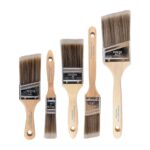
Common paint brush shapes include:
- Angled sash brush: Good for trim, corners, window frames, and cutting in.
- Flat brush: Useful for doors, siding, broad trim, and flat surfaces.
- Square-cut brush: Helps spread paint across large, flat areas.
- Small detail brush: Useful for narrow trim and small repairs.
- Block brush: Useful for some thick coatings and broad exterior surfaces.
Paint brushes are often made from nylon, polyester, natural bristle, or a blend. The right material depends on the paint.
When a paint brush works best
Use a paint brush for:
- Interior wall paint
- Exterior house paint
- Trim paint
- Door paint
- Cabinet paint
- Furniture paint
- Some solid-color stains
- Thick sealers approved for brush use
A paint brush is often the better choice when the coating must hide the surface below. It gives you better control over edges and helps form an even top layer.
Limits of a paint brush
A narrow paint brush may take too long on a deck. It can also leave overlap marks if the stain dries fast. A wide stain brush, pad, or roller may be faster for large wood surfaces.
Do not assume a paint brush can handle every stain. Oil-based products may damage some synthetic bristles, while water-based products may make natural bristles swell and lose shape.

Which Brush Should You Use for Stain?
For most wood stain projects, use a wide brush with bristles that match the product. A brush between 4 and 6 inches is often useful for decks, fences, and siding, while a 2- to 3-inch brush offers more control on furniture and trim.
Use these general guidelines:
- Thin, water-based stain: Choose a quality synthetic or synthetic-blend brush.
- Oil-based stain: Choose a brush approved for oil-based coatings, often natural or synthetic bristle.
- Semi-transparent deck stain: Use a wide stain brush or a brush made for deck coatings.
- Solid stain: Use a paint-style brush, stain brush, roller, or sprayer approved by the label.
- Small furniture: Use a smaller brush that gives you control around corners and details.
- Rough wood: Use firm but flexible bristles that can reach the grain.
The product label has the final word. Some stains allow brushing, rolling, or spraying. Others recommend one method to reduce lap marks or improve penetration.
Should you use a brush or a pad for deck stain?
A brush is usually better when the deck has rough grain, cracks, or tight spaces. A stain pad can cover smooth boards faster and may reduce visible brush marks.
A pad may not work as well on heavily textured wood. A brush can push stain into the grain and spread excess material out of puddles.
For a large deck, many people use both. They apply stain with a pad or wide brush, then use a smaller brush along edges, between boards, and around posts.
Can You Use a Paint Brush to Apply Stain?
Yes, you can use some paint brushes to apply stain. The brush must be compatible with the stain and suitable for the surface.
A paint brush may work well for:
- Small furniture
- Stained doors
- Railings
- Trim
- Cabinet parts
- Narrow deck edges
- Detail work
A standard wall brush may be less useful on a large deck. It may be too narrow, hold too little stain, or create more visible overlap lines.
Before use, check three things:
- Bristle material: Confirm that it works with water-based or oil-based products.
- Brush size: Choose a size that matches the surface.
- Product directions: Follow the stain label for application tools and drying conditions.
Do not use a brush that sheds bristles. Loose bristles can dry into the finish and create rough spots.
Can You Use a Stain Brush to Apply Paint?
You can use a stain brush for some paint jobs, but it may not give the best finish. A wide stain brush can work with exterior paint, solid stain, or some thick sealers if the bristles are firm and the product allows brush application.
It is less suitable when you need:
- A sharp trim line
- A smooth cabinet finish
- Even coverage on a wall
- Fine control around windows
- Minimal brush marks
For these tasks, use a paint brush shaped for the surface. An angled sash brush is usually easier to control near trim and corners. A flat brush can spread paint across broad, flat areas.
The main problem is control. A stain brush may release too much paint at once. That can cause runs, thick spots, and uneven edges.
Natural Bristles vs. Synthetic Bristles
Bristle material matters because water and solvents affect brushes in different ways. The right choice helps the brush keep its shape and spread the coating evenly.
Synthetic bristles
Synthetic bristles are usually made from nylon, polyester, or a blend. They are often a good choice for water-based paint and stain.
Synthetic brushes can:
- Resist swelling in water
- Keep a sharp edge
- Work well with many acrylic coatings
- Clean up more easily after water-based products
- Handle some exterior coatings
Some nylon bristles can soften in high heat. Polyester may hold its shape better in warm conditions. A blend can provide both softness and control.
Natural bristles
Natural bristles are often made from animal hair. They can carry oil-based coatings smoothly and may leave a soft finish.
Natural bristles can:
- Hold oil-based coatings well
- Produce a smooth finish
- Soften with use
- Lose shape if left in water
- Become less useful with many water-based coatings
Natural bristles may absorb water and become limp. This can make them harder to control with latex or acrylic paint.
Mixed-bristle brushes
A mixed brush combines natural and synthetic fibers. It may work with several products, but compatibility still depends on the coating label.
When the product type is unknown, do not guess. Check the can or the safety data sheet. The label often states the required thinner, cleaner, or tool type.
How to Apply Stain With a Brush
A clean surface and a controlled amount of stain are the keys to an even result. Work in small sections and keep a wet edge when the label recommends it.
What you need
Gather:
- The correct stain
- A compatible brush
- Drop cloths
- Painter’s tape
- Clean rags
- Gloves
- Eye protection
- A clean container, if the label allows pouring
- The recommended cleaner
Steps
- Read the label. Check the allowed surfaces, tools, temperature range, drying time, and cleanup method.
- Prepare the wood. Remove dirt, loose finish, grease, and dust. Let the surface dry as directed.
- Protect nearby areas. Cover concrete, siding, plants, and other surfaces that could be stained.
- Stir the product. Mix settled color from the bottom without creating excess bubbles.
- Load the brush lightly. Dip only part of the bristles, then tap or wipe off extra stain.
- Follow the wood grain. Brush along the boards or grain pattern.
- Work in short sections. Keep the edges wet if the product calls for wet-on-wet application.
- Remove puddles. Spread extra stain before it dries.
- Check the color. Look for dark spots, missed areas, drips, and lap marks.
- Let it dry. Follow the label before adding another coat or using the surface.
Do not apply stain in direct hot sun if it causes the surface to dry too fast. Wind, heat, humidity, and damp wood can change the result.
Signs of a good stain application
A properly brushed stain should have:
- Even color
- No shiny puddles
- No heavy lap marks
- No runs on vertical surfaces
- No loose bristles
- A finish that dries within the stated time
If the stain remains tacky, the coat may be too thick. The wood may also be damp, the air may be too cool, or the product may need more drying time.
How to Apply Paint With a Brush
Paint needs a clean surface, the right brush, and a steady working rhythm. Use a brush that fits the coating and the detail of the surface.
Steps
- Prepare the surface. Clean it and remove loose paint or dust.
- Repair defects. Fill holes or cracks, then sand and remove the dust.
- Protect nearby surfaces. Use drop cloths and painter’s tape where needed.
- Condition the brush. For water-based paint, lightly dampen a synthetic brush and remove excess water. For oil-based paint, follow the brush maker’s directions.
- Load the brush. Dip about one-third to one-half of the bristle length into paint.
- Start with controlled strokes. Apply paint without pressing the bristles flat.
- Spread the paint. Use long, even strokes to level the coat.
- Keep a wet edge. Blend each section before the previous section dries.
- Inspect the surface. Look for runs, missed areas, and brush marks.
- Clean the brush soon after use. Use the cleaner listed on the paint label.
Avoid overworking paint after it begins to set. Repeated brushing can pull the film, create marks, and reduce the final quality.
Stain Brush vs. Paint Brush for Common Projects
The best brush changes with the project. Use this guide as a starting point, then check the coating label.
| Project | Best starting choice | Why |
|---|---|---|
| Wood deck | Wide stain brush or deck brush | Covers boards and reaches the grain |
| Fence | Wide stain brush, pad, or sprayer | Covers large areas with fewer passes |
| Wood furniture | Small stain brush or quality paint brush | Gives control around details |
| Interior wall | Roller plus paint brush for edges | A roller covers large areas faster |
| Door | Flat paint brush or mini roller | Helps create an even film |
| Window trim | Angled paint brush | Offers control near glass and corners |
| Cabinet doors | Fine synthetic paint brush or sprayer | Helps reduce visible brush marks |
| Porch railing | Medium brush | Fits narrow parts and vertical surfaces |
| Solid-color stain | Paint brush or stain brush | The thicker product needs more control |
A brush is often best for edges, corners, grooves, and small surfaces. A roller or sprayer may save time on broad areas, but each tool still requires the coating label’s approval.
Common Mistakes to Avoid
The most common mistake is choosing a brush by name alone. A “stain brush” or “paint brush” label does not tell you everything about its fibers, shape, or coating compatibility.
Avoid these problems:
- Using a natural-bristle brush with a water-based coating
- Using a soft brush with thick exterior paint
- Applying too much stain at once
- Letting stain pool in cracks or corners
- Brushing paint after it starts to dry
- Using a small brush on a large deck
- Skipping surface cleaning
- Painting damp wood
- Leaving a brush in solvent or water for a long time
- Pouring leftover coating into a drain
- Working without ventilation when the label requires it
- Ignoring the required drying time
Do not mix paint or stain products unless the manufacturer says they are compatible. Test the coating on a hidden area when color, absorption, or adhesion is uncertain.
If the home was built before 1978, take care before sanding or disturbing old paint. In the United States, lead-safe work rules may apply. The U.S. Environmental Protection Agency provides guidance for renovation, repair, and painting work that may disturb lead-based paint.
How to Clean a Stain or Paint Brush
Clean the brush as soon as possible after use. Dried coating can ruin the bristles and make the brush harder to control.
For water-based paint or stain
- Remove extra coating on cardboard or a clean scrap surface.
- Rinse the brush with warm water.
- Work the cleaner through the bristles.
- Comb out trapped coating near the ferrule.
- Rinse until the water runs mostly clear.
- Shake or spin out extra water.
- Reshape the bristles.
- Store the brush flat or hanging if the design allows.
For oil-based paint or stain
Use the cleaner named on the product label. This may be a specific solvent or mineral spirits, but do not substitute a cleaner without checking the directions.
Work in a well-ventilated area. Keep solvents away from flames, sparks, and heat. Wear the protective equipment listed on the product label.
Do not pour solvent, paint, or stain into a storm drain or household drain. Follow local rules for leftover coating and solvent disposal.
Rags used with some oil-based finishes can create a fire hazard if they are stored incorrectly. Keep them away from heat and dispose of them according to local fire and waste guidance.
How to Choose the Right Brush: A Simple Method
Choose the brush in this order: coating, surface, finish goal, then size.
1. Identify the coating
Ask whether the product is:
- Water-based
- Oil-based
- Thin and penetrating
- Thick and film-forming
- Transparent
- Semi-transparent
- Solid-color
This step determines the bristle material and cleaning method.
2. Identify the surface
A deck needs a different brush from a cabinet door. Rough wood benefits from a brush that can reach the grain. Smooth trim needs an edge that stays sharp.
3. Decide how much control you need
Use a wider brush for speed. Use a narrower brush for corners, edges, and detail work.
4. Consider the final look
A transparent stain shows the wood. Uneven application can be easy to see. Paint hides the surface, but brush marks may still show in smooth finishes.
5. Match the brush to the job
As a quick rule:
- Choose a wide stain brush for decks and fences.
- Choose a medium brush for rails, doors, and outdoor furniture.
- Choose an angled paint brush for trim and corners.
- Choose a fine synthetic brush for smooth water-based paint.
- Choose a natural or compatible blend for many oil-based coatings.
Frequently Asked Questions
Is a stain brush better than a paint brush?
A stain brush is usually better for thin stain on large or rough wood surfaces. A paint brush is usually better for thick paint, trim, doors, and areas that need sharp control. Neither brush is always better; the coating and surface decide.
Can I use the same brush for paint and stain?
You can use the same brush only when it is compatible with both products and cleaned fully between uses. Do not move from an oil-based product to a water-based product without proper cleaning.
What size brush is best for a deck?
A brush about 4 to 6 inches wide is a common starting point for deck boards. A smaller brush helps with edges, railings, stairs, and tight spaces.
Is a foam brush good for stain?
A foam brush can work well on small, smooth projects. It may apply thin stain evenly and leave few bristle marks. Foam can tear on rough wood and may not last through a large deck.
Why does my stain look uneven?
Uneven stain can result from damp wood, poor cleaning, uneven sanding, excess product, fast drying, or different levels of wood absorption. Remove puddles while the stain is wet and follow the label’s preparation and coat instructions.
Can I use a roller instead of a brush for stain?
A roller may work on broad, smooth surfaces if the label allows it. Back-brush the stain when directed so it reaches the grain and does not leave heavy texture or lap marks.
Conclusion: Which One Should You Buy?
Choose a stain brush for thin wood stain, decks, fences, and rough outdoor wood. Choose a paint brush for wall paint, trim, doors, cabinets, and coatings that need solid coverage.
If you are unsure, read the product label first. Then match the brush to the coating type, surface texture, project size, and desired finish. A compatible brush used with light loads and steady strokes will usually matter more than the name printed on the package.